MANASLU EXPEDITION
Home / MANASLU EXPEDITION
hard

MANASLU EXPEDITION

duration icon
Duration
32 Days
altitude icon
Max Altitude
8,163m
group icon
Group Size
Max 2 - 4

Trip Summary

Manaslu was first summited on 9 May 1956 by Toshio Imanishi and Gyalzen Norbu Sherpa — the culmination of three previous Japanese expedition attempts on the mountain. Nepal had only opened its peaks to foreign climbers a few years earlier, and Manaslu was among the first great summits reached in the post-opening era. The mountain now has at least six recognized routes, though the northeast face remains the standard and most frequently climbed line.


The mountain sits in the Mansiri Himal, northeast of the Annapurna massif and northwest of the Ganesh Himal — a position that places it in a genuinely different cultural landscape from the Khumbu peaks further east. The Manaslu Conservation Area, through which the helicopter approach passes above Samagaon, is home to communities that maintain a strong Tibetan Buddhist cultural identity and traditions that have remained largely intact. Samagaon also known as the village at the foot of the mountain is one of the most authentic Himalayan high-altitude settlements accessible on any major expedition.


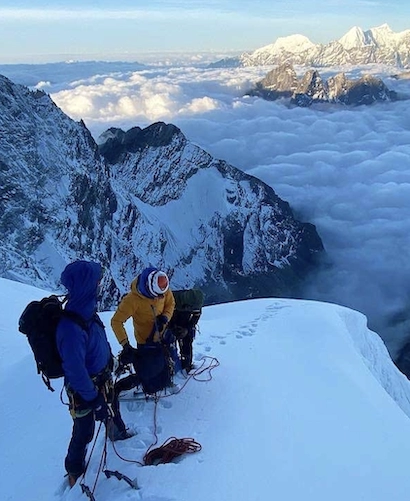
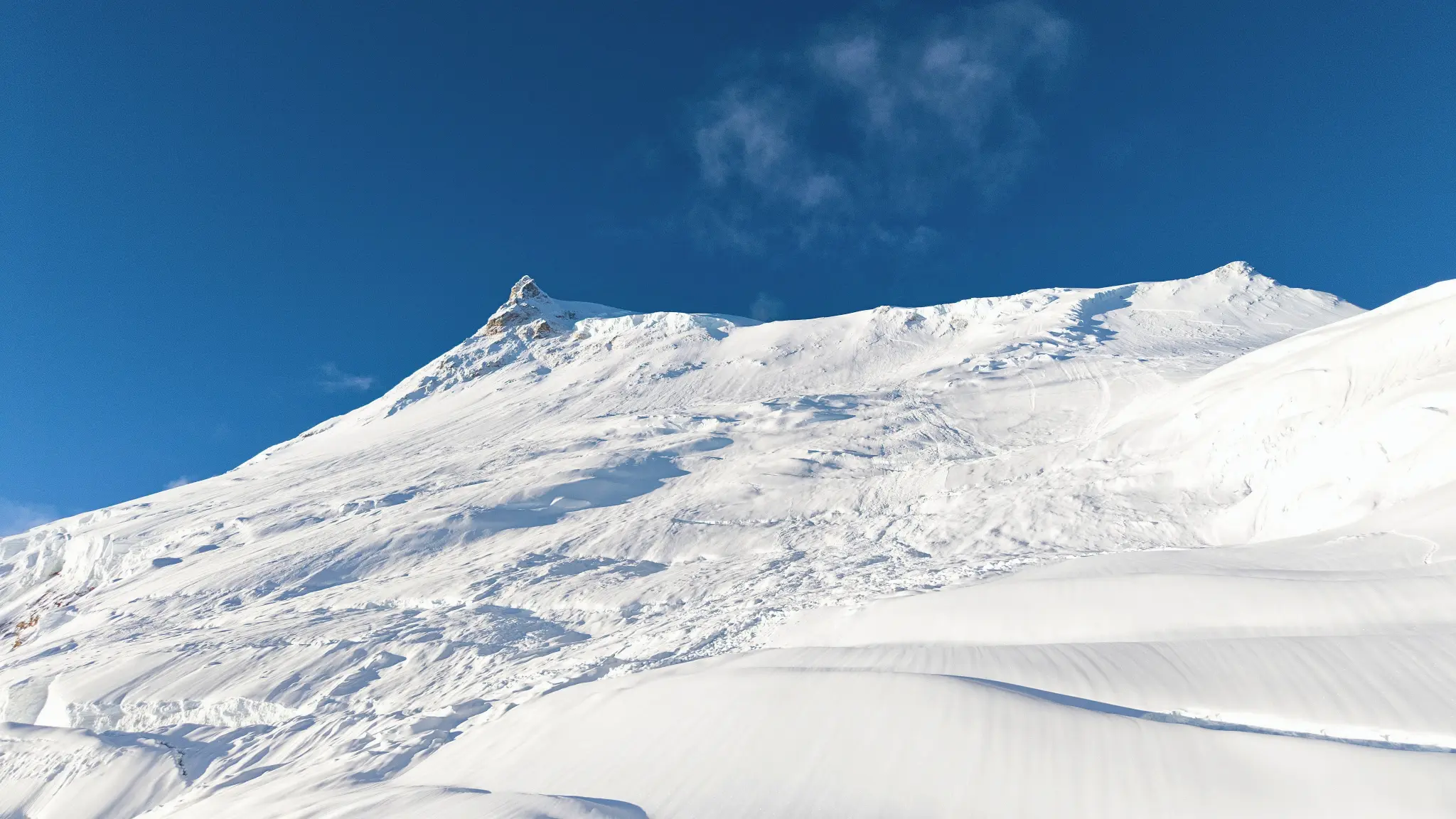
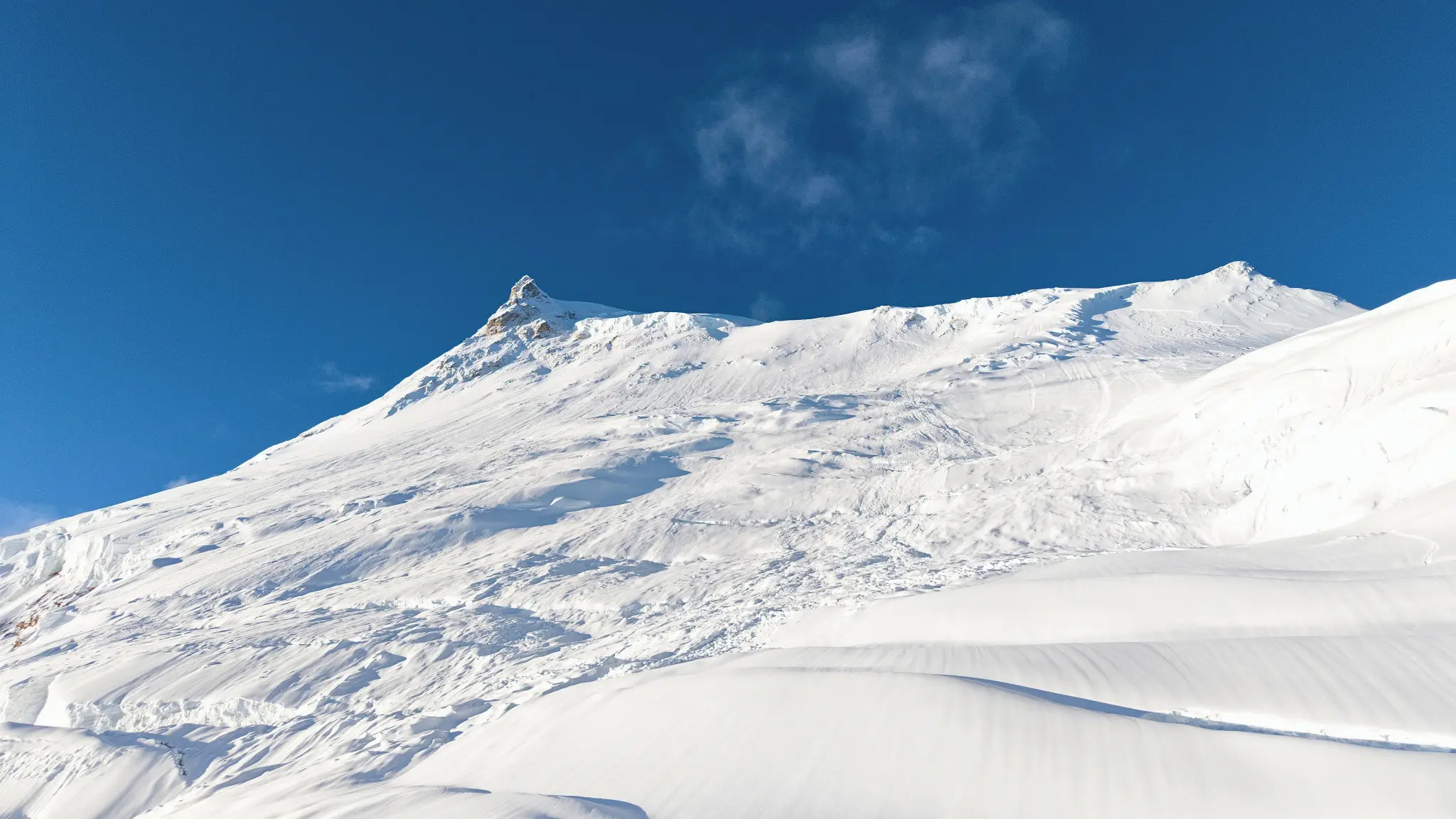
The northeast face route climbs from Base Camp at 4,800m through a series of snow slopes and glaciated terrain. Camp 1 at 5,800m sits on the glacier above the lower approach. Camp 2 at 6,400m marks the point where the face begins to steepen. Camp 3 at 6,800m is the highest camp used for acclimatization rotations before the summit push, and Camp 4 at 7,400m is the final camp before the summit day. The ground above Camp 4 involves steeper snow and some mixed sections before the plateau-like approach to the summit at 8,163m.


The autumn season window on Manaslu typically opens in September and runs through October. It is one of the few 8,000-metre peaks that is predominantly climbed in autumn rather than spring — the post-monsoon stabilization in this western Himalayan region delivers the most reliable conditions for the northeast face route. The summit window is generally narrower than spring windows on Everest or Cho Oyu, and the timing of the summit push requires careful weather monitoring throughout the climbing period.


Alpinist Climber Expeditions approaches the Manaslu programme with an explicit commitment to environmental responsibility. All waste is carried out from Base Camp and high camps. Local cultural practices are respected throughout the expedition. The Leave No Trace approach is not a policy statement, it is standard operating procedure on every expedition we organize in this area.

Trip Overview

Duration
Duration
32 Days
Including travel days
Max altitude
Max Altitude
8,163m
Summit of MANASLU EXPEDITION
Difficulty
Best Season
Autumn
Ideal climbing window
Group size
Group Size
Max 2 - 4
Small team support
Region
Region
Gorkha District
Expedition location
Overview
Overview
Expedition
High-altitude guided climb
Trip overview background

Trip Description

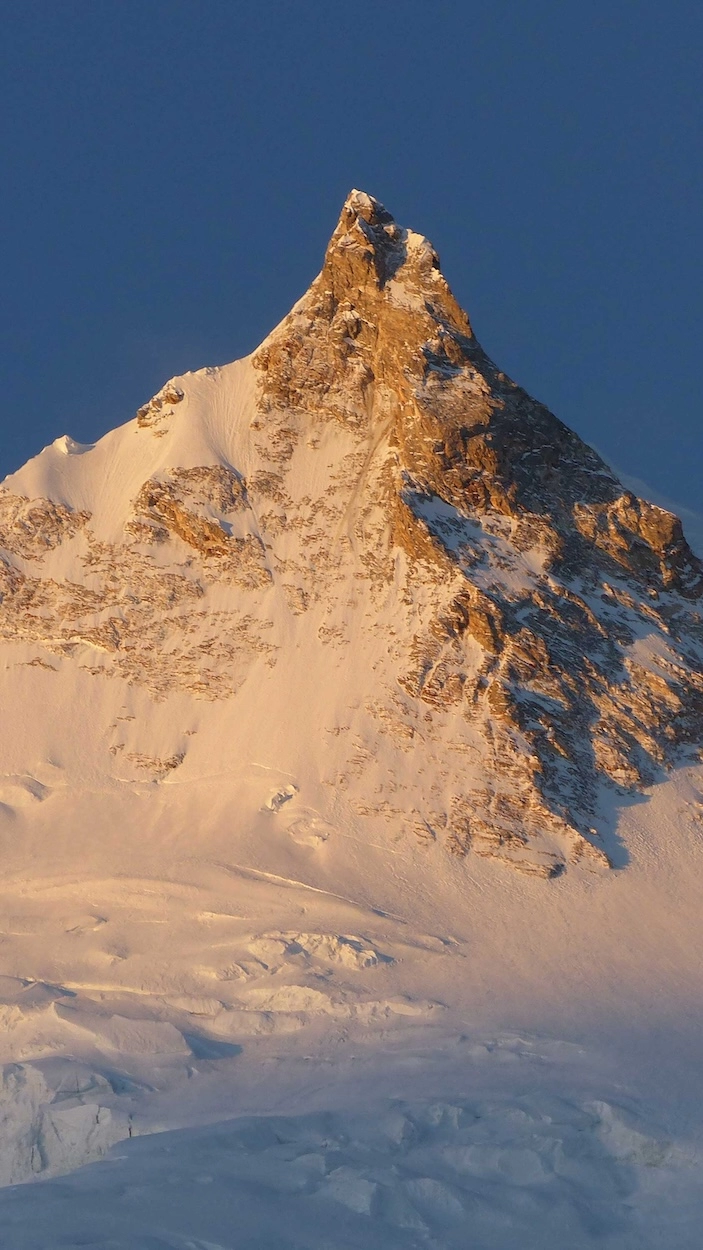
Manaslu stands at 8,163 metres in the Gorkha District of western Nepal — the eighth highest mountain in the world and, for climbers making their first move into 8,000-metre terrain, one of the most logical and rewarding starting points available. Its name means 'Mountain of the Spirit' in Sanskrit. The climbing community has long regarded it as one of the most accessible of the high peaks — a mountain with fewer technical sections than Cho Oyu's upper slopes, a well-established route on the northeast face, and autumn weather patterns that tend to offer more reliable summit windows than some of its peers.


The approach is different from every other 8,000-metre peak in Nepal. Rather than a long Himalayan trek from a mountain airstrip, the Manaslu expedition flies by helicopter directly from Kathmandu to Samagaon — a traditional Tibetan-influenced village at 3,500m in the Manaslu Conservation Area, 40 minutes from the capital. From Samagaon, a short trek leads to Base Camp at 4,800m, passing Birendra Lake — a beautiful glacial lake at the foot of the glacier approach. The helicopter approach is efficient, but Samagaon itself is a genuine cultural highlight: dry stone houses, ancient gompas, prayer flags, and Manaslu rising in full scale directly above the village.


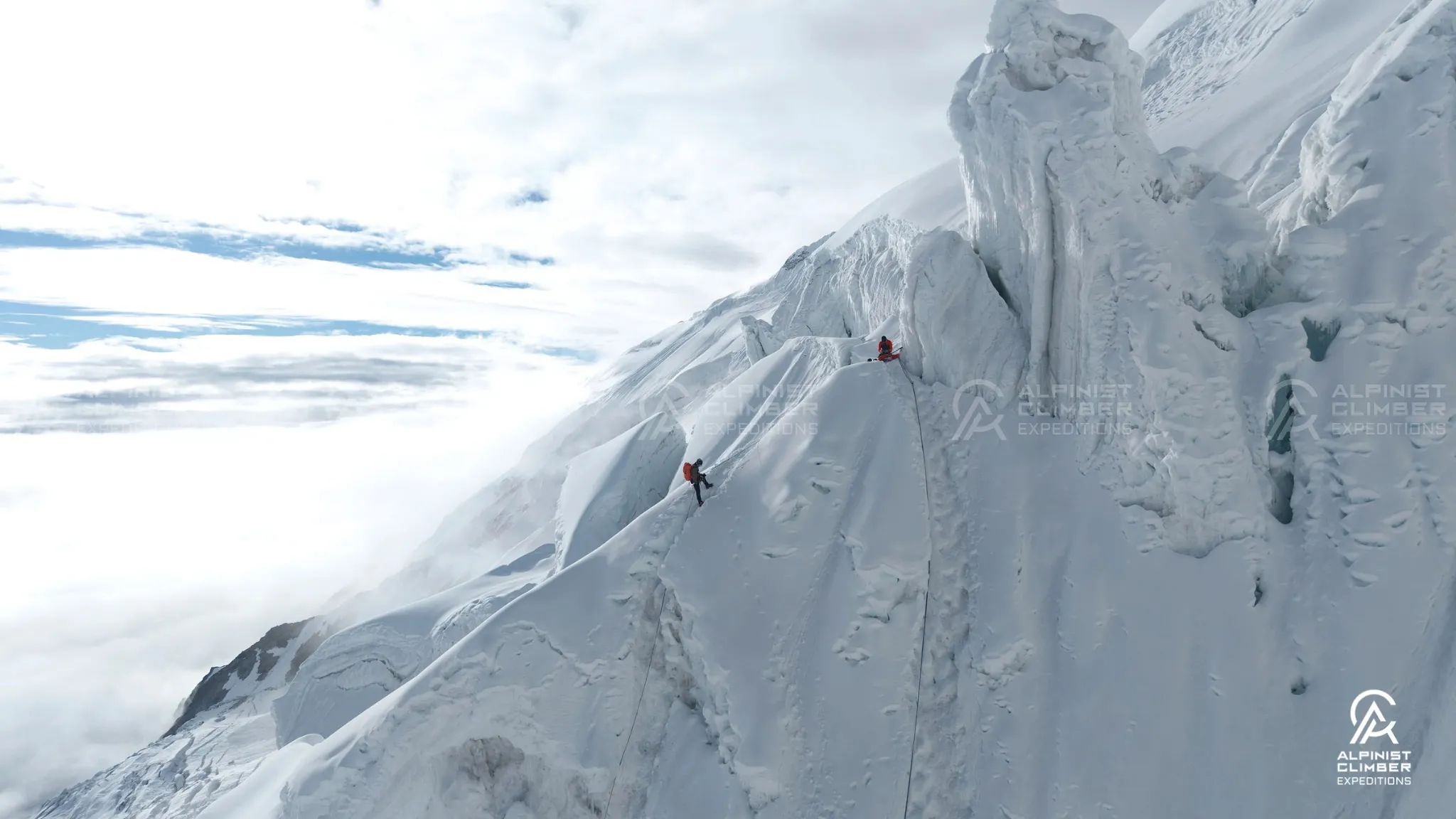
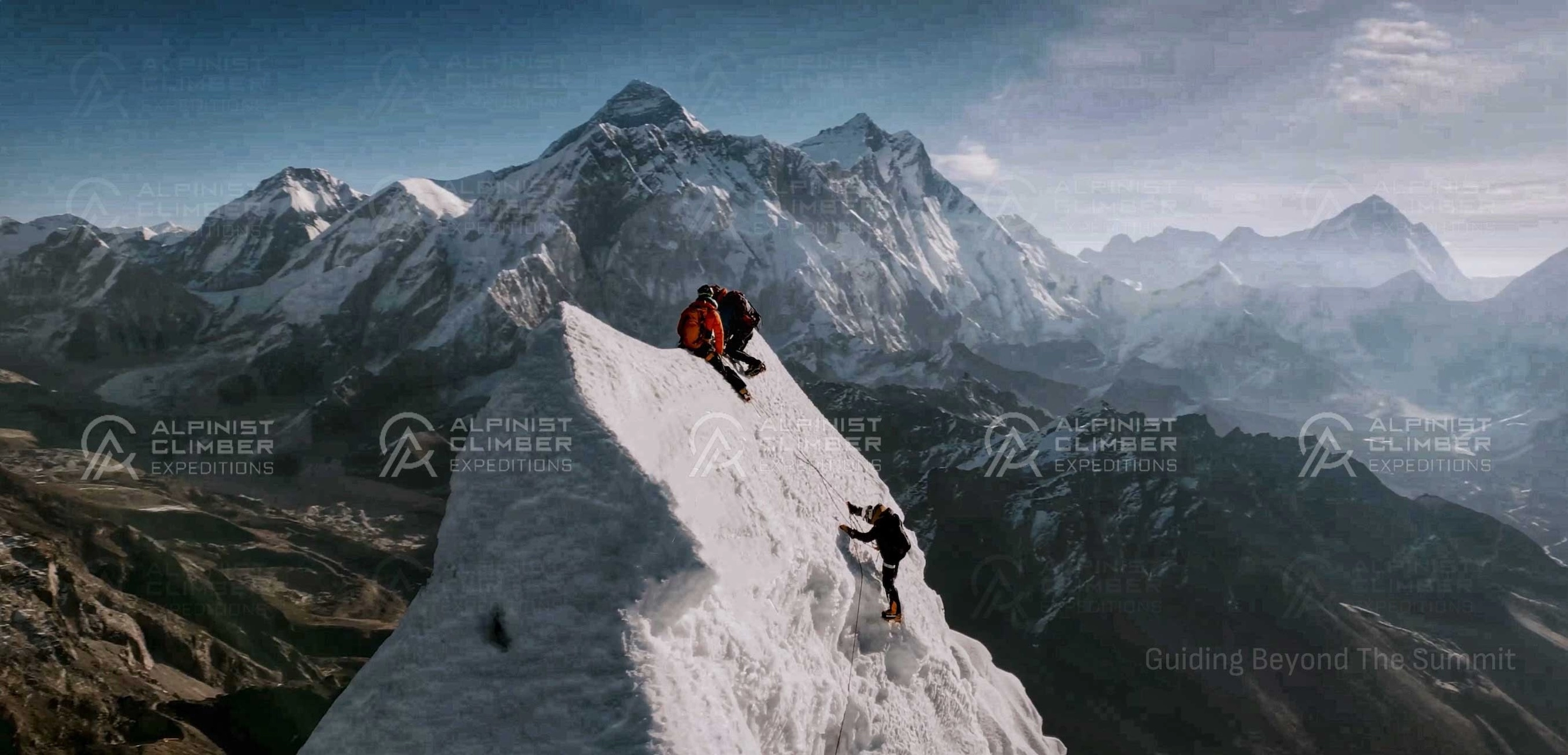
The northeast face route ascends through four camps: Camp 1 at 5,800m, Camp 2 at 6,400m, Camp 3 at 6,800m, and Camp 4 at 7,400m — on moderately angled snow slopes with some steeper sections between Camp 3 and Camp 4. The total climbing period is approximately 20 days from Puja to summit and descent. The summit plateau at 8,163m delivers sweeping views of Dhaulagiri, Annapurna, Cho Oyu, and the full western Himalayan arc — one of the most panoramic summit views available on any 8,000-metre peak.


For climbers who have experience above 7,000 metres and are seriously considering Everest, Manaslu is the most commonly recommended preparation peak. It shares enough of Everest's character, scale, acclimatization demands, high-camp logistics, supplemental oxygen management making it a genuinely useful preparation, while being less crowded, less expensive, and approachable in its own right as a primary objective. Reaching the summit of Manaslu is a significant achievement regardless of what comes after it.


Expedition Highlights

  • Summit Manaslu (8,163m) — the world's eighth highest mountain and the 'Mountain of the Spirit'

  • Widely regarded as one of the best first 8,000m peaks — and the strongest Everest preparation expedition available in Nepal

  • Helicopter Kathmandu to Samagaon (both ways) — efficient approach, no long trekking corridor required

  • Samagaon village — a remarkably intact Tibetan Buddhist settlement with Manaslu rising directly above

  • Birendra Lake — a beautiful glacial lake on the approach from Samagaon to Base Camp

  • Northeast face route — four camps, moderately angled snow slopes, achievable for well-prepared teams

  • Summit views: Dhaulagiri, Annapurna, Cho Oyu, and the full western Himalayan arc

  • Leave No Trace approach — all waste carried out, cultural practices respected throughout

  • IFMGA-certified lead guide and 1:1 Climbing Sherpa on summit day

  • Option for a fully private 1:1 expedition with IFMGA Guide Mr. Prakash Sherpa


Led by IFMGA-Certified Professionals

Manaslu's moderate technical profile means that the primary determinants of expedition success are acclimatization management, weather judgment, and the consistent support quality that allows every team member to perform at their best above 7,000 metres. These are precisely the areas where IFMGA-certified guiding makes the most material difference.


Every Manaslu expedition organized by Alpinist Climber Expeditions is led by an IFMGA / UIAGM / IVBV-certified mountain guide — the highest internationally recognized standard in professional mountain guiding. Our lead guides hold additional qualifications in Advanced Mountaineering, Wilderness First Aid, Helicopter Rescue and Marshalling, and High-Altitude Rescue, all applied in the field on every expedition.


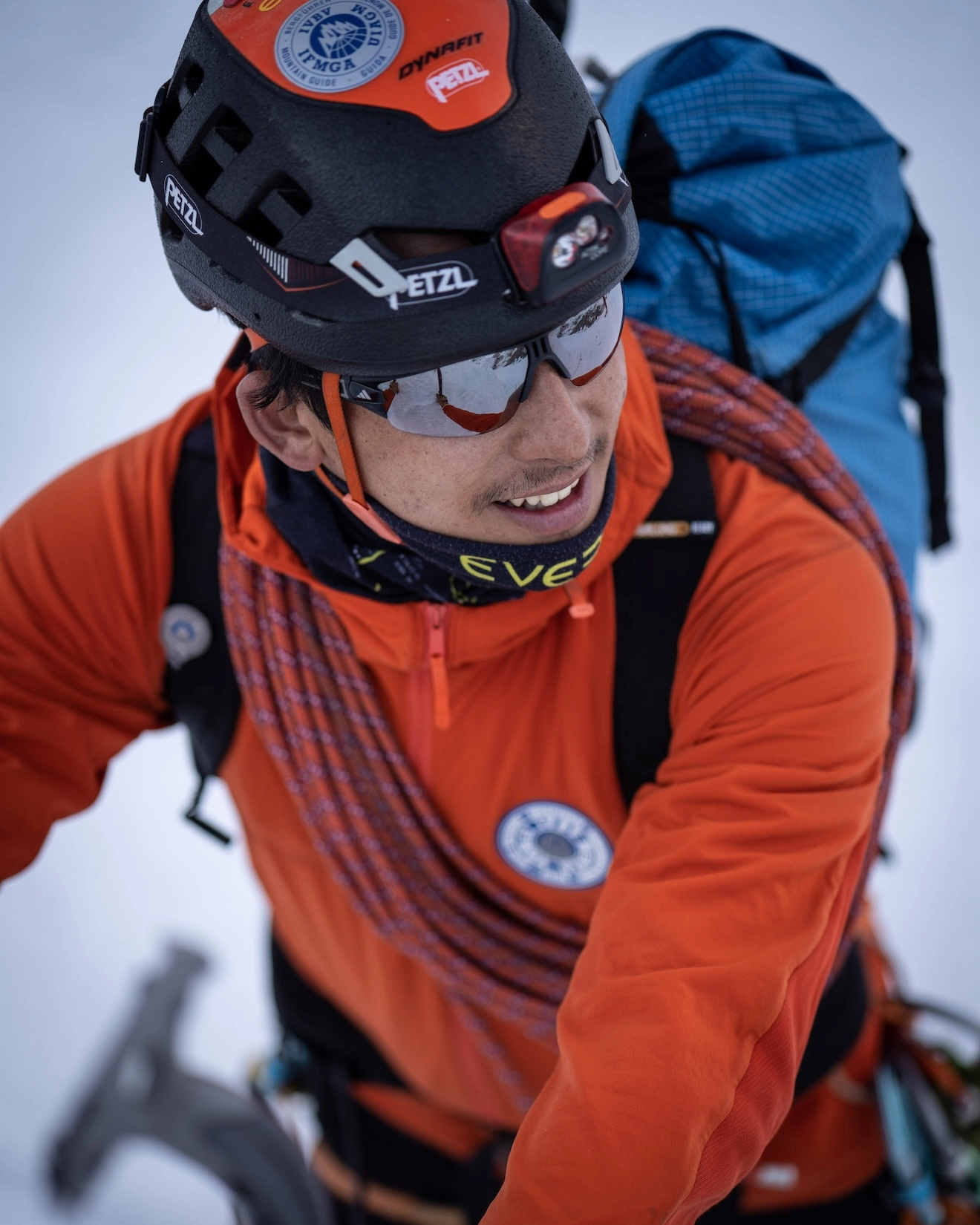
Mr. Prakash Sherpa, CEO and Lead IFMGA Mountain Guide of Alpinist Climber Expeditions, has personally summited Manaslu alongside Everest (five times), Lhotse, K2, Cho Oyu, Makalu, Dhaulagiri, Nuptse, Pumori, and many more — several without supplemental oxygen. He has been guiding professionally at high altitude since the age of 15 with over 15 years of experience on terrain at and above 8,000 metres. He is a member of the Nepal National Mountain Guide Association (NNMGA). For those selecting the premium 1:1 private option, Mr. Prakash Sherpa leads the Manaslu expedition personally.

Detailed Itinerary

A representative from Alpinist Climber Expeditions meets you at Tribhuvan International Airport and transfers you to your 4-star hotel. The evening opens with a welcome dinner — the team gathers for the first time, and your lead guide introduces the route, the helicopter approach, and the 32 days ahead.

Hotel
Location icon 1,330m

A full expedition briefing covers the northeast face route, the four-camp structure, acclimatization plan, oxygen system management, safety protocols, permit formalities, the government liaison officer coordination, and the Leave No Trace approach that governs how we operate in the Manaslu Conservation Area. Equipment is checked and confirmed. You receive your Alpinist Climber Expeditions duffel bag, cap, and T-shirt.

Hotel
Location icon 1,330m

A 40-minute helicopter flight from Kathmandu delivers the team to Samagaon at 3,500m — one of the most direct and efficient approaches of any 8,000-metre peak in Nepal. The flight follows the valleys northwest from Kathmandu, passing above the Budhi Gandaki River corridor before arriving at Samagaon. From the air, Manaslu appears ahead well before landing — the northeast face already presenting its full scale. Samagaon is a traditional Tibetan Buddhist village of dry stone houses, ancient gompas, and prayer flag strings stretched between rooftops. It is a remarkable and culturally rich base before the climb begins.


Note: The altitude gain from 1,330m in Kathmandu to 3,500m in Samagaon in a single day is significant. Activity is kept to a minimum on arrival — rest, hydration, and light movement only. The acclimatization day on Day 04 is essential.


  Duration     Distance     Elevation  
45-60 min flight ~110 km (air) +2,170 m (1,330 m → 3,500 m)
Lodge
Location icon 3,500m

A full rest and acclimatization day in Samagaon. The body begins adapting to 3,500m after the rapid altitude gain of the helicopter flight. A gentle morning walk above the village to approximately 3,800–4,000m follows the principle of climbing high and sleeping low. The Manaslu Conservation Area surrounds the village — gompa, mani walls, and the mountain rising directly above. The afternoon is spent resting, exploring Samagaon, or visiting the local monastery. Proper hydration is essential.


  Duration     Distance     Elevation  
2–4 hrs (optional acclimatization hike) 4–8 km +300–600 m (optional hike, return to 3,500 m)
Lodge
Location icon 3,500m

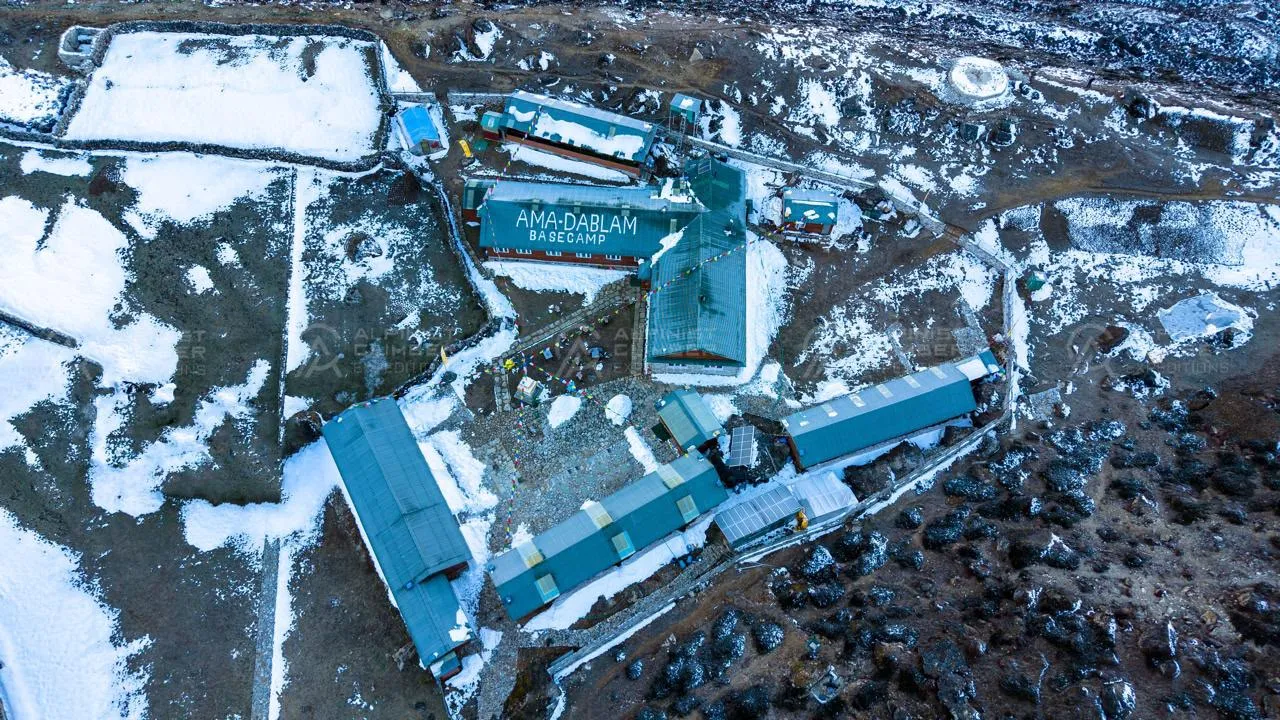
The trail from Samagaon climbs onto the glacier moraine toward Base Camp at 4,800m, passing Birendra Lake — a beautiful, still glacial lake at the foot of the glacier, tucked below the moraines with Manaslu reflected in the water on clear mornings. It is one of the finest natural features on any 8,000-metre approach in Nepal. Above the lake, the route continues onto the moraine to Base Camp. Tents are established, kitchen and dining set up, and the expedition formally begins.


  Duration     Distance     Elevation  
6–8 hrs ~12 km +1,300 m (3,500 m → 4,800 m)
Camp
Location icon 4,800m

The Puja ceremony is conducted at Manaslu Base Camp — a traditional Sherpa blessing led by a lama, attended by the full team. All climbing equipment is blessed. The ceremony at Manaslu Base Camp has a particular character — the northeast face rises immediately above, the Manaslu glacier stretches ahead, and the mountain's scale is fully apparent from the moment the ceremony begins. The remainder of the day is for rest, equipment organization, and acclimatizing to the Base Camp altitude.


  Duration     Distance     Elevation  
2–3 hrs (camp activities) 1–3 km Minimal (<100 m)
Camp
Location icon 4,800m

This 23-day climbing window is managed entirely in the field by the expedition leader. Weather, route conditions, and team readiness determine the daily sequence within this period.


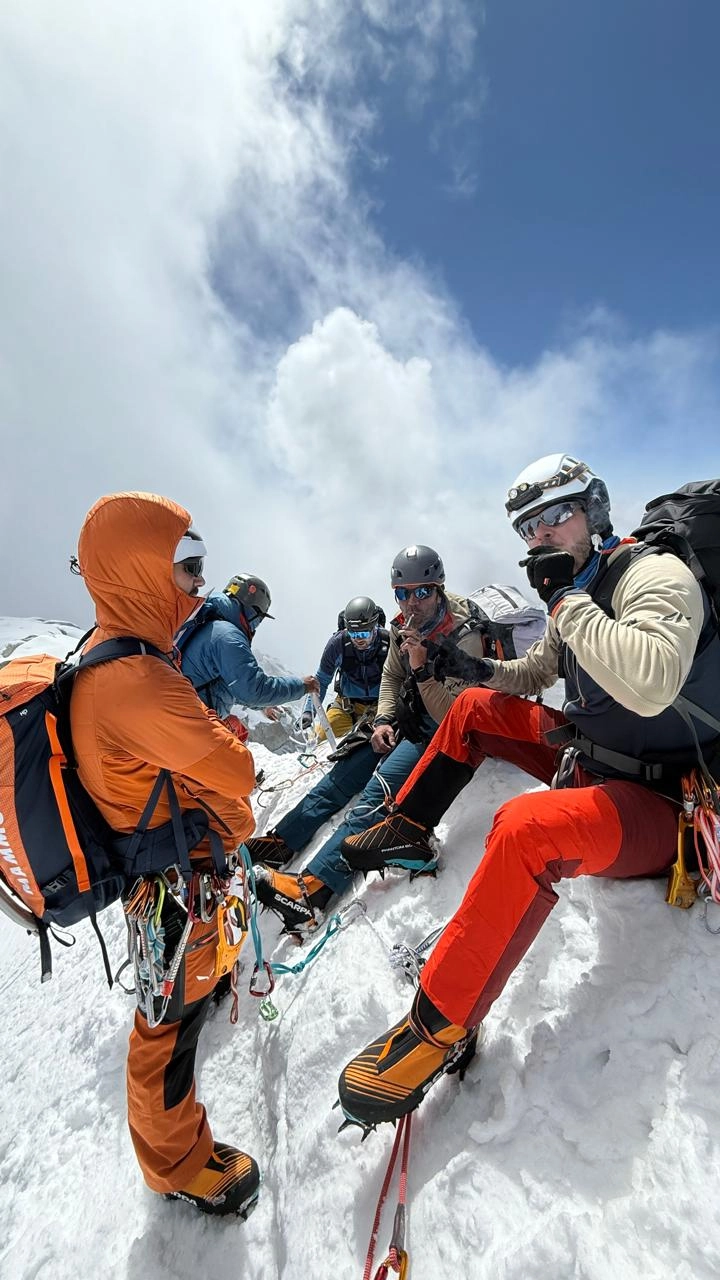
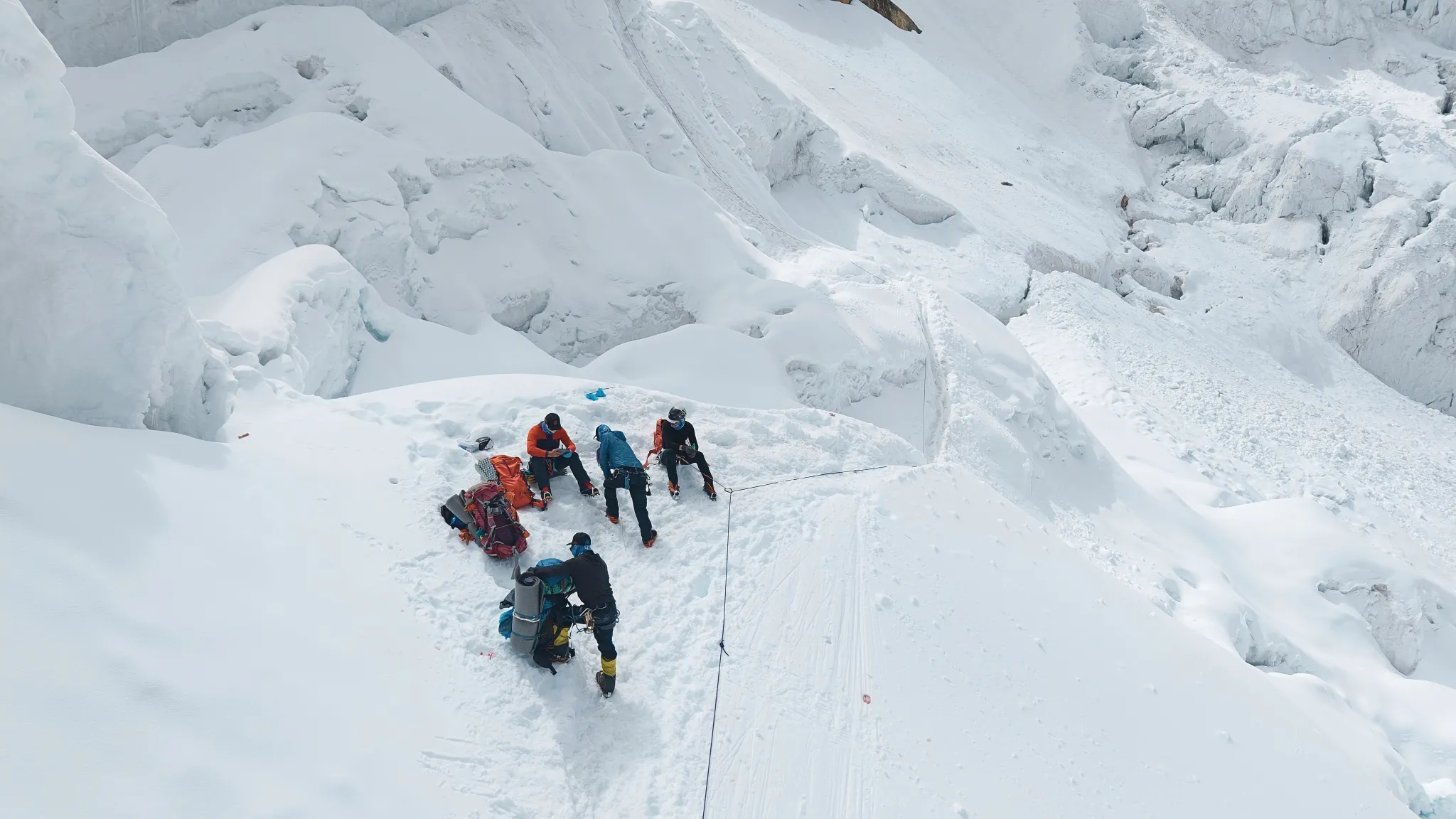
The typical structure: technical training at Base Camp covering crampon technique on the glacier approach, jumar use on the steeper sections above Camp 2, and oxygen system management → first rotation to Camp 1 (5,800m) and return to Base Camp → second rotation to Camp 2 (6,400m) and return → rest and recovery at Base Camp → third rotation reaching Camp 3 (6,800m) or above → recovery → summit push: Camp 1 → Camp 2 → Camp 3 → Camp 4 (7,400m) → summit day to Manaslu (8,163m) → descent to Camp 3 or Camp 4 → return to Base Camp.


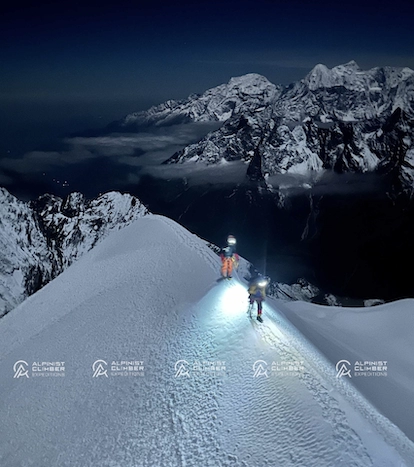
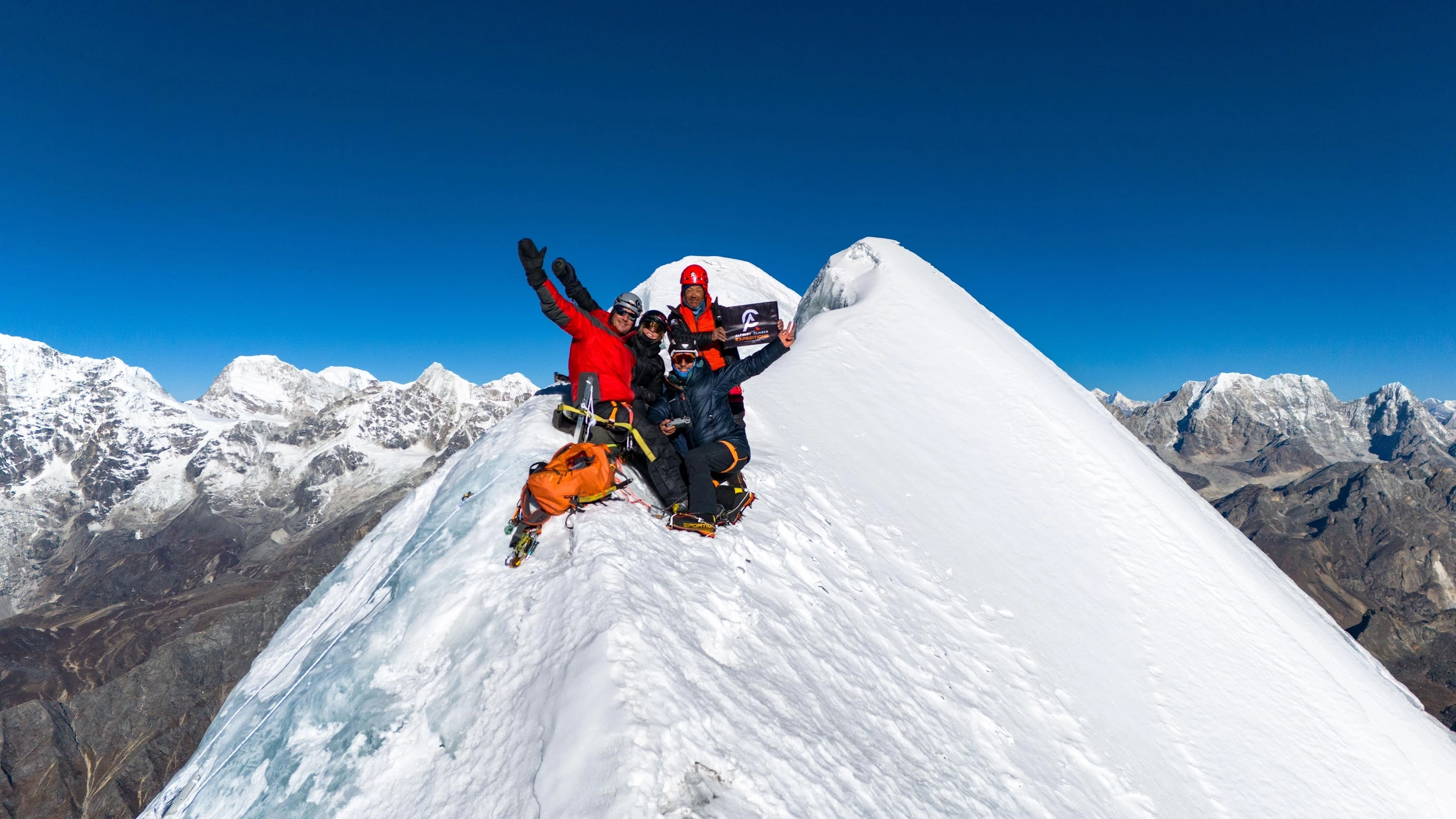
Summit day from Camp 4 begins in the early hours. The terrain above Camp 4 involves steeper snow slopes and some mixed sections before the plateau approach to the summit at 8,163m. From the summit, Dhaulagiri, Annapurna, Cho Oyu, and the entire western Himalayan arc spread to the horizon. Supplemental oxygen is in use above Camp 2 for all members and guides throughout this window. All summit push decisions are made by the expedition leader based on current weather data and team condition.


  Duration     Distance     Elevation  
8–12 hrs 10–15 km (on summit day) +3,363 m to summit (8,163 m) then descent
Camp
Location icon 8,163m

Base Camp is broken down. All tents are struck, waste is sorted and carried out in accordance with the Leave No Trace commitment and Manaslu Conservation Area regulations, and the site is left clean. The team treks back down to Samagaon — Birendra Lake visible again on the descent, Manaslu receding behind. The village receives the team for the final night before the helicopter return.


  Duration     Distance     Elevation  
5–6 hrs ~12 km −1,300 m (4,800 m → 3,500 m)
Lodge
Location icon 3,500m

The helicopter returns the team from Samagaon to Kathmandu — 40 minutes over the same valley corridor, now with the summit of the eighth highest mountain on Earth behind you. The flight arrives in Kathmandu in the morning and the afternoon is free. A farewell dinner in the evening is the proper close to a 31-day expedition — a celebration of Manaslu, of the team, and of the highest altitude most climbers on this expedition have ever reached.


  Duration     Distance     Elevation  
45–60 min flight ~110 km (air) −2,170 m (3,500 m → 1,330 m)
Hotel
Location icon 1,330m

Private airport transfer for your international flight. The Manaslu Expedition concludes — 32 days from Kathmandu to the summit of the Mountain of the Spirit and back.

Why ACE?

Alpinist Climber Expeditions was built around a principle that has guided every climb we have organized — that the quality of the experience on a mountain is directly tied to the quality and depth of experience of the people leading it. What sets Alpinist Climber Expeditions apart is something that cannot be manufactured or replicated — it comes from decades spent on these mountains, from the culture that formed us, and from a deeply held belief that every climb deserves to be done properly.


We are a team of professional Sherpas. Not guides who have visited the Himalaya — guides who grew up here, who know these peaks in every season, and who have spent careers developing the technical skills and mountain judgment required to lead expeditions safely and successfully.


Our team holds IFMGA / UIAGM certification — the highest international standard in professional mountain guiding — alongside Advanced Mountaineering, Wilderness First Aid, Helicopter Rescue, and High-Altitude Rescue qualifications. Our lead guide has summited multiple 8,000-metre peaks, including ascents without supplemental oxygen. This is not a credential on paper. It is a lived capability that directly protects every climber who climbs with us.


We offer two expedition structures: a standard option with small-group expedition, and a premium option with 1:1 guide-to-client ratio. Both are built on the same standard of safety, preparation, and professionalism.The standard option maintains a minimum 1:3 guide-to-client ratio with a dedicated IFMGA lead guide and Sherpa support on every climb. Our premium 1:1 private option places you on the mountain directly alongside IFMGA Guide Mr. Prakash Sherpa.


We do not run high-volume operations as our clients are not bookings. They are climbers who have chosen to trust us with something significant and we take that trust seriously on every single expedition. We do not cut corners on acclimatization, staffing ratios, or safety equipment. We organize expeditions the way they should be organized — with patience, precision, and the kind of local knowledge that only comes from growing up in these mountains and spending a career on them.


The Team

Expedition Guides

Every guide on our team has been selected for their technical ability, high-altitude experience, and personal commitment to the safety and success of every climber they lead. All guides carry extensive experience at altitude and hold a proven record of safety, summit success, and strong compatibility with international clients.

The number of guides assigned to each expedition is determined by the size of the climbing team. Our standard guide-to-member ratio is 1:3, ensuring that every climber receives consistent, attentive support throughout the approach, the acclimatization phase, and the technical climb itself.


Climbing Sherpa Support

A dedicated team of experienced Climbing Sherpas supports every expedition with load carrying on the mountain, route preparation, and high camp management. On summit day, we maintain a 1:1 Sherpa-to-climber ratio — a commitment that reflects our belief that the summit push is where support matters most.

Our Climbing Sherpas are not simply load carriers. They are experienced high-altitude professionals who understand the mountain, the route, and the demands of summit day. Their presence alongside every climber on the final push is a core part of how we manage safety and success on the upper mountain.


What to Expect from Our Team

  • Technically qualified, IFMGA-certified lead guidance on every expedition
  • A standard guide-to-member ratio of 1:3 — adjusted based on team size and peak requirements
  • 1:1 Climbing Sherpa support on summit day for every team member
  • Guides who are experienced, companionable, and genuinely invested in your success
  • Full medical kit, satellite communication, and emergency response capability carried by the team at all times
  • A premium 1:1 private option available — summit alongside Mr. Prakash Sherpa directly


Trip Notes

Quick facts: 8,163m | Mansiri Himal, Gorkha District, Nepal | Best season: spring (Apr–May) & autumn (Sep–Nov) | Graded moderate-to-challenging – often a first 8,000m objective


Overview


Manaslu is the eighth-highest mountain in the world and is frequently chosen as climbers' introduction to 8,000m mountaineering, since its standard route is technically more straightforward than peaks like Everest or K2. First summited in 1956 by a Japanese team, it sits in the remote, culturally rich Gorkha district, with a base camp reached via days of wild, off-the-beaten-path trekking rather than the busier Khumbu trails.


Route & Character


The standard Northeast Face route climbs from base camp (~4,800m) through Camps 1–4, with terrain that is only slightly more technical than Cho Oyu but notably more exposed to avalanche danger throughout. The final summit push climbs steep snow slopes in the thin air above 8,000m, with most climbers using supplemental oxygen from Camp 3 or 4 onward for safety during the long, cold push to the top.


Key Risks & Why They Matter


High avalanche risk: Manaslu's slopes are more prone to avalanche than most other 8,000m peaks, and this has led to serious incidents in the past, including a 2012 disaster and a 2022 avalanche near Camp 4 — expedition teams watch snow loading and recent weather closely before committing to camps or summit pushes on exposed slopes.

Technical ice sections at altitude: While more moderate than Everest or K2, the upper mountain still includes real technical ground that demands confident cramponing and rope skills — climbers without solid 6,000–7,000m experience can find these sections far more taxing than expected once combined with extreme altitude fatigue.

Extreme cold near the summit: Temperatures near the top can drop to around –30°C, and the long, exposed final push raises real risk of frostbite and hypothermia if pacing and gear management aren't handled carefully during the summit night.

Altitude sickness over a multi-week rotation: As with all 8,000m peaks, climbers spend extended periods above 7,000m during acclimatisation rotations between camps, and the standard risks of Acute Mountain Sickness, HAPE, and HACE apply throughout — this is why the itinerary builds in repeated up-and-down cycles rather than a single push to height.


Note: All ACE expeditions are subject to the unpredictable conditions of the Himalaya. Weather at altitude can change within hours, and your safety always takes priority over the fixed schedule — if trails become unsafe, snow conditions deteriorate, or flights to remote airstrips are delayed by poor visibility or wind, we will adjust the itinerary, reroute, or arrange alternative transport as needed. These changes are made solely to protect you, and our guides will ensure the spirit and quality of your expedition is never compromised. ACE is not liable for costs arising from missed international flights due to such delays, so we strongly recommend comprehensive travel insurance covering trip interruption, flight disruption, and emergency evacuation before you travel.

Equipment List

Manaslu is an 8,000-metre expedition with nights above 7,000m and a summit day at 8,163m. All personal equipment should be expedition-grade, rated for extreme cold, and tested in the field before departure. The same quality standard as any other 8,000-metre peak applies here.


Clothing

  • Expedition down suit — highest grade available (Rab, Mountain Hardwear, or equivalent)

  • Expedition down jacket — best available brand

  • Waterproof Gore-Tex jacket and over-trousers fitting over alpine boots

  • Balaclava fully covering nose and face — BUFF or equivalent

  • Long sleeve thermal shirt and trousers — moisture-wicking base layer

  • Fleece jacket and fleece trousers


Handwear & Footwear

  • Thin liner gloves — warm and close-fitting

  • Down mitts — required above Camp 3

  • Gore-Tex Primaloft insulated gloves

  • Mountain gloves — waterproof and windproof

  • Smartwool mountaineering socks (2 pairs — new)

  • Ultra-soft running or hiking socks (2 pairs — new)

  • High-altitude mountaineering boots — La Sportiva G2 Evo or equivalent

  • Alpine boots for lower camp and lodge use — La Sportiva or Scarpa equivalent


Technical Climbing Equipment

  • UIAA-tested climbing helmet — Petzl or BD

  • Sit harness — Petzl or BD

  • Ski goggles with UV protection and anti-fog system

  • UV-protective sunglasses

  • Headlamp with spare Energizer Ultimate Lithium batteries

  • Ascender (jumar) — Petzl or BD

  • Abseiling device (ATC guide) — Petzl or BD

  • Screw gate carabiners — 2 large, 2 small

  • Bent gate carabiners — 2 medium

  • 6mm cord — 2m and 5m (UIAA tested)

  • Dynamic 8mm rope — 2m (UIAA tested)

  • Ice axe — classic alpine type (Petzl, Grivel, or BD)

  • Crampons compatible with high-altitude boots (Grivel, Petzl, or BD)


General Equipment

  • Sleeping bag rated to -20°C or colder

  • 45–75 litre rucksack

  • Large duffel bag with padlock

  • 1-litre water bottles (x2) and 1-litre stainless steel thermos

  • Personal first aid kit and trekking poles

  • Swiss army knife or Leatherman multi-tool

Upcoming Departure Dates

Background
September 1 - 5 October, 2026
Standard Package
Includes background

Includes & Excludes

Included
  • Manaslu climbing royalty and expedition permit fees
  • Manaslu Conservation Area permit and all necessary national park permits
  • TIMS (Trekkers' Information Management System) card
  • Summit route fixing fees
  • Government liaison officer — wages, insurance, and transportation
  • Garbage disposal and environmental management fees
  • All government taxes, VAT, and official tourism service charges
  • IFMGA-certified lead mountain guide — full wages and comprehensive insurance
  • Experienced Climbing Sherpa support — 1:1 ratio on summit day — wages, summit bonus, equipment, and full insurance
  • Base Camp cook and kitchen crew — wages, insurance, and equipment allowance
  • Porters to carry expedition gear at a 1:1 member-to-porter ratio
  • All staff accommodation, wages, equipment, insurance, and medical provisions
  • 4-star hotel accommodation in Kathmandu with daily breakfast (3 nights)
  • Full-board lodge accommodation in Samagaon and at Base Camp
  • Single dome tent per member at Base Camp with hot shower
  • High camp tents for members and guides at Camp 1, Camp 2, Camp 3, and Camp 4
  • Helicopter flights: Kathmandu to Samagaon and return (both ways)
  • Private vehicle airport transfers in Kathmandu
  • Supplemental oxygen and masks for all members and guides
  • Welcome dinner on Day 01 and farewell dinner on Day 31 in Kathmandu
  • Full-board meals and drinks at Samagaon lodge and Base Camp throughout
  • High-altitude food and provisions for members and guides at all high camps
  • Medical kit carried throughout the expedition
  • Satellite phone for emergency communication
  • Alpinist Climber Expeditions branded duffel bag, cap, and T-shirt per member
Not Included
  • × International airfare (to and from Kathmandu)
  • × Nepal entry visa fees
  • × Lunch and dinner in Kathmandu
  • × Alcoholic beverages and internet / WiFi access
  • × Personal clothing and climbing equipment
  • × Personal first aid kit
  • × Special drone permit fees
  • × Personal travel, medical, and emergency rescue insurance
  • × Gratuities for guides, Climbing Sherpa, and all staff

1:1 Experience with Your Lead Guide

Lead Guide

Prakash Sherpa

Founder & IFMGA Mountain Guide

Our lead guide Prakash Sherpa oversees expedition strategy, pacing, and on-mountain decision-making so your climb is supported from preparation through summit push.

You get direct access to experienced guidance, real-time judgement in changing conditions, and a more focused expedition experience built around safety, clarity, and strong leadership.

Certification
IFMGA / UIAGM / IVBV

Package Options

Standard

An expertly guided group expedition offering an affordable, memorable way to attempt stunning peaks alongside fellow adventurers.

Starting From
€ 18,500
per person
  • → Group Expedition
  • → 1:1 Climbing Sherpa Guide
  • → Well-Planned Itinerary
  • → Fixed Group Schedule
  • → Minimum 3 Participants
  • → Professionally Guided
  • → Excellent Value
  • → Best for Budget-conscious Adventurers
Book Standard
Premium

A fully personalized, private expedition with 1:1 IFMGA guiding — designed around your goals, pace, and schedule for an exclusive mountain experience.

Starting From
€ 29,800
per person
  • → Private Expedition
  • → 1:1 Private IFMGA Mountain Guide
  • → Fully Tailored Itinerary
  • → Flexible Scheduling
  • → Premium Value
  • → Heli Flights IN / OUT
  • → Premium, Personalised Experience
  • → Best for Adventurers Seeking a Personalized, Exclusive Experience
Book Premium

FAQs

Yes — Manaslu is widely regarded as one of the best first 8,000-metre objectives available. Its northeast face route is less technically demanding than Cho Oyu's upper slopes and significantly less committing than Lhotse or K2. The primary demands are altitude conditioning, supplemental oxygen management, and the physical stamina to sustain effort over a 20-day climbing period. The autumn season window, the helicopter approach efficiency, and the well-established four-camp structure make it a logical and achievable starting point for climbers who have the right high-altitude preparation behind them.

Summit
Elevation
N
ACE
Guiding Beyond The Summit
Client Stories

From the Summit

DP
Daniel Puttkemery
Kyajo Ri Expedition
5/5 Rating

Prakash and his team are a couple of notches above totally professional! Everyone in the Alpinist Climber Expeditions family goes out of their way to provide the best possible experience. Superb core values and safety principles. I had the good fortune of climbing Kyajo Ri with Alpinist Climber Expeditions and I can not say enough positive things. All gear is first rate, exceptional food and beautiful base camp in particular. I have climbed with a few different outfits in the past, now I need look no further, whenever I’m in the Himalaya. I will only climb with Alpinist Climber Expeditions. It sounds cliche but they very much made me feel like family. Top marks to a top outfit!

Verified Client Story
MS
Mr. Smargiasso Luca
Ama Dablam 6,812m
5/5 Rating

I have been climbing for 15 years, over 4 continents. This was my 3rd trip to Nepal. And this was undoubtedly one of the Best-organised expeditions have participated in. Cannot thank Prakash and his Team enough. The attention to detail both in terms of equipment, climbing conditions, and accommodation/food was outstanding. And despite having limited exposure to high altitude alpine style climbing, always felt comfortable in the climbs and approach. I put this down to Prakash and his experience as well as the unique approach to team size. The small team ensures that a more flexible and sensible approach is applied to all technical aspects of the climb-including importantly how you physically feel and acclimatise. I needed to spend 5 days at Namche due to a sinus infection, and never felt that this jeopardised the rest of my climb. The same goes for weather delays. I eventually overran the climbing calendar by 5 days without a single complaint from Prakash and his team. You feel like a climbing partner rather than a paying client. My only regret is that Alpinist Climber Expeditions does not have a more international footprint as would have liked to climb with Prakash and his Team internationally as well as in Nepal.

Verified Client Story
AT
Andy Tronsberg
Kyajo Ri & Island Peak
5/5 Rating

Perfect organised and guided expedition I ever took part! We climbed island peak and kyajo ri alpine style! Safety is always first, all team members are super kind and professional and also laughing comes not to short! Thanks for this unforgettable experience!! Andreas.

Verified Client Story
RK
Rogier Keulen
Mt. Kyajo Ri & Mt. Cholatse
5/5 Rating

With IFMGA guide Prakash we climbed Kyajo Ri and Cholatse. Our expedition couldn't have been any better! We had a lot of fun and summiting stunning Cholatse is the most intense thing I've done. We did it alpine style, so without fixed ropes from bottom to top. Safety was a priority - Prakash summited Everest 3 times and is always in control - and we had a very strong drive to reach the summit - which we did!

Verified Client Story
LB
Ludwig Beer
Baruntse 7,162m + Mera Peak 6,476m
5/5 Rating

Vielen Dank lieber Pemba für die tolle Zeit. Deine Professionalität und stete Fürsorge waren allgegenwärtig. Die gute Planung, der Ablauf und die gute Stimmung waren großartig. Mit Dir und Deinem Team fühlt man sich wohl am Berg. Dadurch ist der Erfolg gesichert!

Verified Client Story
CJ
Christiaan Jong
Mt. Kyajo Ri & Mt. Cholatse
5/5 Rating

The Kyajo Ri and Cholatse climbing expedition I did with Alpinist Climber Expeditions was great! Our guide Prakash is a very strong and professional guide.
We share our values regarding alpine-style climbing and succeeded on both summits in a very safe manner.
Apart from the climbing, the whole team was super supportive, helpful, and friendly. Nothing was too much to ask.
For future expeditions or other endeavors in the mountains, I would definitely reach out to Alpinist Climber Expeditions again.

Verified Client Story
Expedition Journal

Dispatches from the Mountains

All Articles
High Altitude Kit List: What our IFMGA Guides Actually Carry
Expedition Report

High Altitude Kit List: What our IFMGA Guides Actually Carry

Climbing at high altitude demands more than strength and determination — it requires the right equipment, careful preparation, and the ability to respond to changing mountain conditions. Our IFMGA-certified mountain guides carry specialized gear not only for their own safety but for the well-being of the entire team. Their packs are carefully organized with technical climbing equipment such as harnesses, helmets, crampons, ice axes, carabiners, ascenders, descenders, and safety slings, allowing them to manage steep snow, ice, and glacier terrain. Depending on the route, they may also carry snow pickets, ice screws, and extra rope for protection and rescue situations. Safety Safety is always the top priority, so guides include a comprehensive high-altitude first aid kit, emergency bivy sack, crevasse rescue gear, and reliable communication devices such as satellite phones or radios. Navigation tools like GPS units and altimeter watches help maintain route accuracy, especially in poor visibility. Proper clothing is equally critical in extreme environments, and guides rely on a layering system that includes moisture-wicking base layers, insulating mid-layers, expedition-weight down jackets, and waterproof outer shells. They also carry multiple gloves, glacier sunglasses, goggles, and face protection to guard against wind, cold, and intense UV exposure. Navigation & Planning Tools Even on established routes, visibility can drop suddenly due to storms or whiteouts. Guides carry: Detailed route knowledge and maps GPS waypoints Weather updates via communication devices Climbing plan with turnaround times Decision-making tools are just as important as physical gear. At high altitude, the smallest item can make a life-saving difference. Our IFMGA guides pack with purpose, balancing weight with safety and efficiency. Their experience ensures that nothing essential is left behind — because in the mountains, preparation is everything.

Sep 15, 2025 Read Article →
Stay Connected