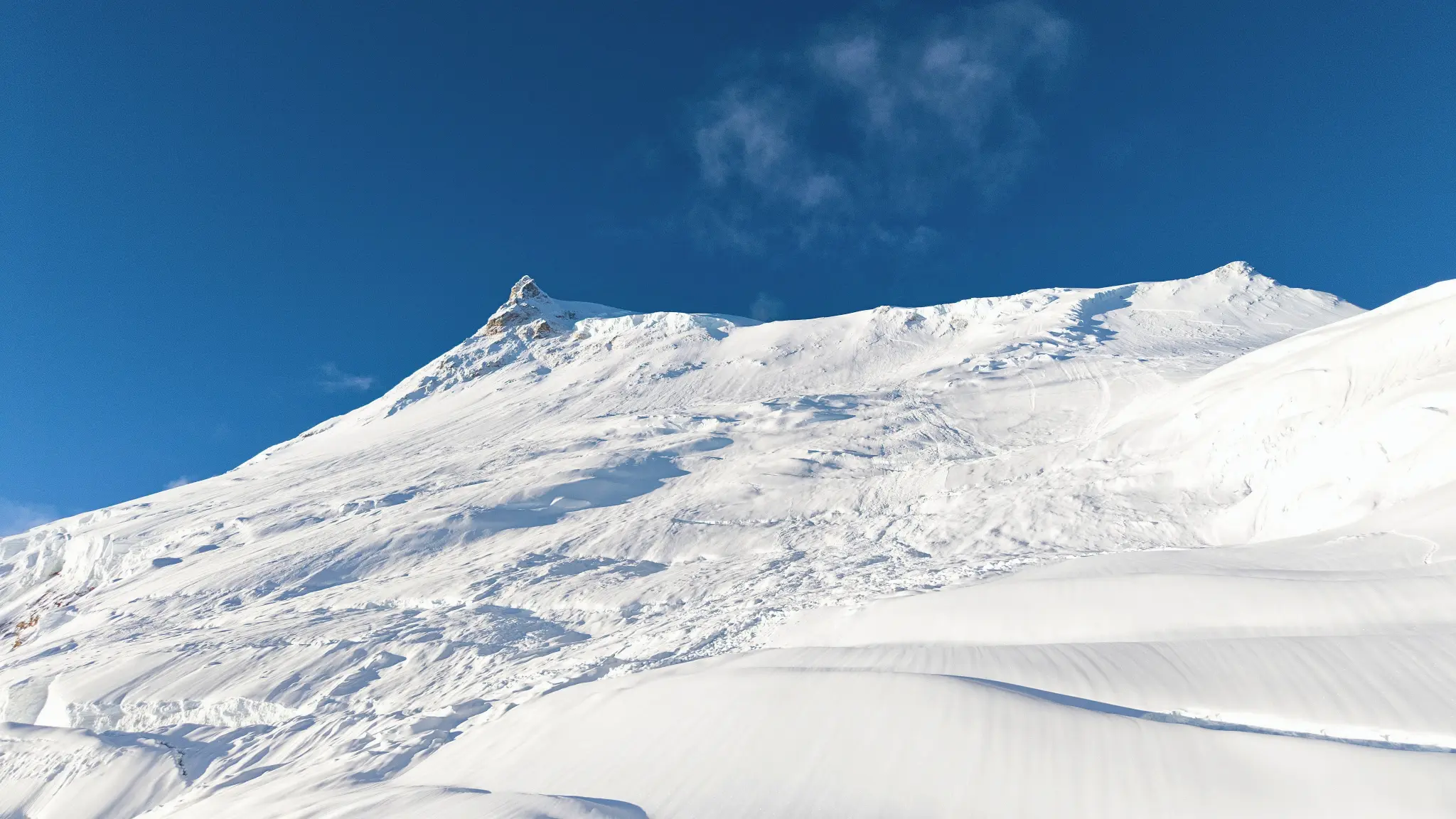
KYAJO RI EXPEDITION
Home / KYAJO RI EXPEDITION
hard

KYAJO RI EXPEDITION

duration icon
Duration
17 Days
altitude icon
Max Altitude
6,186m
group icon
Group Size
Max 2 - 4

Trip Summary

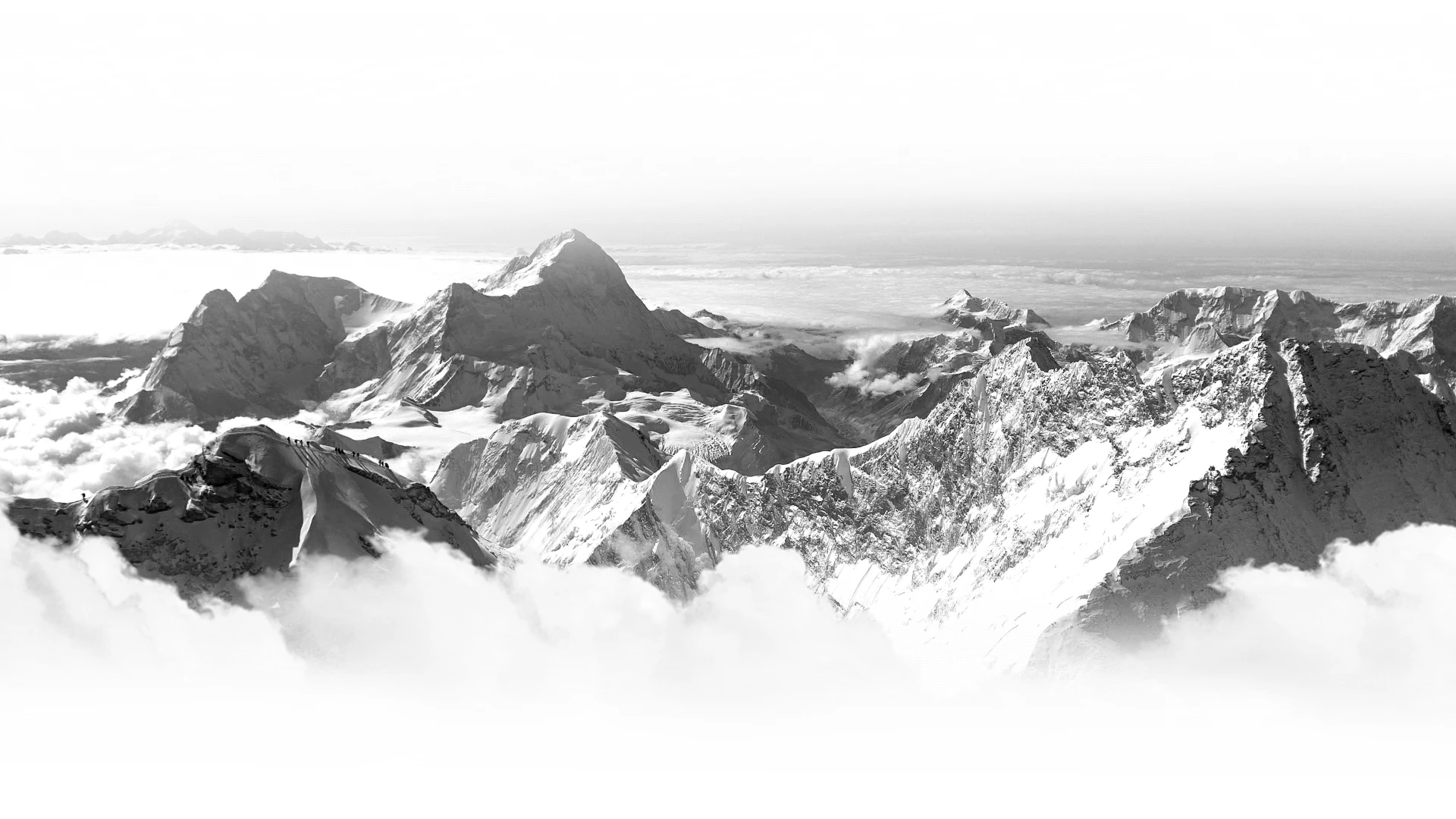
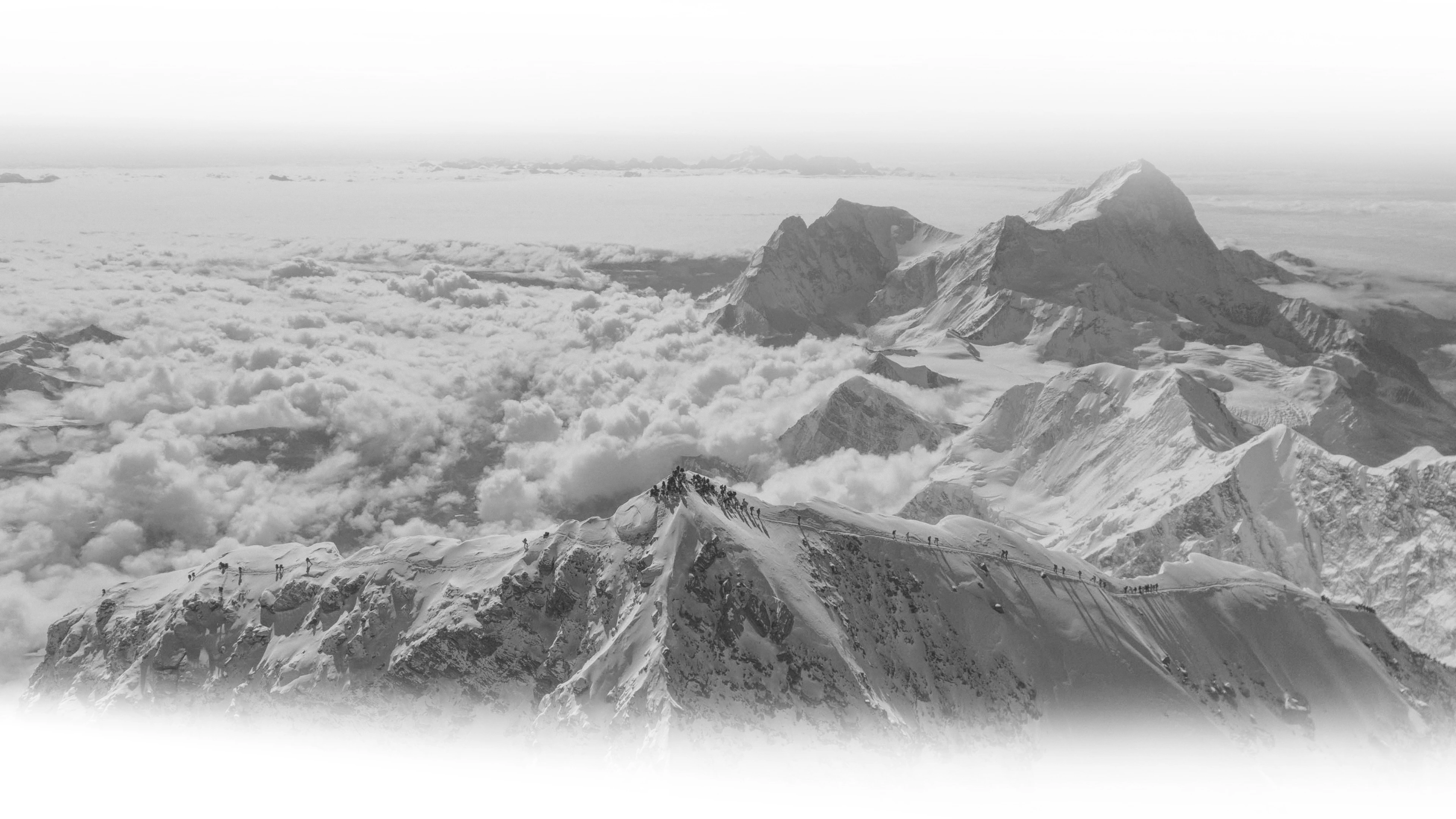
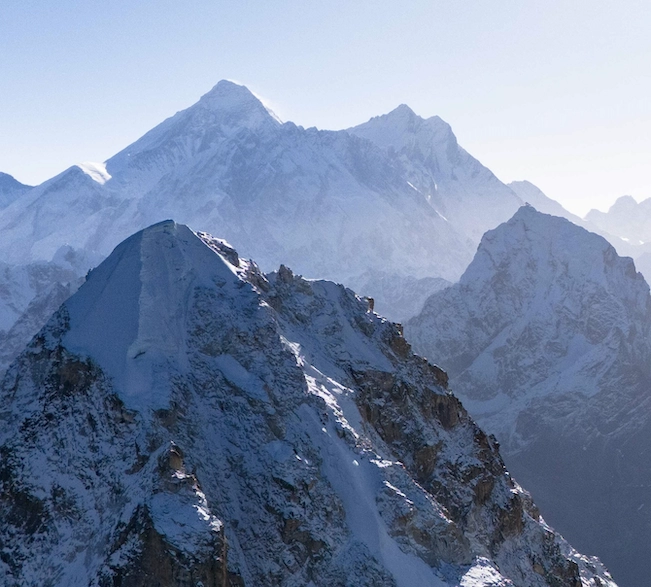
Kyajo Ri rises at the eastern edge of the Khumuche Himal, a chain of rocky summits that forms a dramatic backdrop above the Khumbu Valley. At 6,186 metres, it is a genuine high-altitude objective — tall enough to demand serious physiological preparation, technical enough to reward experienced climbers, and remote enough to offer the kind of solitude that has become rare in Nepal's busier climbing corridors.


The peak sits in a privileged position within Sagarmatha National Park, a UNESCO World Heritage Site. The approach travels through the Sherpa heartland — through Namche Bazaar, past ancient monasteries, and across high ridges with unobstructed views of the world's highest peaks. The journey to Base Camp is itself an experience worth undertaking.


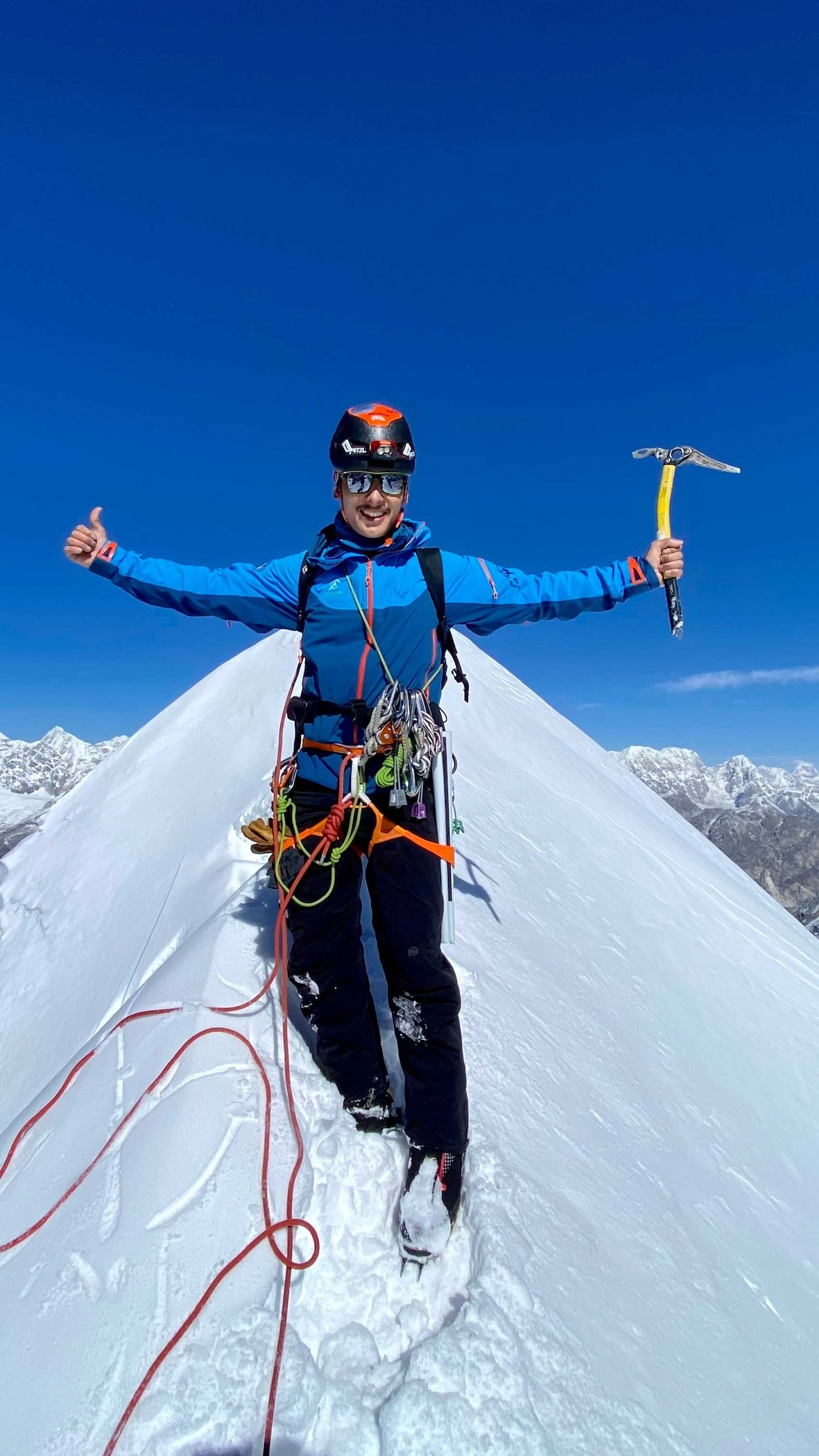
From Base Camp at 4,550m, the route gains elevation across rocky glacier terrain before the real technical climbing begins. Two high camps are established above Base Camp, with the final push departing from Camp 1 at 5,700m in the early pre-dawn hours. The summit rewards those who reach it with one of the most expansive panoramas in the entire Everest region.

Trip Overview

Duration
Duration
17 Days
Including travel days
Max altitude
Max Altitude
6,186m
Summit of KYAJO RI EXPEDITION
Difficulty
Best Season
Spring & Autumn
Ideal climbing window
Group size
Group Size
Max 2 - 4
Small team support
Region
Region
Everest Region
Expedition location
Overview
Overview
Expedition
High-altitude guided climb
Trip overview background

Trip Description

Kyajo Ri (6,186m) stands as one of the most compelling technical peaks in the Everest region — rarely crowded, genuinely challenging, and extraordinarily rewarding. Positioned between the Thame and Gokyo valleys, this peak offers a pure alpine experience that few mountains of its elevation can match.


Officially opened for climbing in 2002, Kyajo Ri remains among the least explored 6,000-metre summits in Nepal. The first ascent was completed that same year by British and French teams, and the mountain has since attracted climbers who value quality over crowds.


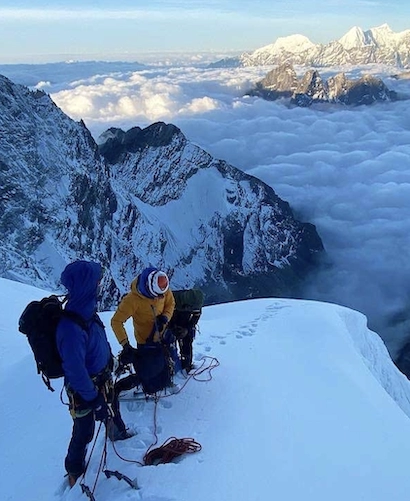
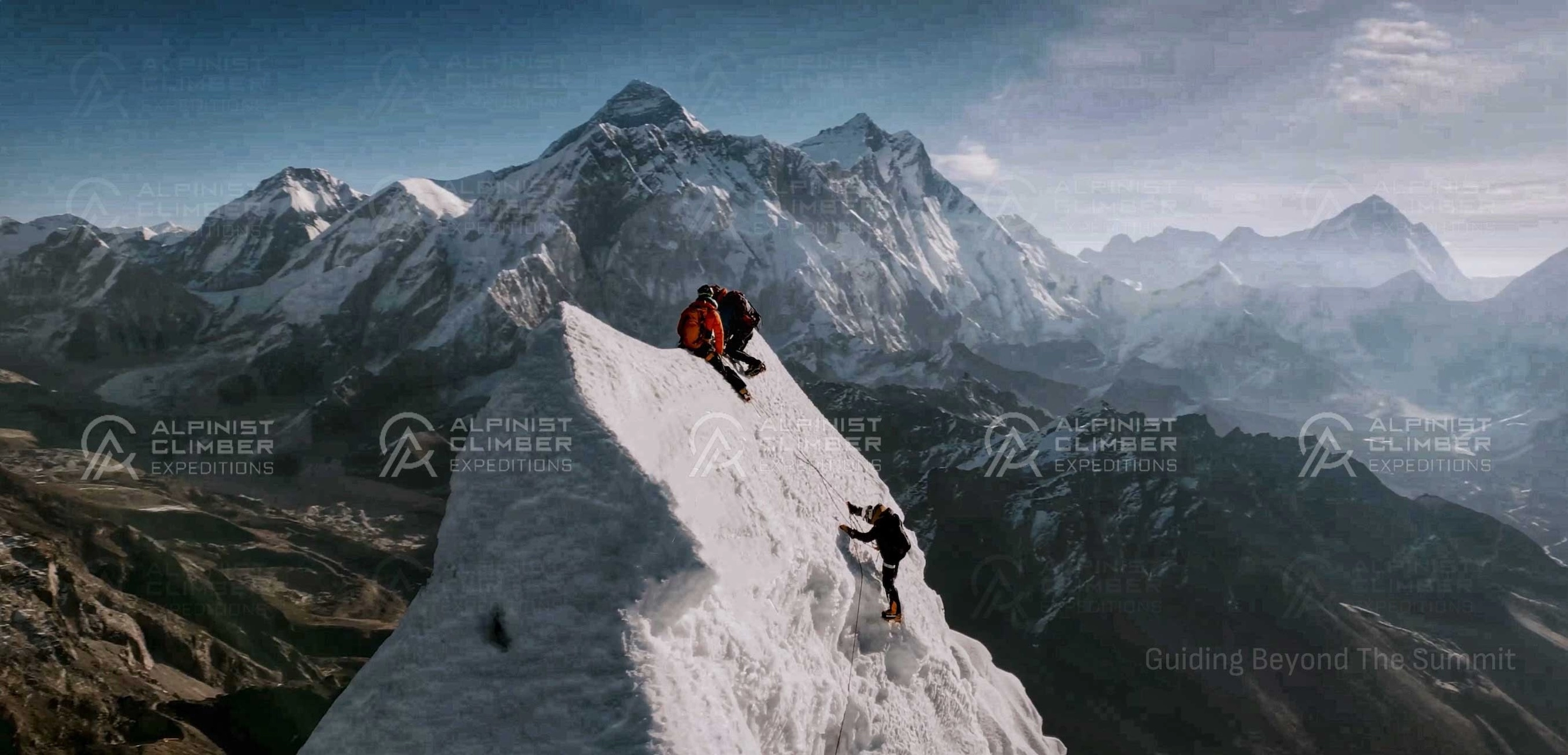
The standard route follows the Southwest Ridge — a classic alpine line that involves mixed terrain across rock, snow, and ice, including sections above 50 degrees. The Northeast Face and Southeast Ridge provide alternative lines for teams seeking greater challenge. Two high camps above Base Camp are established on the ascent, and the climb is structured around a disciplined acclimatization schedule to ensure both safety and summit performance.


Kyajo Ri is rated AD (Assez Difficile) on the alpine grading scale. This means the climb demands more than fitness alone — prior experience at altitude and a solid foundation in mountaineering technique are essential.


At Alpinist Climber Expeditions, every Kyajo Ri climb is guided by IFMGA-certified mountain professionals with deep firsthand knowledge of this peak and the broader Himalayan landscape. Our 100% summit success rate on Kyajo Ri reflects not only technical capability but a careful, methodical approach that never compromises on safety.


Expedition Highlights


  • One of the least-climbed 6,000m peaks in Nepal — uncrowded, authentic, and pristine

  • Technical mixed climbing on rock, snow, and ice with breathtaking Himalayan scenery

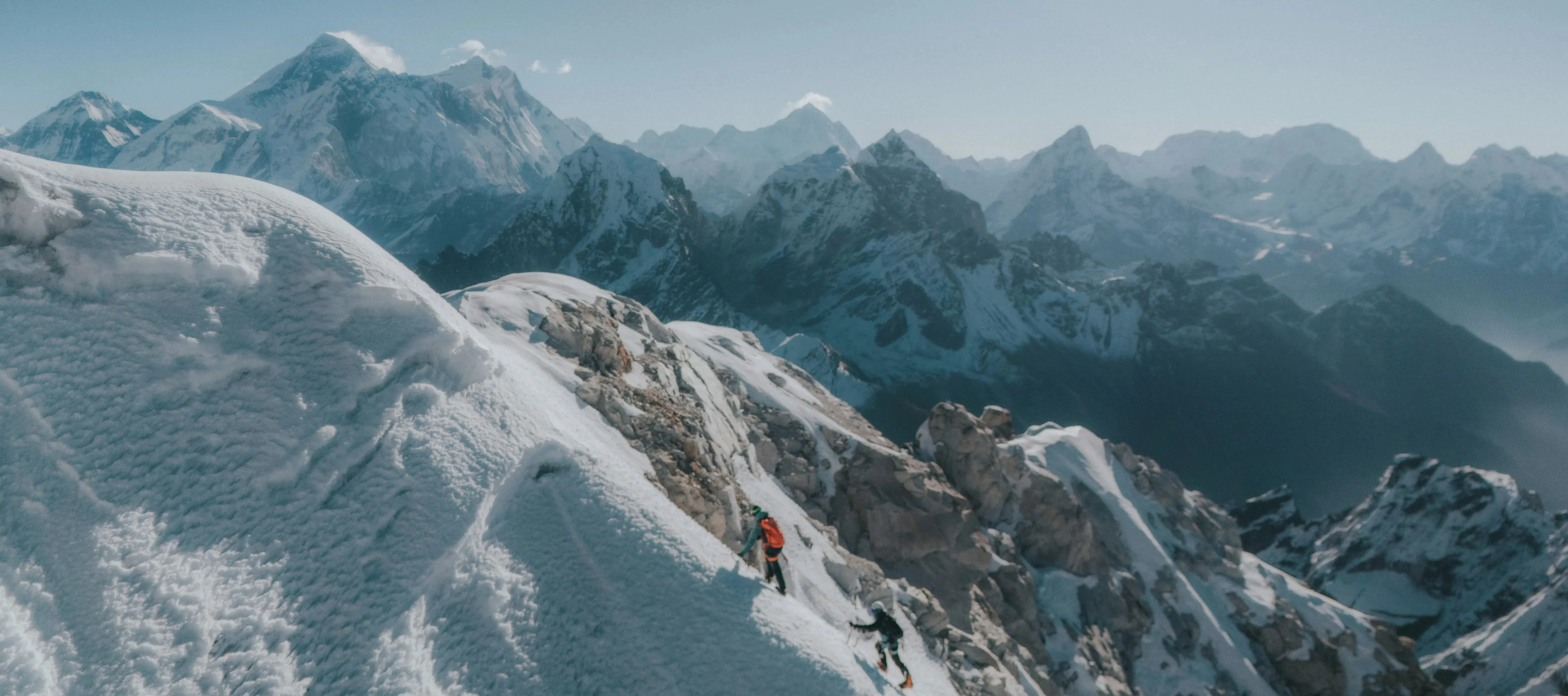
  • Panoramic summit views of Everest, Cho Oyu, Lhotse, Makalu, and surrounding peaks

  • Pure alpine-style ascent via the classic Southwest Ridge

  • Pre-summit climbing technique training conducted by IFMGA-certified guides

  • 100% summit success rate under Alpinist Climber Expeditions

  • Option for 1:1 private summit experience with IFMGA Guide Mr. Prakash Sherpa


Led by IFMGA-Certified Professionals


Every expedition organized by Alpinist Climber Expeditions is led by fully certified, experienced mountain professionals. Our guiding team holds IFMGA / UIAGM / IVBV certification — the highest internationally recognized standard in mountain guiding — along with training in Wilderness First Aid, Helicopter Rescue and Marshalling, Advanced Mountaineering, and High-Altitude Rescue.


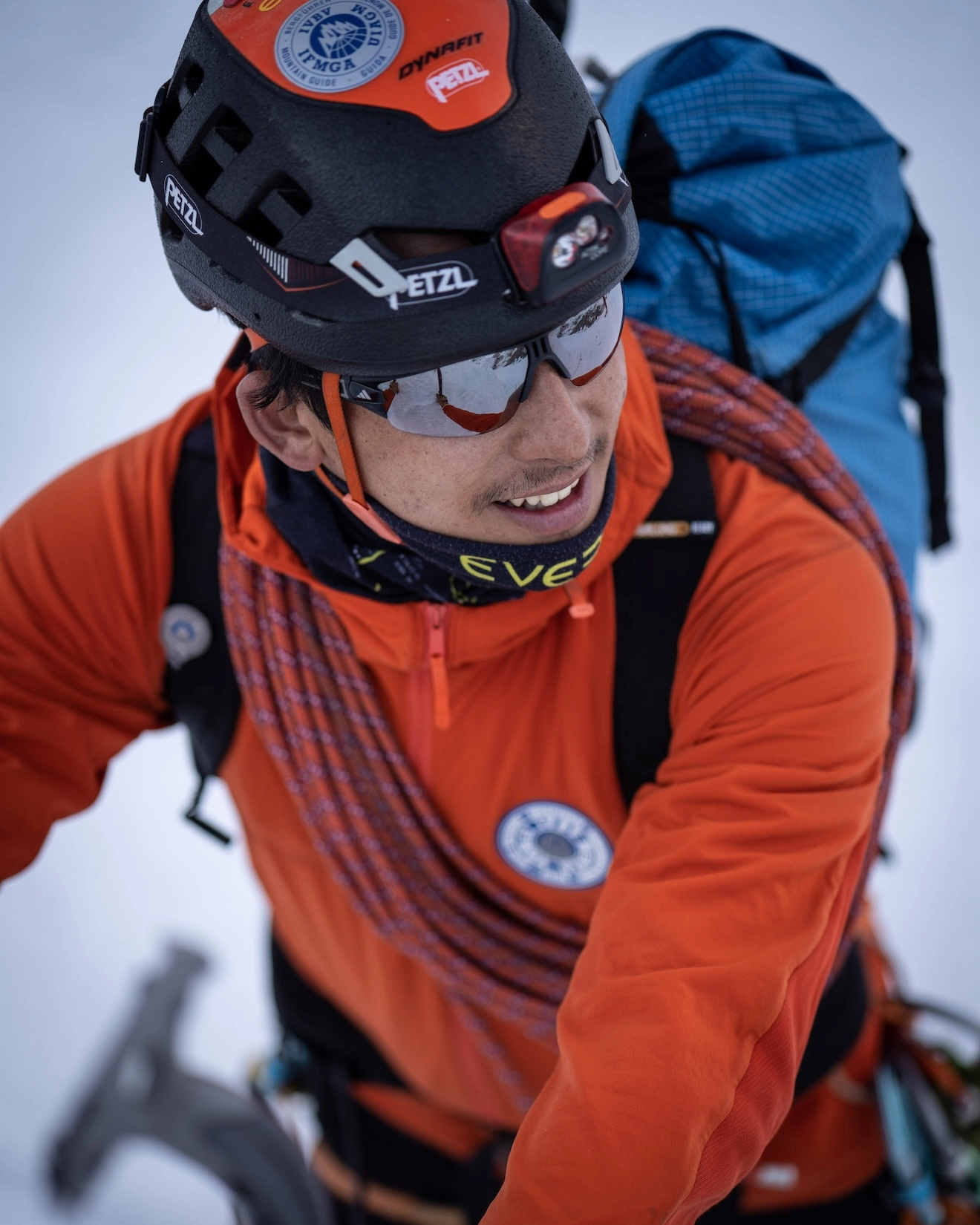
Mr. Prakash Sherpa, our lead IFMGA Mountain Guide, began his mountaineering career at the age of 15 and has accumulated over 15 years of professional high-altitude experience. He has completed ascents of multiple 8,000-metre peaks — including Everest, Lhotse, Makalu, Cho Oyu, Dhaulagiri, Manaslu, Nuptse, and Pumori — some achieved without supplemental oxygen. His additional training includes ski instruction certifications from Nepal, Switzerland, Chamonix, and Austria.


The premium 1:1 private option allows you to summit Kyajo Ri alongside Mr. Prakash Sherpa directly — an unmatched level of personal guidance, safety, and shared experience on the mountain.

Detailed Itinerary

Your expedition begins the moment you land. A representative from Alpinist Climber Expeditions will meet you at Tribhuvan International Airport and transfer you to your accommodation. Once settled, you will meet your expedition guide and fellow team members for an informal welcome. The evening is an opportunity to experience Kathmandu's warmth and cuisine before the journey ahead.

Hotel
Location icon 1,330m

The day begins with a full expedition briefing covering the route, safety protocols, equipment checks, and Ministry of Tourism formalities. The remainder of the day is spent exploring Kathmandu's UNESCO World Heritage Sites — ancient temples, monasteries, and cultural landmarks that offer a rich introduction to the country you are about to climb in.


  Duration     Distance     Elevation  
Full Day 5–10 km (city tour) Minimal
Hotel
Location icon 1,330m

An early-morning mountain flight to Lukla (2,840m) opens with sweeping aerial views of the Himalayan range as dawn light catches the high peaks. Upon landing, the team assembles for a final equipment review before the trail begins. The walk to Phakding follows the Dudh Koshi River valley through traditional Sherpa villages — a gentle introduction to the terrain ahead.


  Duration     Distance     Elevation  
35 min flight + 3–4 hrs trek Flight: ~138 km, Trek: ~8 km −250 m
Lodge
Location icon 2,610m

The trail today crosses two suspension bridges over the Dudh Koshi before climbing steeply through rhododendron forest and entering the Sagarmatha National Park checkpoint at Monjo. The ascent to Namche Bazaar is demanding but rewarding — the first proper views of Everest, Lhotse, and Ama Dablam greet you as you crest the final ridge into the Sherpa capital.


  Duration     Distance     Elevation  
6–7 hrs ~10 km +830 m (2,610 m → 3,440 m)
Lodge
Location icon 3,440m

Acclimatization is not a delay — it is a critical component of summit success. Today's hike to Khumjung (3,900m) helps your body begin adjusting to reduced oxygen levels while keeping exertion manageable. Khumjung is a traditional Sherpa village within the national park, offering a quiet and authentic glimpse into mountain life.


  Duration     Distance     Elevation  
3–5 hrs ~6 km +460 m (3,440 m → 3,900 m)
Lodge
Location icon 3,900m

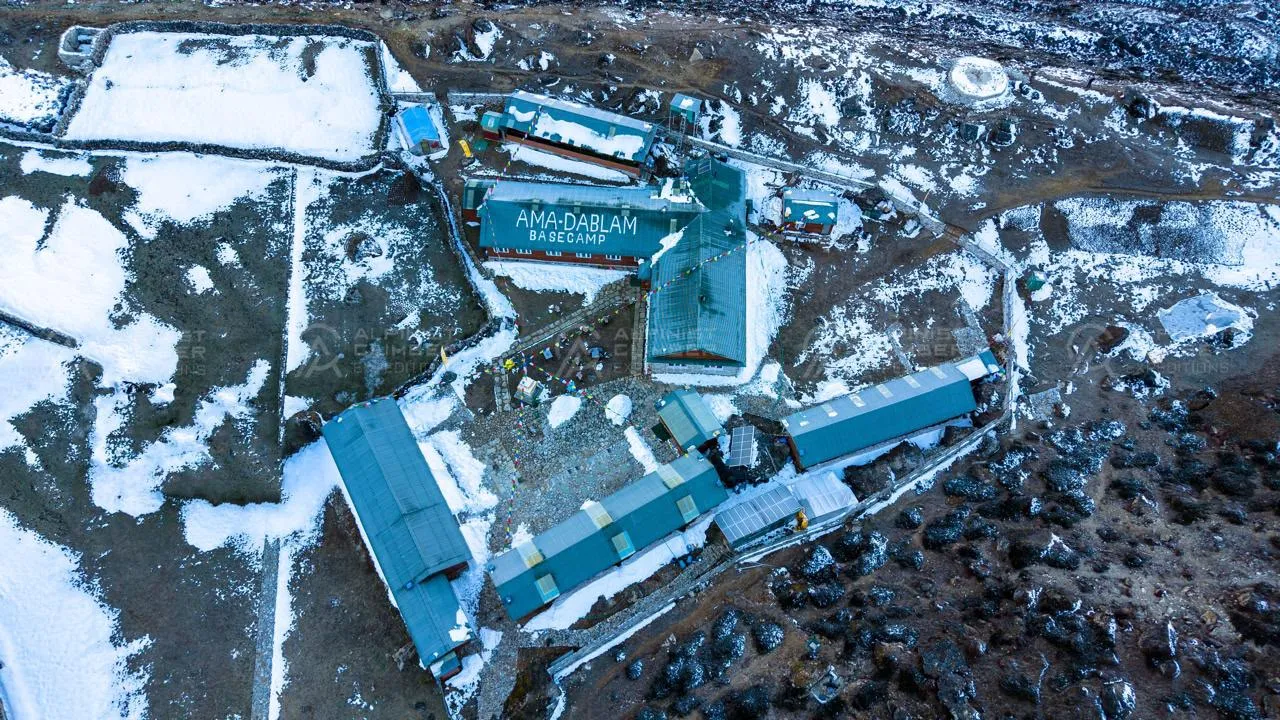
Departing Khumjung, the trail rises steeply toward the Khumuche Himal — the rocky ridge chain at whose eastern end Kyajo Ri stands. The ascent offers expanding views of Thamserku, Kusum Kangaru, Pacharmo, and numerous surrounding peaks. Base Camp is established on flat ground near a glacial stream, a functional and scenic home for the days ahead.


  Duration     Distance     Elevation  
5–7 hrs ~11 km +650 m (3,900 m → 4,550 m)
Camp
Location icon 4,550m

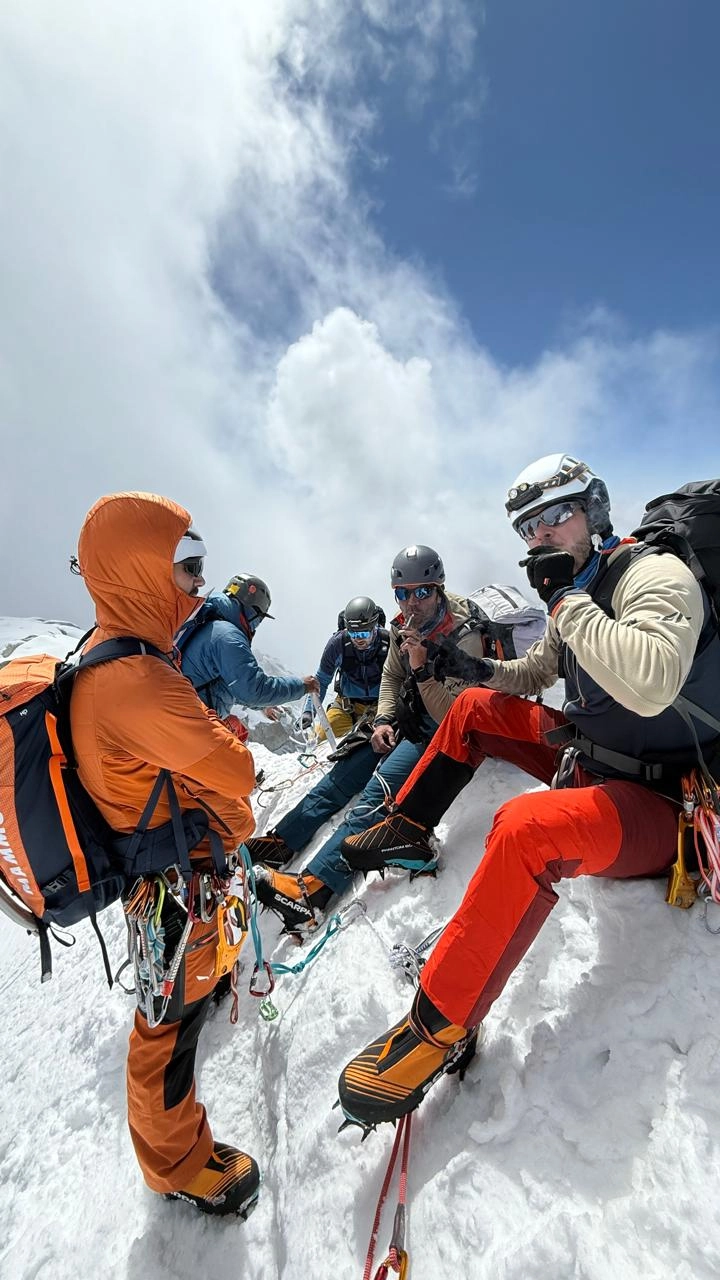
This day is devoted to both recovery and preparation. Your IFMGA guide will lead a structured training session covering essential climbing skills: rope management, ice axe use, crampon technique, and self-arrest procedure. This is not a formality — it is hands-on training that directly prepares you for the technical sections above.


  Duration     Distance     Elevation  
3–5 hrs 2–4 km +100–200 m (training around Base Camp)
Camp
Location icon 4,550m

After breakfast, the team moves upward through grassy terrain before transitioning to a rocky section across boulders and scree. High Camp at 5,300m provides a panoramic vista of the surrounding massif. Tents are pitched, a warm meal is prepared, and the team rests in preparation for the harder terrain above.


  Duration     Distance     Elevation  
5–7 hrs ~5 km +750 m (4,550 m → 5,300 m)
Camp
Location icon 5,300m

A deliberate rest day at altitude. Hydration, nutrition, and quality sleep are prioritized. Your body is making quiet physiological adjustments that will prove critical during the summit push. The guide monitors team condition throughout.


  Duration     Distance     Elevation  
Full Day 1–2 km Minimal (High Camp remains around 5,200–5,300 m)
Camp
Location icon 5,200m

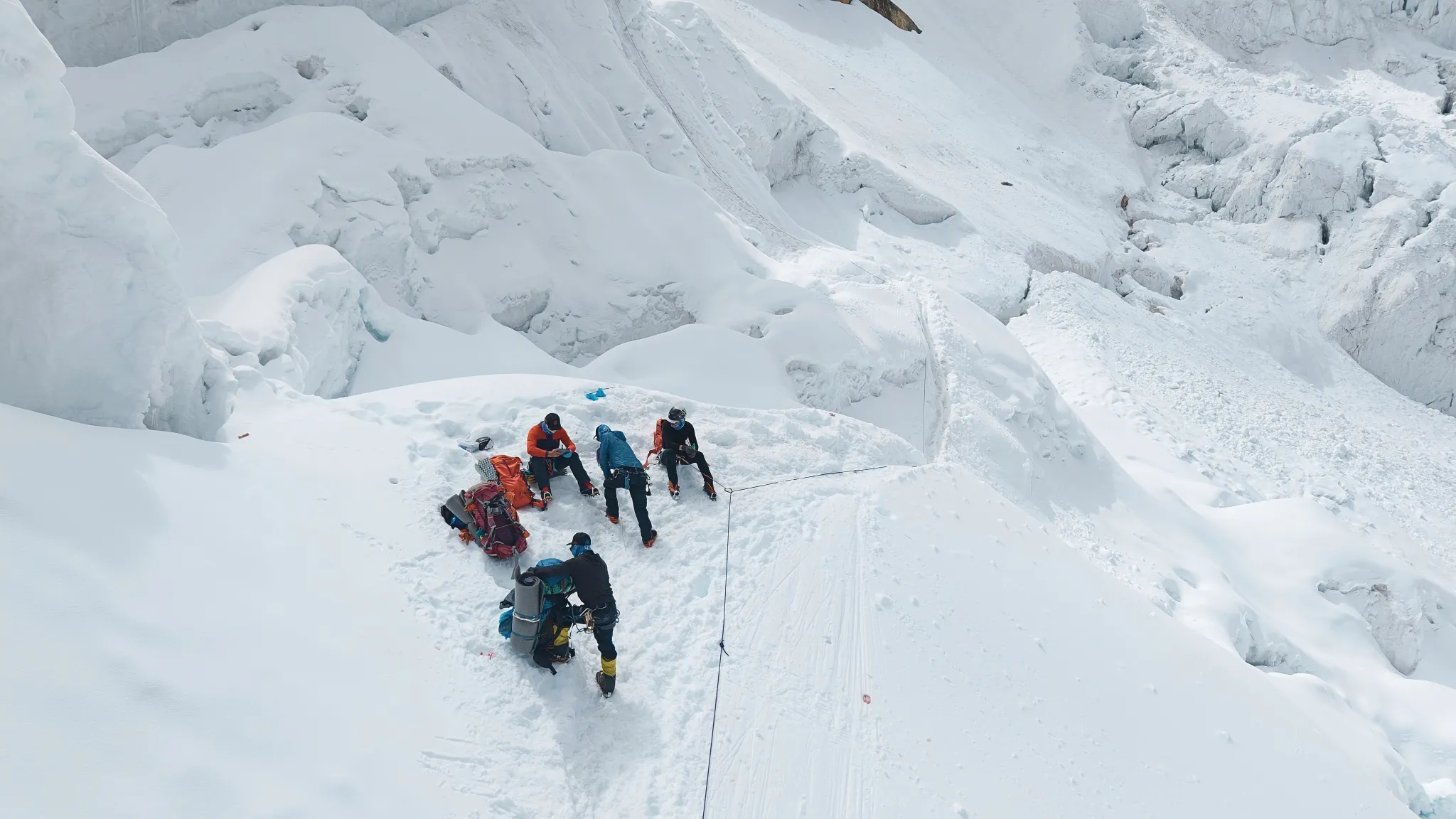
The route to Camp 1 crosses the Kyajo Ri Glacier, where terrain becomes slippery and increasingly technical. A 55-degree slope must be negotiated before reaching the col and the cleared area near the glacial lake where Camp 1 is established. This is the final camp before the summit — views from here are extraordinary.


  Duration     Distance     Elevation  
4–6 hrs ~3 km +400 m (5,300 m → 5,700 m)
Camp
Location icon 5,700m

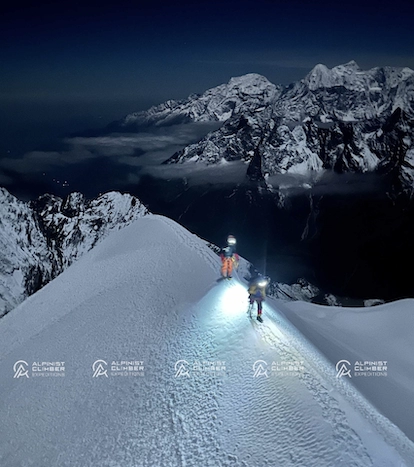
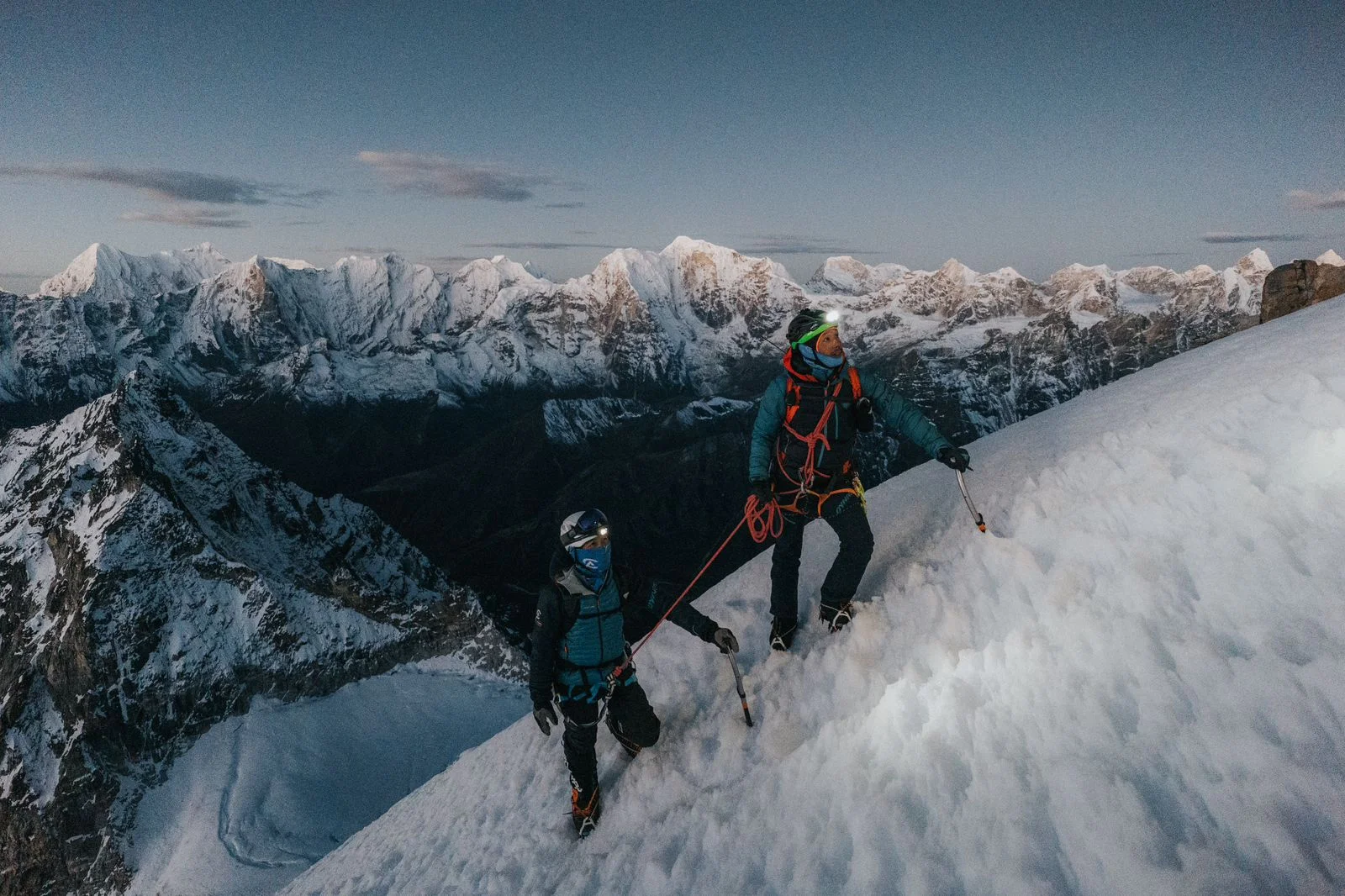
Summit day begins well before sunrise. Moving through the darkness with headlamps, the team traverses boulders and glacier to reach the Southwest Ridge. From here, the climb involves sustained mixed terrain — snow, ice, and short rock sections — leading to the summit of Kyajo Ri at 6,186 metres.


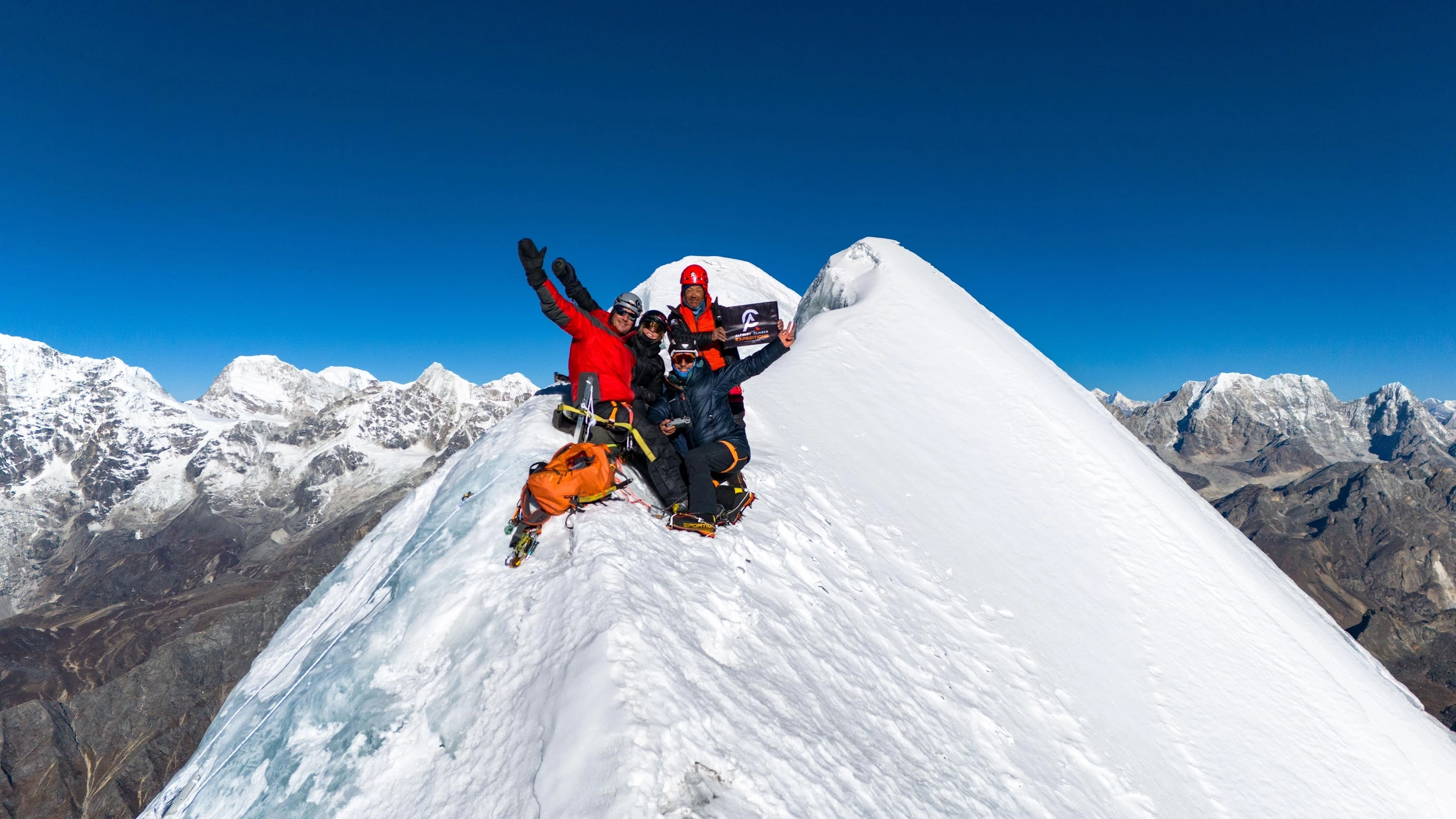
From the top, the panorama unfolds across the entire eastern Himalayan arc: Everest, Cho Oyu, Lhotse, Makalu, and dozens of lesser-known summits stretching to the horizon. The descent involves 15–20 full rope-length rappels back to Camp 1, where the team rests for the night.


  Duration     Distance     Elevation  
10–14 hrs ~6 km +486 m (5,700 m → 6,186 m, then descend back to Camp I)
Camp
Location icon 6,186m

A dedicated buffer day is built into every Kyajo Ri expedition. High-altitude weather is unpredictable, and this reserve day ensures that the team has flexibility if conditions require a delayed summit attempt or additional recovery time.


  Duration     Distance     Elevation  
Full Day Varies Varies
Camp
Location icon 5,700m

With the summit behind you, the descent to Base Camp is a chance to exhale. The trail reverses the ascent route and the team arrives at Base Camp for a final night in the mountains before the trek out begins.


  Duration     Distance     Elevation  
5–7 hrs ~8 km −1,150 m (5,700 m → 4,550 m)
Camp
Location icon 4,550m

The return journey through the Khumbu valley is familiar terrain seen with fresh eyes. The trail descends through Sherpa settlements and rhododendron forest before arriving back in Namche Bazaar for the night.


  Duration     Distance     Elevation  
5–6 hrs ~11 km −1,110 m (4,550 m → 3,440 m)
Lodge
Location icon 3,440m

Following the Dudh Koshi River downstream, crossing suspension bridges and passing through Phakding, the trail gradually eases toward Lukla. This final trekking day is a pleasant walk through scenery that feels different now — seen through the perspective of a completed expedition.


  Duration     Distance     Elevation  
6–7 hrs ~18 km −580 m (3,440 m → 2,860 m)
Lodge
Location icon 2,860m

An early morning flight returns the team to Kathmandu. The afternoon is free for rest, exploration, or shopping. In the evening, a farewell dinner is hosted to mark the successful completion of the expedition.


  Duration     Distance     Elevation  
35 min flight ~138 km (air) −1,530 m (2,860 m → 1,330 m)
Hotel
Location icon 1,330m

Your Kyajo Ri expedition concludes. A private transfer to the airport is arranged, and the team departs with the summit in memory and the experience fully absorbed. We hope this is not the last time you climb with us.

Why ACE?

Alpinist Climber Expeditions was built around a principle that has guided every climb we have organized — that the quality of the experience on a mountain is directly tied to the quality and depth of experience of the people leading it. What sets Alpinist Climber Expeditions apart is something that cannot be manufactured or replicated — it comes from decades spent on these mountains, from the culture that formed us, and from a deeply held belief that every climb deserves to be done properly.


We are a team of professional Sherpas. Not guides who have visited the Himalaya — guides who grew up here, who know these peaks in every season, and who have spent careers developing the technical skills and mountain judgment required to lead expeditions safely and successfully.


Our team holds IFMGA / UIAGM certification — the highest international standard in professional mountain guiding — alongside Advanced Mountaineering, Wilderness First Aid, Helicopter Rescue, and High-Altitude Rescue qualifications. Our lead guide has summited multiple 8,000-metre peaks, including ascents without supplemental oxygen. This is not a credential on paper. It is a lived capability that directly protects every climber who climbs with us.


We offer two expedition structures: a standard option with small-group expedition, and a premium option with 1:1 guide-to-client ratio. Both are built on the same standard of safety, preparation, and professionalism.The standard option maintains a minimum 1:3 guide-to-client ratio with a dedicated IFMGA lead guide and Sherpa support on every climb. Our premium 1:1 private option places you on the mountain directly alongside IFMGA Guide Mr. Prakash Sherpa.


We do not run high-volume operations as our clients are not bookings. They are climbers who have chosen to trust us with something significant and we take that trust seriously on every single expedition. We do not cut corners on acclimatization, staffing ratios, or safety equipment. We organize expeditions the way they should be organized — with patience, precision, and the kind of local knowledge that only comes from growing up in these mountains and spending a career on them.


The Team

Expedition Guides

Every guide on our team has been selected for their technical ability, high-altitude experience, and personal commitment to the safety and success of every climber they lead. All guides carry extensive experience at altitude and hold a proven record of safety, summit success, and strong compatibility with international clients.

The number of guides assigned to each expedition is determined by the size of the climbing team. Our standard guide-to-member ratio is 1:3, ensuring that every climber receives consistent, attentive support throughout the approach, the acclimatization phase, and the technical climb itself.


Climbing Sherpa Support

A dedicated team of experienced Climbing Sherpas supports every expedition with load carrying on the mountain, route preparation, and high camp management. On summit day, we maintain a 1:1 Sherpa-to-climber ratio — a commitment that reflects our belief that the summit push is where support matters most.

Our Climbing Sherpas are not simply load carriers. They are experienced high-altitude professionals who understand the mountain, the route, and the demands of summit day. Their presence alongside every climber on the final push is a core part of how we manage safety and success on the upper mountain.


What to Expect from Our Team

  • Technically qualified, IFMGA-certified lead guidance on every expedition
  • A standard guide-to-member ratio of 1:3 — adjusted based on team size and peak requirements
  • 1:1 Climbing Sherpa support on summit day for every team member
  • Guides who are experienced, companionable, and genuinely invested in your success
  • Full medical kit, satellite communication, and emergency response capability carried by the team at all times
  • A premium 1:1 private option available — summit alongside Mr. Prakash Sherpa directly


Trip Notes

Quick facts: 6,186m | Khumbu region, between the Thame and Gokyo valleys | Best season: autumn (Oct–Nov) | Technical peak, opened for climbing in 2002


Overview


Kyajo Ri is one of the least-explored summits in the Khumbu, sitting on the same ridge system that runs north of Namche Bazaar towards Cho Oyu. Because it was only opened to climbers in 2002 and lies slightly off the main Everest trail, it offers a quieter, more adventurous alternative to the region’s busier peaks while still delivering a genuine high-altitude mountaineering experience.


Route & Character


The approach winds through the Gokyo Valley to a base camp at around 4,550m, with two further camps established above it before the summit push. The climb itself is a serious mix of snow, ice, and rock: a grassy spur and boulder field lead to Camp 1, after which the route steepens into mixed faces of up to 55° and a glacier crossing before Camp 2. The final push to the 6,186m summit follows a glacial ridge with mixed rock and ice pitches up to 60°, making this a true technical climb rather than a straightforward trekking peak.


Key Risks & Why They Matter


Technical climbing terrain: The Southwest Ridge route involves steep mixed ground (rock, snow, and ice up to 60°), so a fall or misstep on unroped sections can have serious consequences — climbers need prior experience moving on this kind of terrain, not just fitness.

Glacier and crevasse hazards: The route crosses glaciated ground between camps, where hidden crevasses can open beneath snow bridges; this is why climbers move roped together and follow the guide’s exact line rather than choosing their own path.

Altitude-related illness: Spending multiple nights above 5,300m without full acclimatisation can trigger headaches, nausea, or more serious altitude sickness; the multi-camp structure exists specifically to let the body adjust gradually before the final summit attempt.

Sudden weather shifts: Because the upper mountain has little shelter, an incoming storm or whiteout can strand climbers on exposed ridgelines; this is why summit attempts depend on a stable weather window rather than a fixed calendar date.


Note: All ACE expeditions are subject to the unpredictable conditions of the Himalaya. Weather at altitude can change within hours, and your safety always takes priority over the fixed schedule — if trails become unsafe, snow conditions deteriorate, or flights to remote airstrips are delayed by poor visibility or wind, we will adjust the itinerary, reroute, or arrange alternative transport as needed. These changes are made solely to protect you, and our guides will ensure the spirit and quality of your expedition is never compromised. ACE is not liable for costs arising from missed international flights due to such delays, so we strongly recommend comprehensive travel insurance covering trip interruption, flight disruption, and emergency evacuation before you travel.

Equipment List

The following list covers the essential gear for a Kyajo Ri expedition. Personal clothing and climbing equipment are not included in the package price and should be sourced and tested prior to departure.


Headwear

  • Sun hat or lightweight cap

  • Warm fleece or wool hat

  • UV-protective sunglasses (category 4 recommended)

  • Buff / thin face mask


Handwear

  • Lightweight fleece or wool inner gloves

  • Gore-Tex outer mitten gloves


Clothing — Upper & Lower Body

  • Gore-Tex waterproof jacket

  • Gore-Tex waterproof trousers

  • Hiking trousers

  • Fleece jacket or warm mid-layer — should be slim enough to layer under Gore-Tex

  • Moisture-wicking base layer top

  • Thermal base layer trousers

  • Down jacket with hood


Footwear

  • Trekking boots (well broken-in)

  • Double-insulated alpine boots

  • Crampons (compatible with alpine boots)

  • Snow gaiters

  • Trekking socks (4–5 pairs)

  • Camp sandals or light slippers


Technical Climbing Equipment

  • Ice axe

  • Harness

  • Carabiners and belay device

  • Ascender (jumar)

  • Helmet


Camping & Trekking Essentials

  • Sleeping bag rated to at least -20°C

  • 45-litre rucksack with rain cover

  • Large duffle bag with padlock (for porter loads)

  • Headlamp with spare batteries

  • 1-litre water bottles (x2)

  • Thermos flask

  • Trekking poles

  • First aid kit


Hygiene & Sun Protection

  • Waterproof wash bag

  • Medium towel

  • Toiletries — soap, toothbrush, toothpaste

  • Sunscreen SPF 50+ (including lip balm with sun protection)

  • Hand sanitizer and handwash

  • Toilet paper and wet wipes

Upcoming Departure Dates

Background
October 15 - 4 November, 2026
Standard Package
Includes background

Includes & Excludes

Included
  • Kyajo Ri peak climbing permit (royalty fee)
  • Sagarmatha National Park entry permit
  • TIMS (Trekkers' Information Management System) card
  • Garbage disposal and environmental management fees
  • All government taxes, VAT, and official tourism service charges
  • IFMGA-certified lead mountain guide — full wages and comprehensive insurance
  • Experienced Sherpa high-altitude support — full wages and insurance
  • Porters for trekking and expedition gear at a 1:1 member-to-porter ratio
  • All staff accommodation, equipment, wages, insurance, and medical provisions
  • 4-star hotel accommodation in Kathmandu with daily breakfast (3 nights)
  • Full-board lodge accommodation throughout the trekking approach and descent
  • High-altitude camp food for all members and guides during the climbing phase
  • Round-trip Kathmandu to Lukla mountain flight
  • Private vehicle airport pick-up and drop-off in Kathmandu
  • Single private dome tent at Base Camp with hot shower facility
  • Shared tents at Camp 1 between members and guides
  • Medical kit carried throughout the expedition
  • Satellite phone for emergency communication
  • Alpinist Climber Expeditions branded duffle bag, cap, and T-shirt per member
Not Included
  • × International airfare (to and from Kathmandu)
  • × Nepal entry visa fees
  • × Meals in Kathmandu (lunch and dinner)
  • × Alcoholic and soft beverages
  • × Internet and WiFi access
  • × Personal clothing and climbing equipment
  • × Personal first aid kit
  • × Drone permit fees (if applicable)
  • × Personal travel, medical, and emergency rescue insurance
  • × Gratuities for guides, Sherpa staff, Base Camp crew, and porters

1:1 Experience with Your Lead Guide

Lead Guide

Prakash Sherpa

Founder & IFMGA Mountain Guide

Our lead guide Prakash Sherpa oversees expedition strategy, pacing, and on-mountain decision-making so your climb is supported from preparation through summit push.

You get direct access to experienced guidance, real-time judgement in changing conditions, and a more focused expedition experience built around safety, clarity, and strong leadership.

Certification
IFMGA / UIAGM / IVBV

Package Options

Standard

An expertly guided group expedition offering an affordable, memorable way to attempt stunning peaks alongside fellow adventurers.

Starting From
€ 6,600
per person
  • → Group Expedition
  • → 1:1 Climbing Sherpa Guide
  • → Well-Planned Itinerary
  • → Fixed Group Schedule
  • → Minimum 3 Participants
  • → Professionally Guided
  • → Excellent Value
  • → Best for Budget-conscious Adventurers
Book Standard
Premium

A fully personalized, private expedition with 1:1 IFMGA guiding — designed around your goals, pace, and schedule for an exclusive mountain experience.

Starting From
€ 9,900
per person
  • → Private Expedition
  • → 1:1 Private IFMGA Mountain Guide
  • → Fully Tailored Itinerary
  • → Flexible Scheduling
  • → Premium Value
  • → Heli flights IN / OUT
  • → Premium, Personalised Experience
  • → Best for Adventurers Seeking a Personalized, Exclusive Experience
Book Premium

FAQs

Kyajo Ri is rated AD (Assez Difficile) on the international alpine grading scale — a genuine technical challenge that requires prior mountaineering experience. The route involves steep mixed terrain including rock, snow, and ice sections exceeding 50 degrees, glacier travel, and multi-pitch rappels on descent. It is not suitable for first-time climbers, but it is well within reach for those with solid prior experience at altitude. Our guides provide hands-on technical training at Base Camp before the ascent begins.

Summit
Elevation
N
ACE
Guiding Beyond The Summit
Client Stories

From the Summit

Daniel Puttkemery
Daniel Puttkemery
Kyajo Ri Expedition
5/5 Rating

Prakash and his team are a couple of notches above totally professional! Everyone in the Alpinist Climber Expeditions family goes out of their way to provide the best possible experience. Superb core values and safety principles. I had the good fortune of climbing Kyajo Ri with Alpinist Climber Expeditions and I can not say enough positive things. All gear is first rate, exceptional food and beautiful base camp in particular. I have climbed with a few different outfits in the past, now I need look no further, whenever I’m in the Himalaya. I will only climb with Alpinist Climber Expeditions. It sounds cliche but they very much made me feel like family. Top marks to a top outfit!

Verified Client Story
Luca Smargiasso
Luca Smargiasso
Ama Dablam 6,812m
5/5 Rating

I have been climbing for 15 years, over 4 continents. This was my 3rd trip to Nepal. And this was undoubtedly one of the Best-organised expeditions have participated in. Cannot thank Prakash and his Team enough. The attention to detail both in terms of equipment, climbing conditions, and accommodation/food was outstanding. And despite having limited exposure to high altitude alpine style climbing, always felt comfortable in the climbs and approach. I put this down to Prakash and his experience as well as the unique approach to team size. The small team ensures that a more flexible and sensible approach is applied to all technical aspects of the climb-including importantly how you physically feel and acclimatise. I needed to spend 5 days at Namche due to a sinus infection, and never felt that this jeopardised the rest of my climb. The same goes for weather delays. I eventually overran the climbing calendar by 5 days without a single complaint from Prakash and his team. You feel like a climbing partner rather than a paying client. My only regret is that Alpinist Climber Expeditions does not have a more international footprint as would have liked to climb with Prakash and his Team internationally as well as in Nepal.

Verified Client Story
Andy Tronsberg
Andy Tronsberg
Kyajo Ri & Island Peak
5/5 Rating
“Perfect organised and guided expedition I ever took part! We climbed island peak and kyajo ri alpine style! Safety is always first, all team members are super kind and professional and also laughing comes not to short! Thanks for this unforgettable experience!! Andreas.

Verified Client Story
Rogier Keulen
Rogier Keulen
Mt. Kyajo Ri & Mt. Cholatse
5/5 Rating
“With IFMGA guide Prakash we climbed Kyajo Ri and Cholatse. Our expedition couldn't have been any better! We had a lot of fun and summiting stunning Cholatse is the most intense thing I've done. We did it alpine style, so without fixed ropes from bottom to top. Safety was a priority - Prakash summited Everest 3 times and is always in control - and we had a very strong drive to reach the summit - which we did!”
Verified Client Story
Ludwig Beer
Ludwig Beer
Baruntse 7,162m + Mera Peak 6,476m
5/5 Rating
“Vielen Dank lieber Pemba für die tolle Zeit. Deine Professionalität und stete Fürsorge waren allgegenwärtig. Die gute Planung, der Ablauf und die gute Stimmung waren großartig. Mit Dir und Deinem Team fühlt man sich wohl am Berg. Dadurch ist der Erfolg gesichert!”
Verified Client Story
Christiaan Jong
Christiaan Jong
Mt. Kyajo Ri & Mt. Cholatse
5/5 Rating
“The Kyajo Ri and Cholatse climbing expedition I did with Alpinist Climber Expeditions was great! Our guide Prakash is a very strong and professional guide.
We share our values regarding alpine-style climbing and succeeded on both summits in a very safe manner.
Apart from the climbing, the whole team was super supportive, helpful, and friendly. Nothing was too much to ask.
For future expeditions or other endeavors in the mountains, I would definitely reach out to Alpinist Climber Expeditions again.”
Verified Client Story
Expedition Journal

Dispatches from the Mountains

All Articles
Chhuama IV First Ascent Report 2026
Expedition Report

Chhuama IV First Ascent Report 2026

  In July 2026, a team from Alpinist Climber Expeditions climbed Chhuama IV, a 6,179-metre peak in the Mustang region of Nepal that no one had ever summited before. On 16 July, IFMGA Mountain Guide and Dynafit athlete Prakash Sherpa reached the top at 3:21 PM Nepal time, after teammate Barnaby Francis turned back roughly 250 metres from the summit because of dangerous rockfall. Six earlier permit teams had tried and failed to climb Chhuama IV. This was the seventh attempt, and it succeeded — making it the first recorded ascent of the mountain. This is the story of that expedition: how the team got to the mountain, what the route was actually like, and what happened during the final push to the summit.   About Alpinist Climber Expeditions Alpinist Climber Expeditions is a Nepal-based expedition company that has been running alpine-style expeditions in the Himalayan ranges of Nepal since 2021. The Chhuama IV climb fits the kind of objective the company tends to take on: a lesser-known peak, a small team, and a route that hadn't been fully worked out by anyone before them. Alpine-style climbing generally means moving with a small team and minimal fixed infrastructure on the mountain, relying on judgment and route-finding rather than large-scale siege tactics — and that approach mattered on Chhuama IV, where conditions changed quickly and decisions had to be made on the spot.   The Peak and Why This Expedition  Was Different Chhuama IV sits in the Mustang region of Nepal and stands 6,179 metres high. Before this expedition, six other permit teams had attempted the mountain. None of them reached the top. That history says something about the peak — this wasn't a case of nobody having tried. Climbers had gone up before, assessed the conditions, and turned back. Alpinist Climber Expeditions' team was the seventh group to hold a permit for Chhuama IV. Reaching the summit meant succeeding where six previous attempts hadn't, on a mountain with no established route and no prior summit to reference for conditions, timing, or line of ascent.   Preparing for the Expedition and the Approach  to Base Camp The trip began on 9 July 2026 with a drive from Kathmandu to Pokhara, followed the next day by the long drive from Pokhara to Jomsom. On 11 July, the team continued by road from Jomsom to Lo Manthang, the historic walled town in Upper Mustang. The team spent 12 July acclimatizing in Lo Manthang before moving on. On 13 July they drove from Lo Manthang to Nymdo, and on 14 July they trekked from Nymdo to Base Camp. The following day, 15 July, they moved up from Base Camp to Lower High Camp — the last stop before the summit attempt. This slower, staged approach — drive, acclimatize, drive again, then trek up in stages to Base Camp and Lower High Camp — gave the team time to adjust to altitude before the technical climbing began.   Climbing Conditions on Chhuama IV Once the team got onto the mountain itself, the terrain turned out to be the main obstacle. The route up Chhuama IV involved long stretches of loose, unstable rock, slopes that could shift underfoot, and frequent rockfall. In the upper sections, there were only limited safe options for where to actually put a route, which meant the team had to keep reassessing the terrain as they climbed rather than following a fixed line. Weather added another layer of difficulty. Conditions changed often during the expedition, and on the day chosen for the summit push, the team had only a short window of favourable weather to work with. That combination — unstable ground below and a narrow weather window above — shaped almost every decision made on summit day.   The Summit Push : 16 July 2026 The team began its summit push from Lower High Camp on 16 July 2026. From early on, the upper mountain was hazardous. Rockfall was continuous, and the loose terrain meant every section had to be evaluated as they went, not assumed safe because it had been climbed before. Barnaby Francis climbed with the team through this section but made the decision to turn back approximately 250 metres below the summit. The reason was straightforward: the rockfall and the state of the terrain above made continuing unsafe. It was a judgment call made in the moment, based on what was actually happening on the mountain rather than on how close the summit looked. From that point, IFMGA Mountain Guide Prakash Sherpa continued alone. He worked through the difficult, unstable upper section and kept going where the conditions had stopped his teammate. This wasn't a case of pushing through recklessly — it reflects the kind of terrain assessment that comes with IFMGA-level guiding experience, where the decision to continue or turn back is made section by section.   Reaching the Summit Prakash Sherpa reached the summit of Chhuama IV, at 6,179 metres, at 3:21 PM Nepal Local Time on 16 July 2026. With six previous permit teams having failed to summit the mountain, this made Alpinist Climber Expeditions' team the first to do so. The expedition is recorded by the team as the first recorded ascent of Chhuama IV — a first ascent of a Nepal peak that had resisted six prior attempts before this one succeeded. After the summit, the team descended back toward Lower High Camp on the same day.     The Team's Experience  and the Way Down The climbing team for this expedition was small: Barnaby Francis from the United Kingdom, IFMGA Mountain Guide Prakash Sherpa, and Ngima Tashi Sherpa as supporter. On a mountain with unstable rock and shifting weather, decisions had to be made quickly and by people who knew the terrain — which is part of why Barnaby Francis's decision to turn back, and Prakash Sherpa's decision to continue, both mattered as much as the summit itself. The descent and return followed a similarly staged plan to the approach. On 17 July, the team trekked roughly 2.5 hours down from Lower High Camp before driving on to Pokhara. On 18 July, they completed the trip with the drive from Pokhara back to Kathmandu.   What Made This First Ascent  Significant Chhuama IV wasn't an easy objective, and it wasn't an obscure line that simply hadn't attracted attention. Six permit teams before Alpinist Climber Expeditions had tried to climb it and hadn't succeeded, which points to real difficulty rather than a lack of interest. The loose rock, the rockfall, and the narrow weather windows on summit day were the actual obstacles that had stopped previous attempts — and they were still present for this expedition. What changed the outcome wasn't a shortcut around those conditions. Barnaby Francis's decision to turn back 250 metres from the top, made because the risk was too high, and Prakash Sherpa's decision to continue where conditions allowed it, together produced the first known summit of the mountain. Both decisions came from reading the same terrain and weather correctly.   Conclusion The Chhuama IV expedition, carried out by Alpinist Climber Expeditions in July 2026, resulted in the first recorded ascent of Chhuama IV 6,179-metre peak in Nepal's Mustang region — a mountain that had already turned back six permit teams before this one. On 16 July 2026, after Barnaby Francis turned back roughly 250 metres below the summit due to rockfall and unstable terrain, IFMGA Mountain Guide Prakash Sherpa continued and reached the top at 3:21 PM Nepal time. It wasn't a straightforward climb, and the notes from the expedition don't describe it as one. Loose rock, frequent rockfall, and a narrow weather window shaped nearly every part of the summit day. Given that history, reaching the summit of Chhuama IV for the first time is a meaningful outcome — one built on careful, terrain-by-terrain decision-making rather than a single dramatic push to the top.     #GuidingBeyondTheSummit  #Dynafit 

Aug 12, 2026 Read Article →
Stay Connected