CHOLATSE EXPEDITION
Home / CHOLATSE EXPEDITION
very_hard

CHOLATSE EXPEDITION

duration icon
Duration
24 Days
altitude icon
Max Altitude
6,440m
group icon
Group Size
Max 2 - 4
coordinates icon
Coordinates
27°55′05″N, 86°46′00″E

Trip Summary

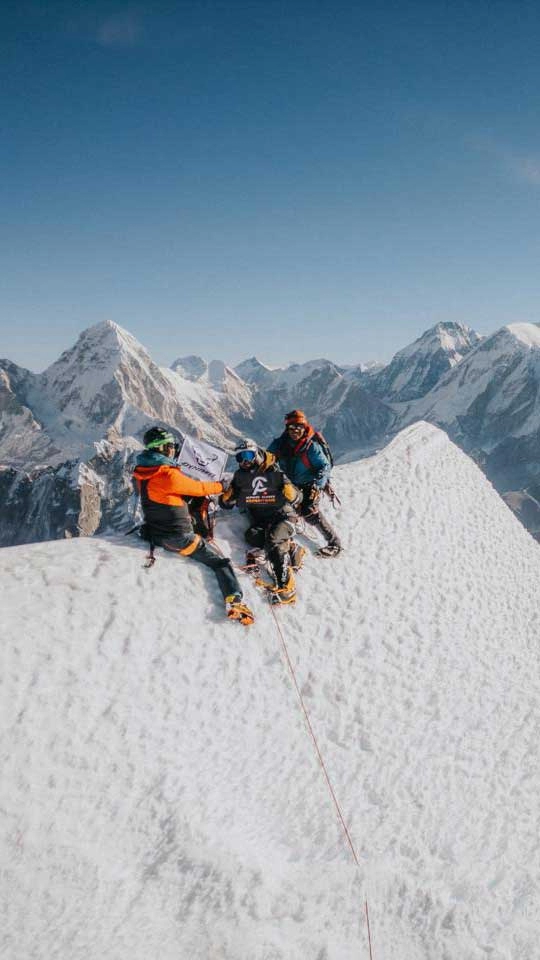
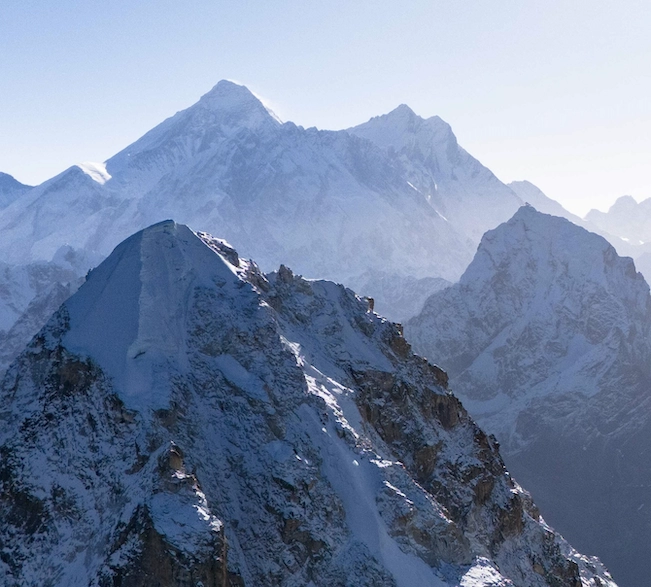
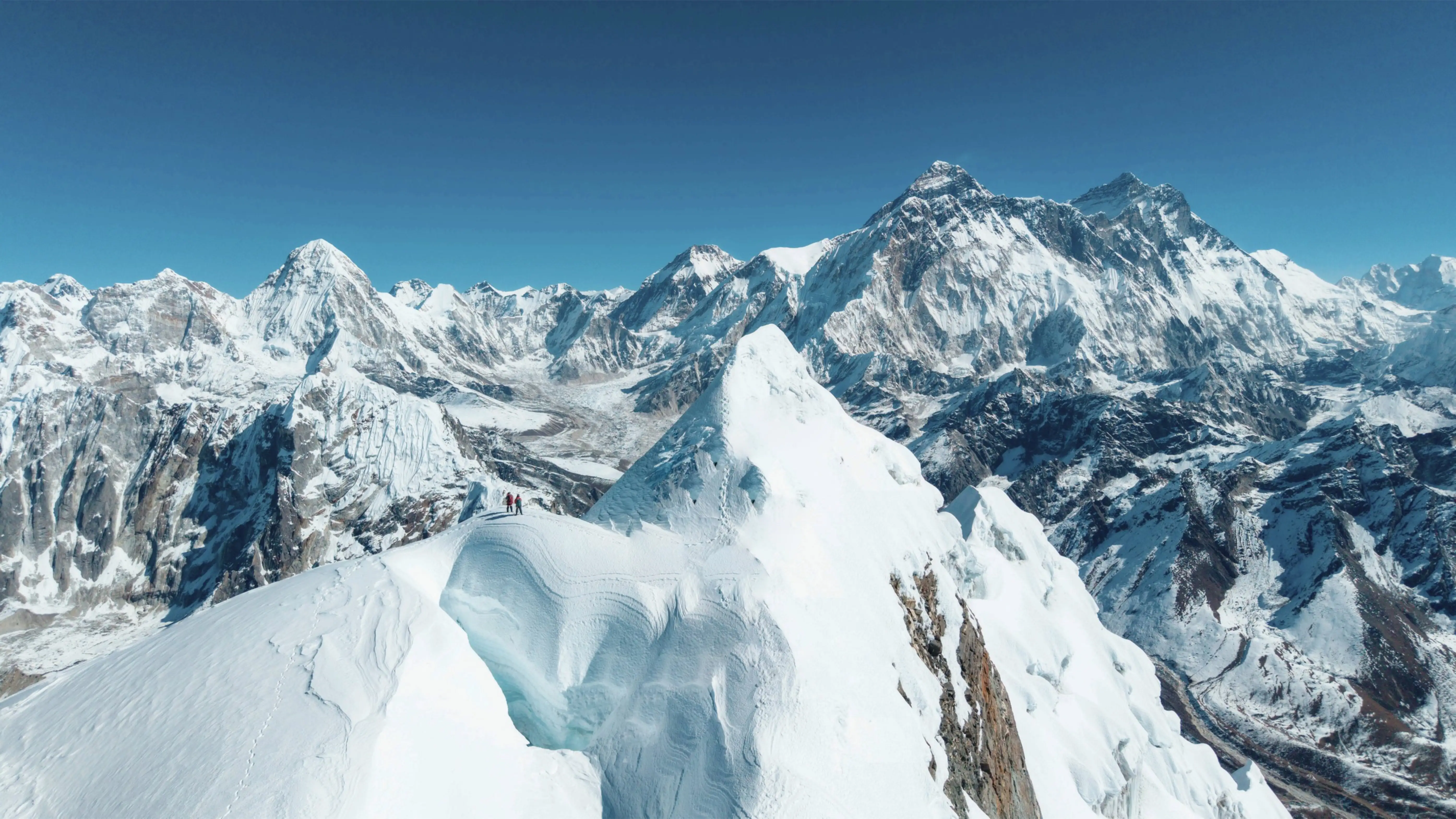
Cholatse stands at the junction of two of the most celebrated valleys in Nepal, the Khumbu to the east and Gokyo to the west. Its position gives it a commanding presence in the landscape and, from the summit, one of the most expansive panoramas available on any 6,000-metre peak in the region.


The mountain was first climbed on April 22, 1982, via the Southwest Ridge, by an American team that included Vern Clevenger, Galen Rowell, John Roskelley, and Bill O'Connor — all respected names in high-altitude alpinism. The routes to the summit have been repeated only a handful of times since. Cholatse has not been opened to commercial group expeditions in the way that better-known Khumbu peaks have been. That scarcity is itself part of the appeal.


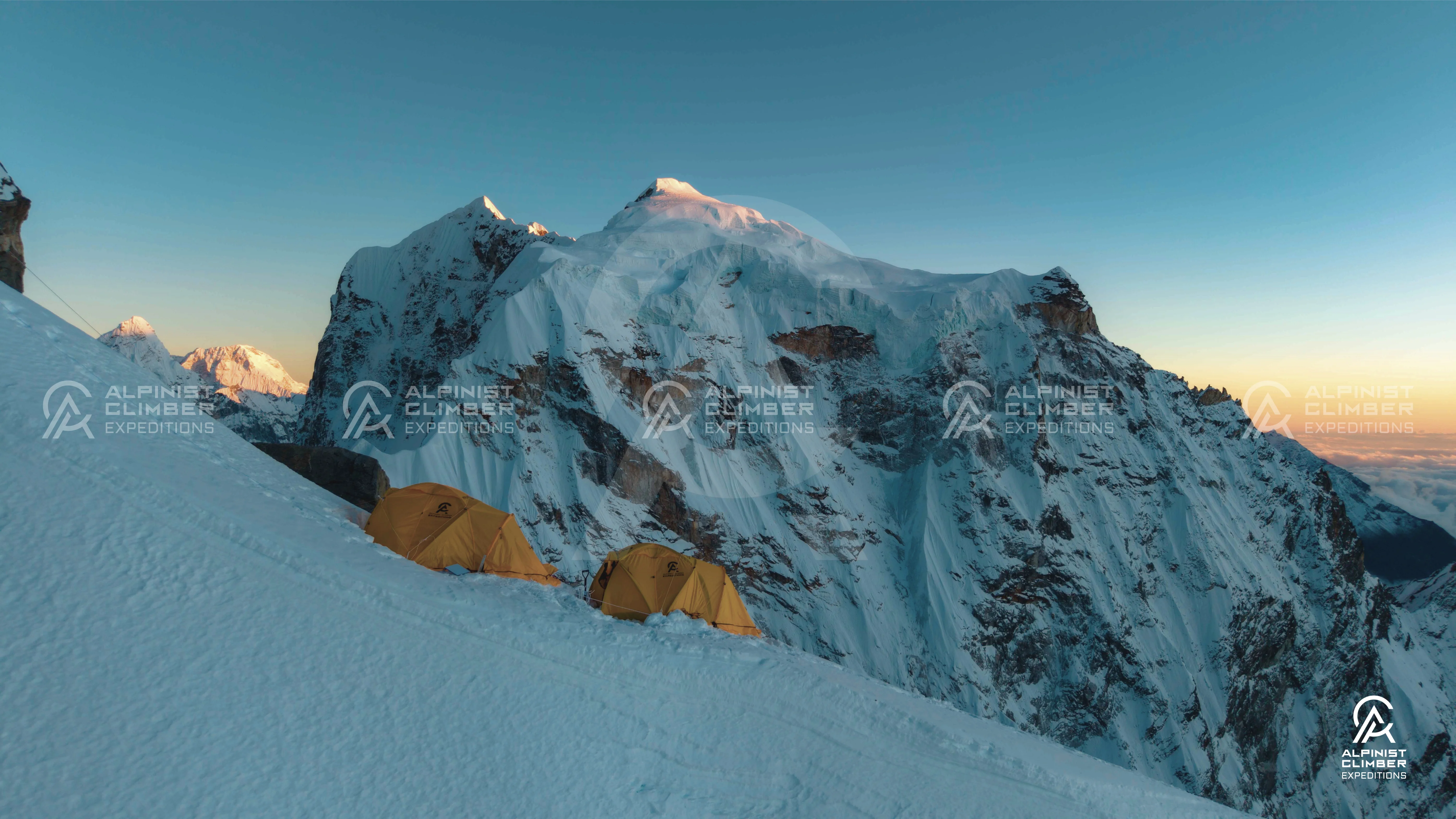
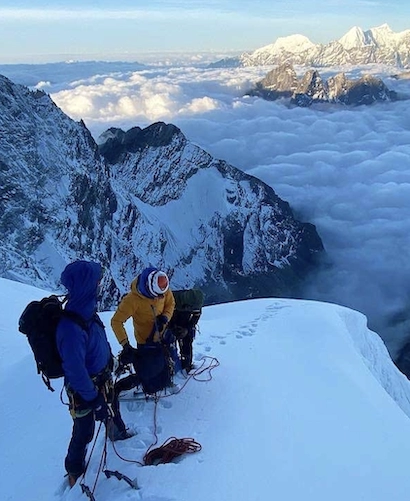
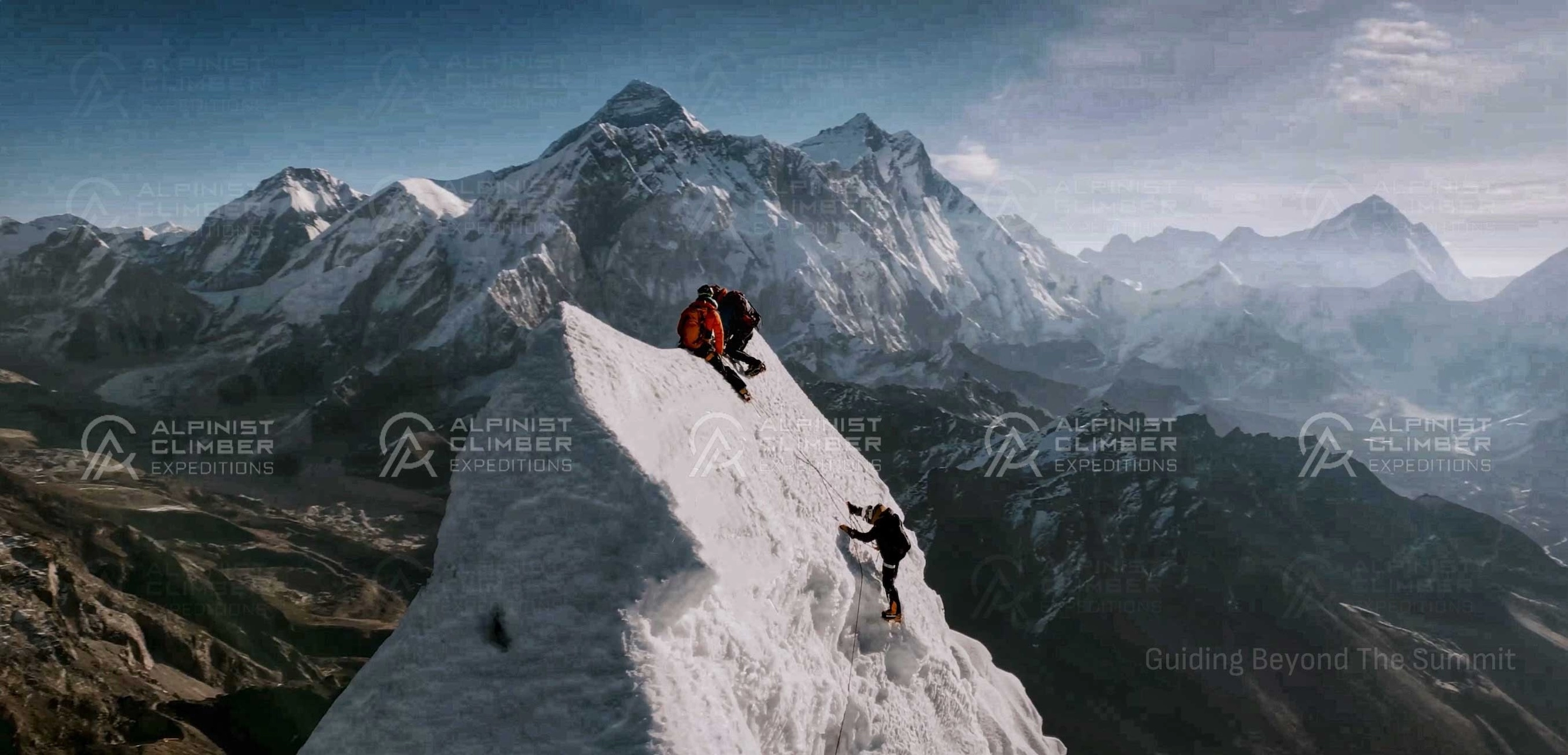
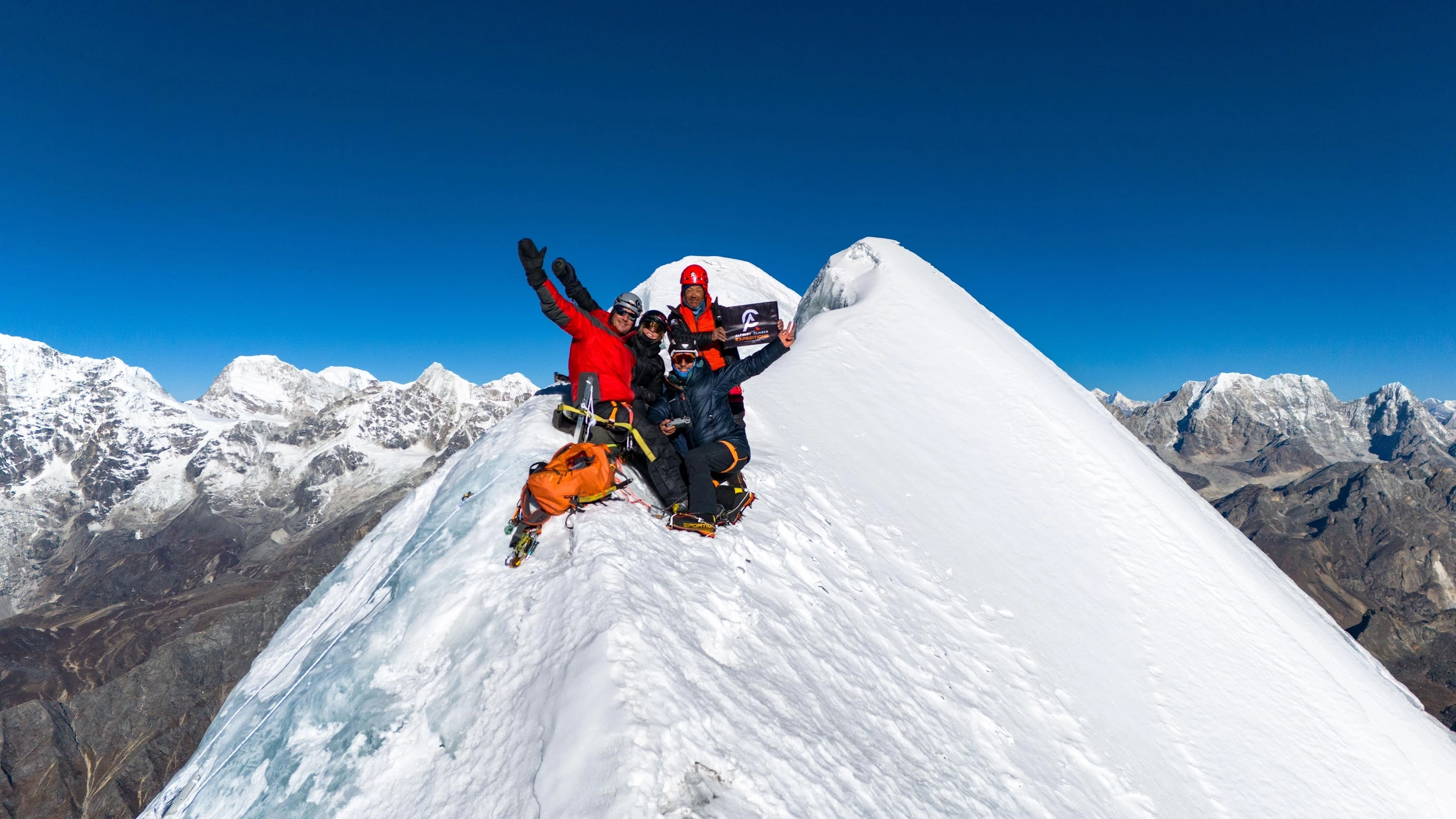
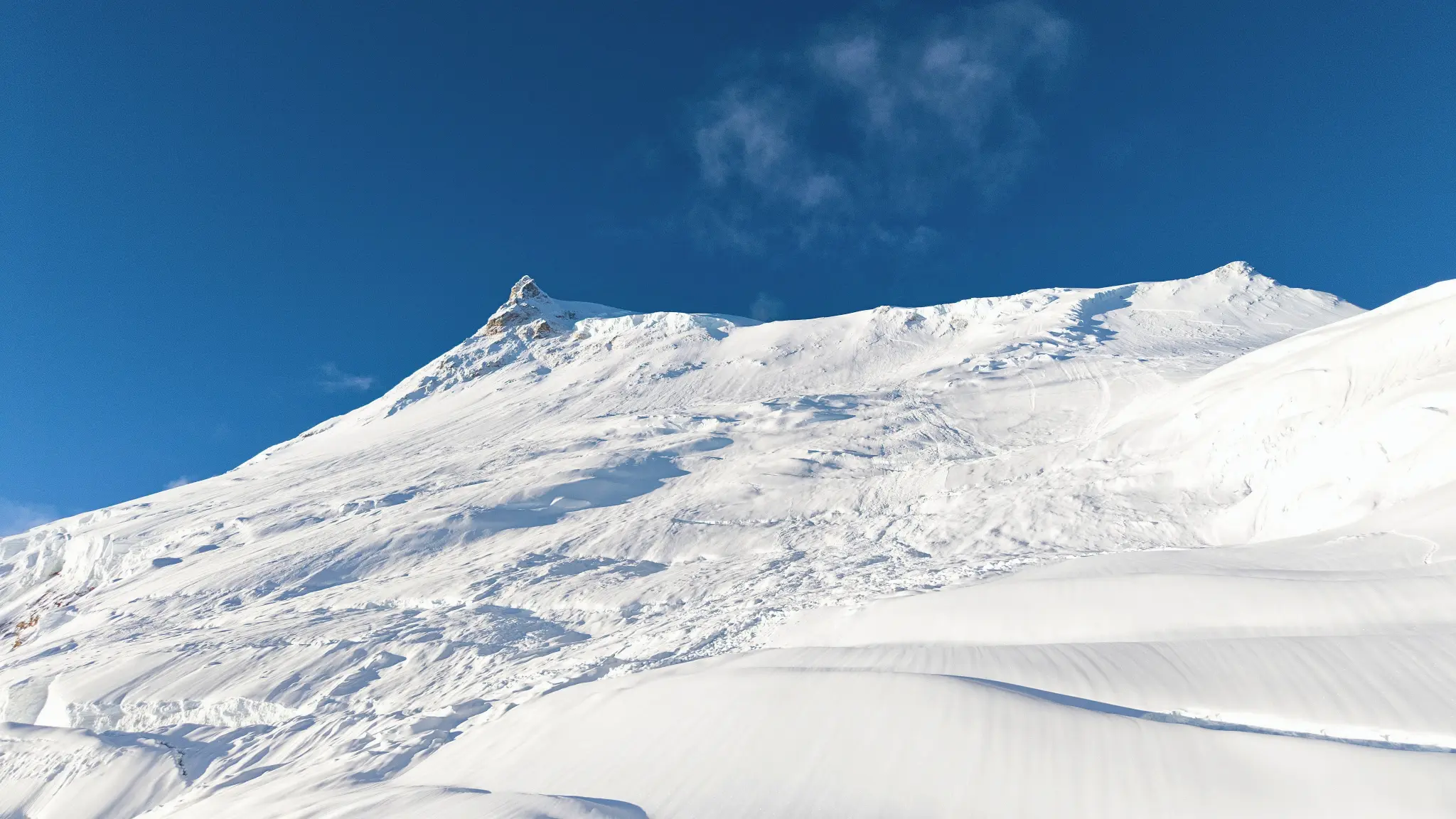
The Southwest Ridge is the primary route and the one used by Alpinist Climber Expeditions. It begins with sustained snow slopes before reaching a crux section that involves technical rock climbing on steep, exposed terrain. Once past the difficulties, the route follows a superb open ridge, narrow, airy, and dramatic before the angle eases onto the summit dome. Two camps are established alpine-style above Base Camp, with the highest positioned to allow a feasible summit push.


Cholatse is connected to Taboche Peak via a long, complex ridge, and together they form one of the most striking massifs visible from the Gokyo valley. The approach crosses the Cho La Pass at 5,420m — a significant acclimatization step and an experience in itself that offers extraordinary views in both directions.

Trip Overview

Duration
24 Days
Including travel days
Max Altitude
6,440m
Summit of CHOLATSE EXPEDITION
Best Season
Spring & Autumn
Ideal climbing window
Group Size
Max 2 - 4
Small team support
Region
Khumbu Region
Expedition location
Grade
Very Hard
High-altitude guided climb
Trip overview background

Trip Description

Cholatse (6,440m) is one of the most demanding and least-commercialised technical peaks in the Himalayas. Its pyramid-shaped profile rises sharply between the Khumbu and Gokyo valleys, a striking summit visible from many classic trekking routes, yet rarely reached. The mountain has seen very few ascents, and none by commercial expedition companies on most of its routes. This is a peak that exists beyond the ordinary.


Rated Alpine Grade D (Difficile) Cholatse sits at the upper boundary of what a 6,000-metre objective can demand. The Southwest Ridge, the standard route, involves steep snow and ice pitches, a sustained crux section on exposed rock, and a dramatic open ridgeline that leads to the summit dome. Every section of this climb asks something of you.


The name Cholatse reflects the landscape it inhabits. In Tibetan, Cho means lake, la means pass, and tse means peak — Lake Pass Peak. The mountain rises above the Cho La (5,420m), the high glaciated pass that connects the Khumbu and Gokyo valleys, and that forms a key part of the acclimatization itinerary before the technical climbing begins.


At Alpinist Climber Expeditions, we approach Cholatse with the same discipline and precision that the mountain demands. This is an expedition for climbers who are ready for a genuine challenge — guided throughout by IFMGA-certified professionals who know this mountain and this terrain with the depth that only years of high-altitude experience can build.


Expedition Highlights


  • One of the least-ascended and most technically demanding 6,000m peaks in Nepal

  • Alpine Grade D — a serious, committing objective for experienced mountaineers

  • Spectacular Southwest Ridge with sustained snow, ice, and rock climbing

  • Acclimatization via Cho La Pass (5,420m) — one of Nepal's most iconic high passes

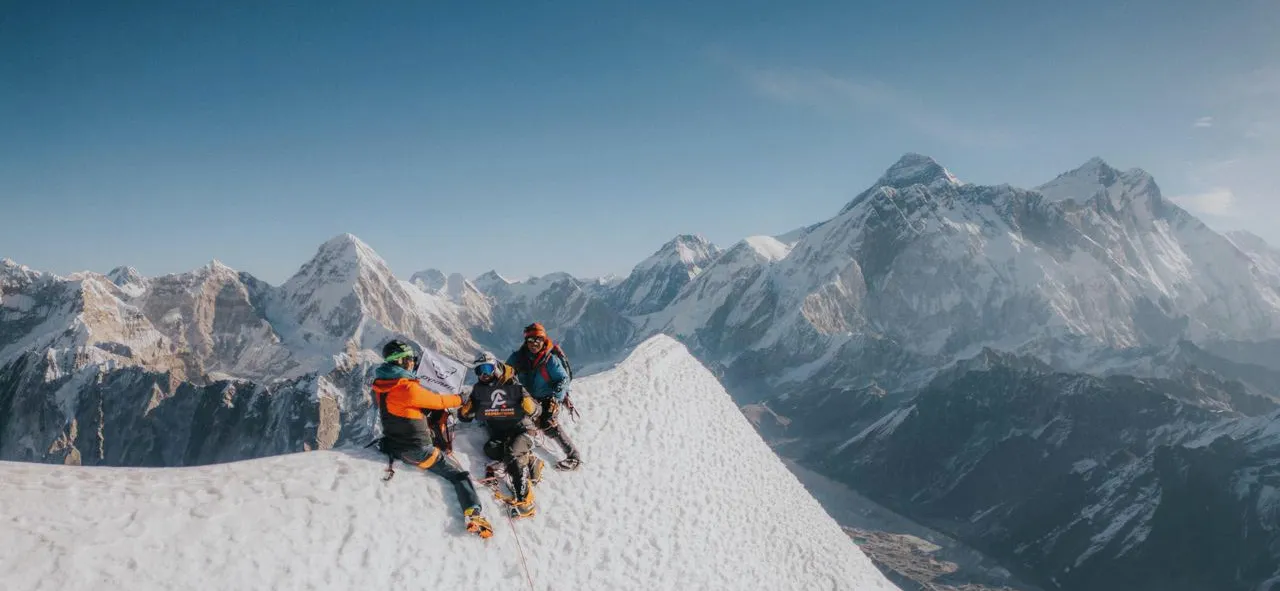
  • Panoramic summit views of Everest, Lhotse, Makalu, Ama Dablam, Nuptse, and more

  • Pure alpine-style ascent with camps established en route to the summit

  • Option for 1:1 private summit experience with IFMGA Guide Mr. Prakash Sherpa


Led by IFMGA-Certified Professionals


A mountain of Cholatse's difficulty requires more than a competent guide — it requires someone with the technical range, high-altitude judgment, and personal experience to manage a serious alpine objective responsibly. Every Cholatse expedition organized by Alpinist Climber Expeditions is led by professionals who meet that standard.


Our guiding team holds IFMGA / UIAGM / IVBV certification, the highest internationally recognized qualification in mountain guiding — alongside training in Advanced Mountaineering, Wilderness First Aid, Helicopter Rescue and Marshalling, Basic and Advanced Rescue, and Rock Climbing. This is not a minimum standard. It is a foundation built over careers spent in the Himalaya.


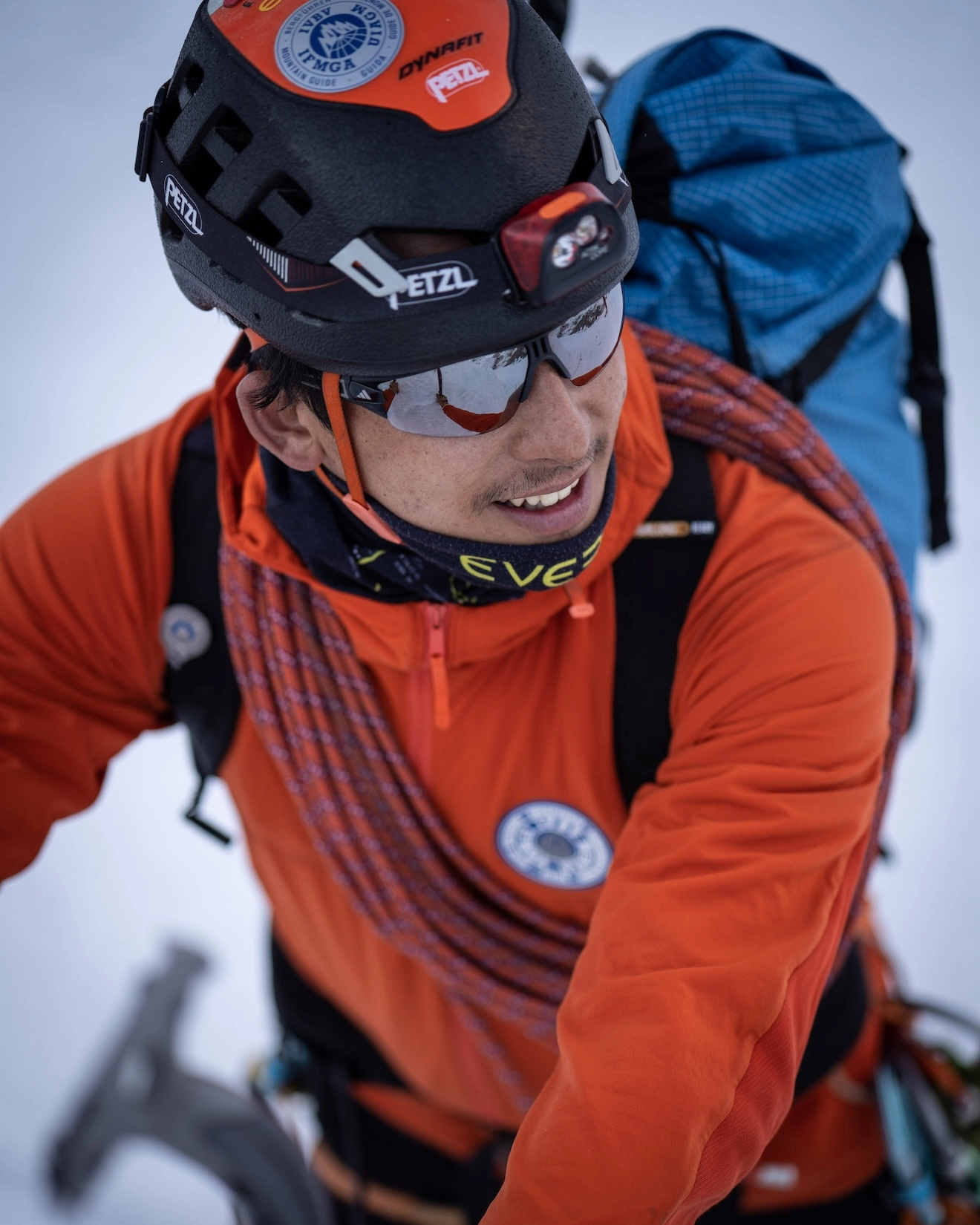
Mr. Prakash Sherpa, our lead IFMGA Mountain Guide and CEO, began his mountaineering career at the age of 15 and carries over 15 years of professional high-altitude experience. He has summited multiple 8,000-metre peaks — including Everest, Lhotse, Makalu, Cho Oyu, Dhaulagiri, Manaslu, Nuptse, and Pumori — some completed without supplemental oxygen. He is a member of the Nepal National Mountain Guide Association (NNMGA).


The premium 1:1 private option allows you to take on Cholatse alongside Mr. Prakash Sherpa directly — a level of personal guidance and shared commitment on a mountain this serious that very few expedition operators can offer.

Detailed Itinerary

A representative from Alpinist Climber Expeditions will meet you at Tribhuvan International Airport and transfer you to your accommodation. Once settled, you will be introduced to your expedition guide and fellow team members. The evening offers a first taste of Kathmandu — its warmth, its noise, and its cuisine — before the journey into the mountains begins.

The day opens with a full expedition briefing covering the route, safety protocols, equipment checks, permit formalities, and Ministry of Tourism requirements. The afternoon is spent visiting several of Kathmandu's UNESCO World Heritage Sites — ancient temples, Buddhist stupas, and Newari courtyards that provide a rich cultural introduction to Nepal.


  Duration     Distance     Elevation  
Full Day 5–10 km (city tour) Minimal

An early mountain flight to Lukla (2,840m) opens with sweeping aerial views of the Himalayan range as the first light catches the high peaks. On landing, the team assembles, equipment is confirmed, and the trek begins. The trail to Phakding follows the Dudh Koshi River valley through pine and rhododendron forest — a gentle opening day before the Khumbu reveals itself.


  Duration     Distance     Elevation  
35 min flight + 3–4 hrs trek Flight: ~138 km, Trek: ~8 km −250 m

The trail today climbs steadily through the Sagarmatha National Park checkpoint at Monjo before crossing a high suspension bridge over the Dudh Koshi and ascending steeply to Namche Bazaar. The first views of Everest, Lhotse, and Ama Dablam appear on the final rise into town — a moment that makes the climb feel real.


  Duration     Distance     Elevation  
6–7 hrs ~10 km +830 m (2,610 m → 3,440 m)

Acclimatization at Namche is not optional — it is a fundamental part of the expedition's safety architecture. Today's hike to the Everest Viewpoint at approximately 3,800m allows the body to experience altitude while returning to sleep lower. The views from the ridge — Everest, Lhotse, Nuptse, Ama Dablam — set the visual tone for everything ahead.


  Duration     Distance     Elevation  
3–5 hrs (optional hike) 5–8 km +350–450 m (optional hike, return to Namche)

The trail rises through one of the most beautiful sections of the entire Khumbu valley, passing through rhododendron forest that blooms vivid red and pink in spring. Tengboche Monastery — one of the most significant Buddhist monasteries in Nepal — sits at a ridge with views of Everest, Lhotse, Nuptse, Ama Dablam, Thamserku, and Kangtega. The team pauses here for the monastery's blessings before the ascent continues.


  Duration     Distance     Elevation  
5–6 hrs ~10 km +420 m (includes descent and ascent)

The trail traverses high above the valley floor, passing through Pangboche (3,985m) — a quiet village with an old monastery worth visiting for blessings before the technical climb ahead. The terrain becomes more open and exposed as the valley widens toward Pheriche, one of the last settled villages before the high glacial terrain begins.


  Duration     Distance     Elevation  
5–6 hrs ~12 km +511 m (3,860 m → 4,371 m)

A structured acclimatization hike to the top of Nangkartshang (5,083m) takes approximately two to three hours from Pheriche. The summit offers a broad mountain panorama and an important physiological step in the acclimatization schedule — gaining altitude by day and returning to sleep lower reinforces the body's adaptation process significantly.


  Duration     Distance     Elevation  
4–6 hrs ~6 km +712 m (4,371 m → 5,083 m, return to Pheriche)

Departing Pheriche, the trail climbs past Duglha (4,620m) — one of the highest permanent settlements in the world — before branching away from the Everest Base Camp route and following the quieter trail toward Dzongla. The surrounding landscape becomes starker and more glaciated as the valley narrows toward the Cho La.


  Duration     Distance     Elevation  
3–4 hrs ~6 km +459 m (4,371 m → 4,830 m)

The crossing of Cho La Pass (5,420m) is one of the most memorable days of the expedition. The trail climbs steeply to the pass — marked by prayer flags and stone cairns — before descending across glacial terrain to the Gokyo valley side. The views from the top encompass Cholatse, Ama Dablam, Lobuche East, and Baruntse — the summit you are heading toward now clearly visible and imposing. The descent leads to Dragnag for the night.


  Duration     Distance     Elevation  
7–8 hrs ~8 km +540 m / −670 m (up to Cho La Pass 5,420m, then descend to 4,700m)

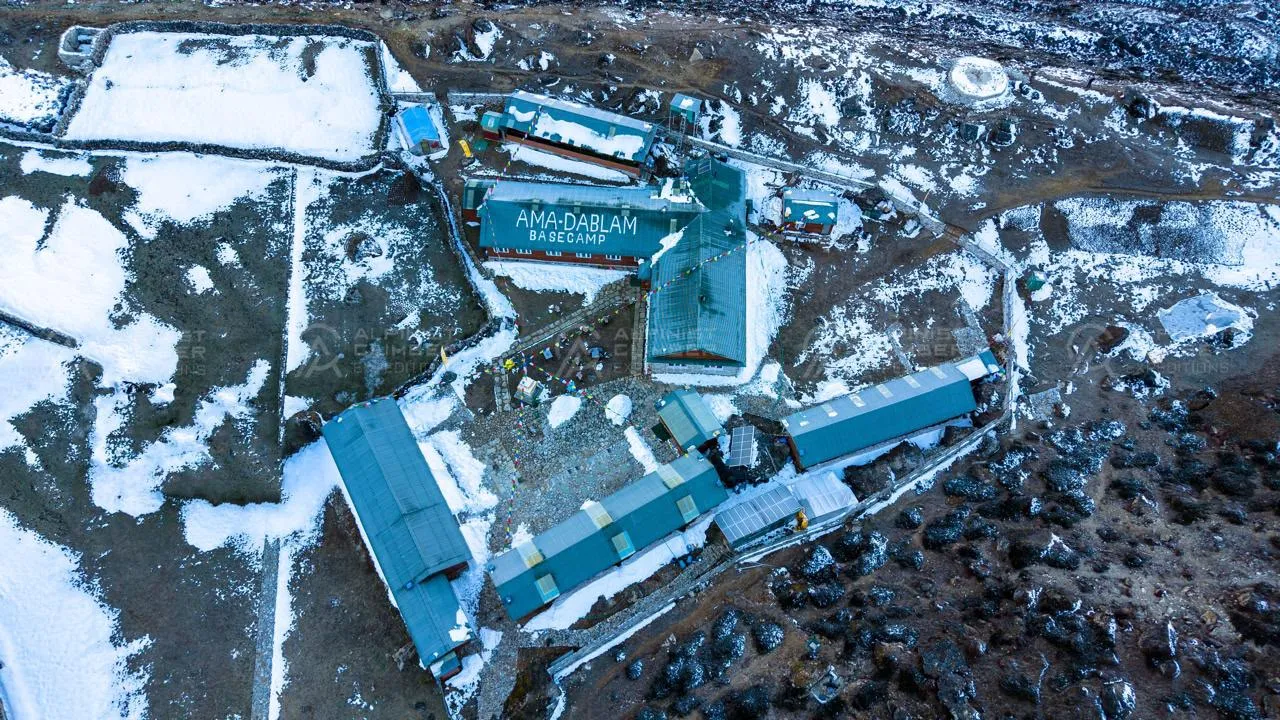
The final approach to Cholatse Base Camp. The trail moves closer to the mountain's flanks as the scale of the Southwest Ridge becomes clear for the first time from below. Base Camp is established on stable ground beneath the peak — tents pitched, equipment organized, and the technical phase of the expedition formally underway.


  Duration     Distance     Elevation  
4–5 hrs ~7 km +100 m (4,700 m → 4,800 m)

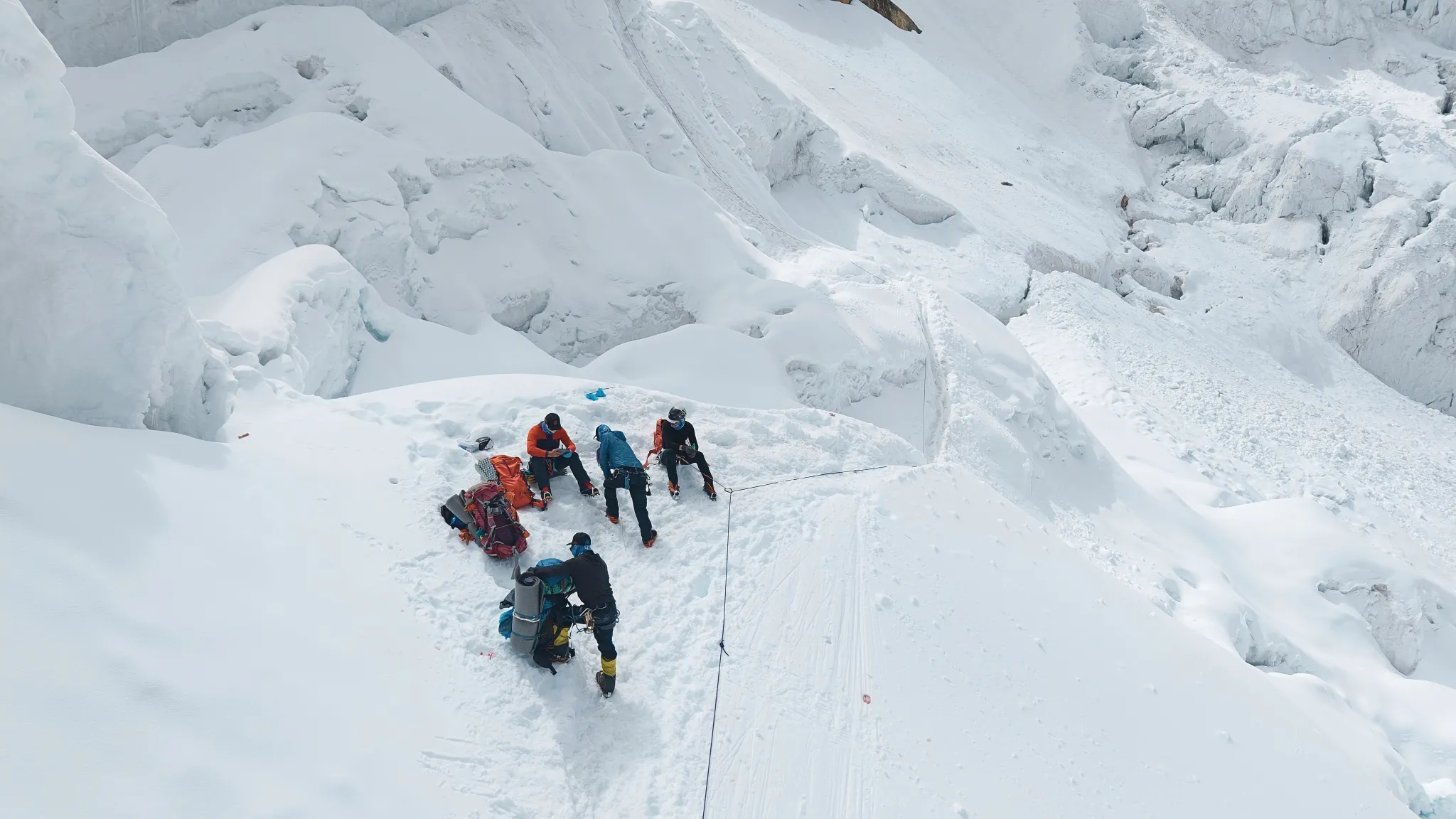
Three days of structured acclimatization and route preparation. The team climbs to Camp 1 (5,600m), assesses route conditions, checks fixed lines, and then descends to Base Camp to rest. This rotation is essential — it allows the body to produce additional red blood cells, confirms the route is viable, and gives every team member time to understand what the upper mountain demands before the summit window opens.


  Duration     Distance     Elevation  
7–9 hrs ~6 km +800 m (4,800 m → 5,600 m, return to Base Camp)

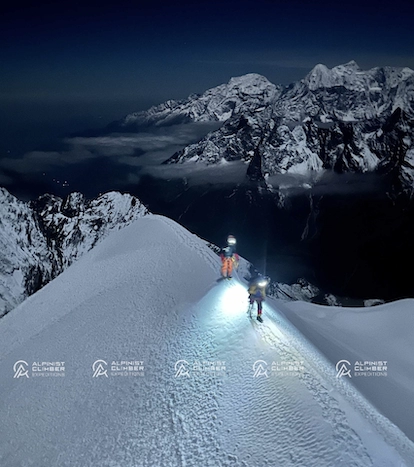
A five-day window is allocated for the summit push, providing flexibility to wait for the best weather conditions. On the chosen summit day, the team departs from Camp 1 in the early pre-dawn hours. The route follows the Southwest Ridge — sustained snow slopes giving way to the technical crux on rock, then the open, exposed ridgeline that leads to the summit dome of Cholatse at 6,440 metres.


From the top, the horizon fills with the full sweep of the eastern Himalaya: Everest, Lhotse, Makalu, Cho Oyu, Nuptse, Ama Dablam, and Baruntse. The descent returns via the ascent route to Base Camp.


  Duration     Distance     Elevation  
Multi-day ~8–10 km +1,640 m (4,800 m → 6,440 m) plus descent after summit

With the summit complete, the team begins the return journey. The descent from Base Camp toward the Gokyo valley leads to Dole — a welcome drop in altitude that allows the body to begin recovering in earnest. A helicopter evacuation option is available for this day if required.


  Duration     Distance     Elevation  
7–9 hrs ~14 km −762 m (4,800 m → 4,038 m)

The valley descends gradually back toward Namche Bazaar. The trail is familiar now — seen through the different lens of a completed expedition. The team reaches Namche for a final night in the mountains.


  Duration     Distance     Elevation  
5–6 hrs ~11 km −598 m (4,038 m → 3,440 m)

The last trekking day follows the Dudh Koshi River valley downstream, through pine forest and past Sherpa villages, to Lukla. The rhythm of the trail and the ease of the descent make this a pleasant final walk after the effort of the weeks above.


  Duration     Distance     Elevation  
6–7 hrs ~18 km −580 m (3,440 m → 2,860 m)

An early flight returns the team to Kathmandu. The afternoon is free for rest, shopping, or exploration of the city. A farewell dinner is held in the evening to mark the conclusion of the expedition.


  Duration     Distance     Elevation  
35 min flight ~138 km (air) −1,530 m (2,860 m → 1,330 m)

Private airport transfer is arranged for your outbound flight. The expedition concludes — not just as a summit achieved, but as an experience that very few places on earth, and very few peaks, can provide.

Why ACE?

Alpinist Climber Expeditions was built around a principle that has guided every climb we have organized — that the quality of the experience on a mountain is directly tied to the quality and depth of experience of the people leading it. What sets Alpinist Climber Expeditions apart is something that cannot be manufactured or replicated — it comes from decades spent on these mountains, from the culture that formed us, and from a deeply held belief that every climb deserves to be done properly.


We are a team of professional Sherpas. Not guides who have visited the Himalaya — guides who grew up here, who know these peaks in every season, and who have spent careers developing the technical skills and mountain judgment required to lead expeditions safely and successfully.


Our team holds IFMGA / UIAGM certification — the highest international standard in professional mountain guiding — alongside Advanced Mountaineering, Wilderness First Aid, Helicopter Rescue, and High-Altitude Rescue qualifications. Our lead guide has summited multiple 8,000-metre peaks, including ascents without supplemental oxygen. This is not a credential on paper. It is a lived capability that directly protects every climber who climbs with us.


We offer two expedition structures: a standard option with small-group expedition, and a premium option with 1:1 guide-to-client ratio. Both are built on the same standard of safety, preparation, and professionalism.The standard option maintains a minimum 1:3 guide-to-client ratio with a dedicated IFMGA lead guide and Sherpa support on every climb. Our premium 1:1 private option places you on the mountain directly alongside IFMGA Guide Mr. Prakash Sherpa.


We do not run high-volume operations as our clients are not bookings. They are climbers who have chosen to trust us with something significant and we take that trust seriously on every single expedition. We do not cut corners on acclimatization, staffing ratios, or safety equipment. We organize expeditions the way they should be organized — with patience, precision, and the kind of local knowledge that only comes from growing up in these mountains and spending a career on them.


The Team

Expedition Guides

Every guide on our team has been selected for their technical ability, high-altitude experience, and personal commitment to the safety and success of every climber they lead. All guides carry extensive experience at altitude and hold a proven record of safety, summit success, and strong compatibility with international clients.

The number of guides assigned to each expedition is determined by the size of the climbing team. Our standard guide-to-member ratio is 1:3, ensuring that every climber receives consistent, attentive support throughout the approach, the acclimatization phase, and the technical climb itself.


Climbing Sherpa Support

A dedicated team of experienced Climbing Sherpas supports every expedition with load carrying on the mountain, route preparation, and high camp management. On summit day, we maintain a 1:1 Sherpa-to-climber ratio — a commitment that reflects our belief that the summit push is where support matters most.

Our Climbing Sherpas are not simply load carriers. They are experienced high-altitude professionals who understand the mountain, the route, and the demands of summit day. Their presence alongside every climber on the final push is a core part of how we manage safety and success on the upper mountain.


What to Expect from Our Team

  • Technically qualified, IFMGA-certified lead guidance on every expedition
  • A standard guide-to-member ratio of 1:3 — adjusted based on team size and peak requirements
  • 1:1 Climbing Sherpa support on summit day for every team member
  • Guides who are experienced, companionable, and genuinely invested in your success
  • Full medical kit, satellite communication, and emergency response capability carried by the team at all times
  • A premium 1:1 private option available — summit alongside Mr. Prakash Sherpa directly


Trip Notes

Quick facts: 6,440m | Khumbu region, between the Gokyo and Khumbu valleys | Best season: spring (Mar–May) & autumn (Sep–Nov) | Graded WI2+ M3-4 – highly technical


Overview


Cholatse is widely regarded as one of the toughest 6,000m peaks in Nepal. Its razor-thin summit ridge and steep, soaring rock-and-ice lines have made it a benchmark climb for mountaineers since its first ascent in 1982, and it remains far less crowded than nearby trekking peaks simply because of how demanding it is.


Route & Character


Most teams acclimatise on Lobuche East before crossing the Cho La Pass to Cholatse Base Camp beneath the mountain’s southwest ridge. From there, the route climbs through snow slopes into a rocky crux section, followed by a sustained and exposed ridgeline that only relents as it plateaus onto the summit dome. Unlike many trekking peaks, Cholatse demands real technical proficiency — fixed ropes help, but climbers are expected to move confidently on steep ice and rock themselves.


Key Risks & Why They Matter


Sustained technical climbing: The route holds steep ice and rock pitches almost continuously rather than just at one crux point, so fatigue compounds the technical difficulty — a tired climber is far more likely to make a costly mistake high on the ridge.

Exposure on the summit ridge: The final ridge is narrow with steep drops on either side; this exposure means even small errors in footing or rope handling carry serious fall risk, which is why this climb is not recommended for first-time peak climbers.

Icefall and rockfall: Warming temperatures or wind can dislodge loose rock and ice from the steep faces above the route, so teams time their climbing day carefully (often climbing in early morning cold) to reduce the chance of debris falling onto the party.

Altitude and cold exposure: Camps are pitched at significant altitude with long technical days above them, meaning climbers face both reduced oxygen and extended exposure to cold — a combination that raises the risk of altitude illness and frostbite if pacing isn’t carefully managed.


Note: All ACE expeditions are subject to the unpredictable conditions of the Himalaya. Weather at altitude can change within hours, and your safety always takes priority over the fixed schedule — if trails become unsafe, snow conditions deteriorate, or flights to remote airstrips are delayed by poor visibility or wind, we will adjust the itinerary, reroute, or arrange alternative transport as needed. These changes are made solely to protect you, and our guides will ensure the spirit and quality of your expedition is never compromised. ACE is not liable for costs arising from missed international flights due to such delays, so we strongly recommend comprehensive travel insurance covering trip interruption, flight disruption, and emergency evacuation before you travel.

Equipment List

Cholatse demands proper equipment across every category. The following list covers the essentials for a 6,000m alpine-grade expedition. Personal clothing and technical climbing gear are not included in the package price and should be sourced, fitted, and field-tested well in advance of departure.


Headwear

  • Sun hat or lightweight cap

  • Warm fleece or wool hat

  • UV-protective sunglasses (category 4 strongly recommended at this altitude)

  • Buff / thin balaclava or face mask


Handwear

  • Lightweight fleece or wool inner gloves

  • Gore-Tex outer mitten gloves


Clothing

  • Gore-Tex waterproof jacket

  • Gore-Tex waterproof trousers

  • Hiking trousers

  • Fleece jacket or warm mid-layer — slim enough to layer under Gore-Tex shell

  • Moisture-wicking base layer top

  • Thermal base layer trousers

  • Down jacket with hood


Footwear

  • Well broken-in trekking boots

  • Double-insulated alpine climbing boots

  • Crampons (compatible with alpine boots — 12-point recommended)

  • Snow gaiters

  • Trekking socks (4–5 pairs)

  • Camp sandals or light slippers


Technical Climbing Equipment

  • Ice axe

  • Sit harness

  • Locking carabiners and belay device

  • Ascender (jumar)

  • Climbing helmet


Camping & Trekking Essentials

  • Sleeping bag rated to at least -20°C

  • 45-litre rucksack with rain cover

  • Large duffle bag with padlock (for porter loads)

  • Headlamp with spare batteries

  • 1-litre water bottles (x2)

  • Thermos flask

  • Trekking poles

  • Personal first aid kit


Hygiene & Sun Protection

  • Waterproof wash bag

  • Medium towel

  • Toiletries — soap, toothbrush, toothpaste

  • Sunscreen SPF 50+ including lip balm with sun protection

  • Hand sanitizer and handwash

  • Toilet paper and wet wipes

CHOLATSE EXPEDITION

Upcoming Departure Dates

Scheduled Departure
Booking Open
November 3 – 27 November, 2026
Book Now
Price
€9,600
Available Seats
2
Package Type
Standard Package led by Sonam Chhiring Sherpa
Includes background

Includes & Excludes

Included
  • Cholatse peak climbing royalty fees
  • Summit route fixing fees
  • Sagarmatha National Park entry permit
  • TIMS (Trekkers' Information Management System) card
  • Garbage disposal and environmental management fees
  • All government taxes, VAT, and official tourism service charges
  • IFMGA-certified lead mountain guide — full wages and comprehensive insurance
  • Experienced Sherpa high-altitude support — full wages and insurance
  • Porters for trekking and expedition gear at a 1:1 member-to-porter ratio
  • All staff accommodation, equipment, wages, insurance, and medical provisions
  • 4-star hotel accommodation in Kathmandu with daily breakfast (3 nights)
  • Full-board lodge accommodation throughout the trekking approach and descent
  • High-altitude camp food for all members and guides during the climbing phase
  • Round-trip Kathmandu to Lukla mountain flight
  • Private vehicle airport pick-up and drop-off in Kathmandu
  • Single private dome tent at Base Camp with hot shower facility
  • Shared tents at Camp 1 and Camp 2 between members and guides
  • Medical kit carried throughout the expedition
  • Satellite phone for emergency communication
  • Alpinist Climber Expeditions branded duffle bag, cap, and T-shirt per member
Not Included
  • International flight ticket 
  • Nepal entry visa fees
  • Alcoholic and soft beverages
  • Internet and WiFi access
  • Personal clothing and climbing equipment
  • Personal first aid kit
  • Drone permit fees (if applicable)
  • Personal travel, medical, and emergency rescue insurance
  • Gratuities for guides, Sherpa staff, Base Camp crew, and porters

1:1 Experience with Your Lead Guide

Lead Guide

Prakash Sherpa

Founder & IFMGA Mountain Guide

Our lead guide Prakash Sherpa oversees expedition strategy, pacing, and on-mountain decision-making so your climb is supported from preparation through summit push.

You get direct access to experienced guidance, real-time judgement in changing conditions, and a more focused expedition experience built around safety, clarity, and strong leadership.

Certification
IFMGA / IVBV / UIAGM

Package Options

Standard

An expertly guided group expedition offering an affordable, memorable way to attempt stunning peaks alongside fellow adventurers.

Starting From
€9,600
per person
  • → Group Expedition
  • → 1:1 Climbing Sherpa Guide
  • → Well-Planned Itinerary
  • → Fixed Group Schedule
  • → Minimum 3 Participants
  • → Professionally Guided
  • → Excellent Value
  • → Best for Budget-conscious Adventurers
Book Standard
Premium

A fully personalized, private expedition with 1:1 IFMGA guiding — designed around your goals, pace, and schedule for an exclusive mountain experience.

Starting From
€17,500
per person
  • → Private Expedition
  • → 1:1 Private IFMGA Mountain Guide
  • → Fully Tailored Itinerary
  • → Flexible Scheduling
  • → Premium Value
  • → Heli flights IN / OUT
  • → Premium, Personalised Experience
  • → Best for Adventurers Seeking a Personalized, Exclusive Experience
Book Premium

FAQs

Cholatse is rated Alpine Grade D — Difficult — which places it among the most technically demanding 6,000-metre peaks in Nepal. The Southwest Ridge involves sustained steep snow and ice climbing, a challenging rock crux section, and a long exposed ridgeline to the summit dome. Climbers should be comfortable with 40–60 degree snow and ice slopes, multi-pitch technical terrain, and the physical and psychological demands of sustained high-altitude alpinism. This is not a suitable objective for first-time 6,000m climbers.

Alpinist Climber Expeditions
GUIDING BEYOND THE SUMMIT
Client Stories

From the Summit

Daniel Puttkemery
Daniel Puttkemery
Kyajo Ri Expedition
Prakash and his team are a couple of notches above totally professional! Everyone in the Alpinist Climber Expeditions family goes out of their way to provide the best possible experience. Superb core values and safety principles. I had the good fortune of climbing Kyajo Ri with Alpinist Climber Expeditions and…
★ ★ ★ ★ ★
Luca Smargiasso
Luca Smargiasso
Ama Dablam + Kyajo Ri + Cholatse
I have been climbing for 15 years, over 4 continents. This was my 3rd trip to Nepal. And this was undoubtedly one of the Best-organised expeditions have participated in. Cannot thank Prakash and his Team enough. The attention to detail both in terms of equipment, climbing conditions, and accommodation/food was…
★ ★ ★ ★ ★
Raphael Lindenmann
Raphael Lindenmann
Kyajo Ri
In April 2025, we completed an unforgettable expedition to Kyajo Ri with ACE. We were four friends from Switzerland and enjoyed about two and a half weeks in the Khumbu region. From our arrival in Kathmandu to the summit and back, ACE's organization was impeccable.A well-coordinated team, superb support, excellent…
★ ★ ★ ★ ★
Andy Tronsberg
Andy Tronsberg
Kyajo Ri & Island Peak
Perfect organised and guided expedition I ever took part! We climbed island peak and kyajo ri alpine style! Safety is always first, all team members are super kind and professional and also laughing comes not to short! Thanks for this unforgettable experience!! Andreas.
★ ★ ★ ★ ★
Rogier Keulen
Rogier Keulen
Kyajo Ri & Cholatse
With IFMGA guide Prakash we climbed Kyajo Ri and Cholatse. Our expedition couldn't have been any better! We had a lot of fun and summiting stunning Cholatse is the most intense thing I've done. We did it alpine style, so without fixed ropes from bottom to top. Safety was a…
★ ★ ★ ★ ★
Manu Laireiter
Manu Laireiter
Kyajo Ri
I participated in a private expedition to Kiayo Ri with Alpinist Climber Expeditions and it was simply fantastic. From the initial consultation to the final summit push, everything was perfectly organized and tailored to my individual needs. The guides were not only highly professional and extremely experienced in high-altitude mountaineering,…
★ ★ ★ ★ ★
Expedition Journal

Dispatches from the Mountains

All Articles
Manaslu 2026: A Season of Extremes — Our Full Expedition Coverage
Expedition Report

Manaslu 2026: A Season of Extremes — Our Full Expedition Coverage

  Every climbing season on Manaslu is different. Record numbers of climbers arrived at Base Camp this autumn, hoping for a straightforward summit. What they found instead was a mountain that tested every team on it, ours included.   This article looks back at the full season: how it started, what went wrong, and why we believe the outcome, difficult as it was, was the right one.     A Record Season, and a Crowded Mountain   Manaslu is usually one of the more approachable 8,000-meter peaks, which is exactly why it drew so many climbers this year. Nepal's Department of Tourism listed close to 500 foreign climbers this season, with a similar number of local guides and support staff on the mountain, making it a record year for permits. Once the fixed ropes reached the top, that many people converging on one route created real congestion.   Climbers described long queues on the fixed ropes, especially through the crowded, icy section between Camp 1 and Camp 2, and on the narrow final ridge that leads to Manaslu's true summit, which can only hold one or two people at a time. A mountain built for small, careful teams was suddenly hosting a crowd. That combination, a narrow summit and hundreds of climbers all aiming for the same short weather window, set the stage for the difficulties that followed.   Traffic Jam in Manaslu 2026 Season     The Danger Builds: Avalanches on the Upper Slopes   Manaslu's upper mountain is known among guides for its avalanche-prone slopes, and this season made that reputation clear early. An avalanche swept down near Camp 4 and buried a freshly fixed section of rope, just hours before the rope-fixing team planned to use it. No one was hurt in that incident, but it was an early sign of how loaded and unstable the snowpack had become.   Persistent snowfall over the following days made conditions worse, not better. Layers of fresh, loose snow sat on top of older snow, creating the unstable slab conditions that guides watch for closely. Our own team, positioned on the mountain at the time, could see and feel how quickly things were changing.   Heavy Snowfall in Manaslu Base Camp     Tragedy on the Mountain: Two Lives Lost   During this period, a slab avalanche struck a tent at Camp 3, killing a foreign climber and his guide, who had pushed higher than the rest of their team in hopes of an early summit attempt. A rescue team later found them buried under roughly two meters of snow.   This loss affected the entire mountain, not just the team involved. Climbers, guides, and outfitters from every expedition, including ours, felt the weight of it. The ACE team holds the memory of these two lives in our thoughts, and we offer our condolences to their families and their expedition family.     A Narrow Escape for Our Own Team   During this stretch of unstable weather, one of our guide's tent was buried by snow. Luckily, he was not inside and had went outside just before the snow sturk the tent and buried it. There was no serious damage to any of our members or our climbing Sherpa guides. It was a close call, and a clear reminder of how quickly conditions on Manaslu can turn serious, even at camps that are normally considered safe.   We share this not to alarm anyone, but because it is part of an honest account of this season. Every member of our team, guides and clients alike, came home safe. We are deeply grateful for that.   One of our guide's tent buried by snow. (Luckily, the guide was outside the tent in that moment)     Racing the Cyclone   As if avalanche danger were not enough, the weather forecast added more pressure. A cyclone forming over the Bay of Bengal was tracked heading toward Nepal, expected to bring heavy new snow and force every team off the mountain before it arrived. That left teams still on Manaslu with a hard choice: wait it out for days or weeks, call off their climb and go home, or rush a summit attempt with less rest and more crowding on the ropes than anyone would prefer.   This kind of pressure is exactly when accidents tend to happen. Rushed decisions, tired climbers, and a shrinking safety margin are a difficult combination on any 8,000-meter peak.     Our Team's Highest Point: 7,100 Meters   Our team completed two full rotations to prepare for the summit push, and once the route was fixed, we climbed to 7,100 meters, the highest point reached by any team on Manaslu this season. Reaching that height took real skill, discipline, and teamwork from our Sherpa staff and our clients.   From there, the combination of unstable snow, the recent avalanche, and the approaching storm made it clear that going higher was not worth the risk. We turned back.   ACE Team's Acclimatization Rotation     Not Alone: How the Rest of the Mountain Responded   Our decision was not made in isolation. As conditions worsened, a large number of operators on Manaslu came to the same conclusion, ending their seasons and sending their climbers home. Almost all teams on the mountain have now left. A small number remain at Base Camp, hoping for one more weather window, but current forecasts make that increasingly unlikely, and it's likely most of them will also head home before the season is out.   Seeing so many experienced teams and guides reach the same decision, independently, said a lot about how serious this season's conditions really were. This was not one operator being overly cautious. It was a mountain-wide judgment call.     A Message: Respect the Mountain   Manaslu did not give us the summit this year. It gave us something else instead: a clear reminder of where we stand next to a mountain like this.   We are not greater than nature. No amount of preparation, experience, or determination changes that. The avalanche danger, the storm, the loss of life this season, none of it cared about summit dreams or expedition budgets. The mountain simply did what mountains do, and our job was to listen.   We believe real mountaineering is not only about reaching the top. It is about knowing the mountain deserves your respect more than your ambition does. This season asked a lot of every team on Manaslu, and we are proud that ours listened when it mattered most.   Manaslu will still be there next year. So will we, and we'll return when conditions, and the mountain, are ready to welcome us back.     About Alpinist Climber Expeditions   Alpinist Climber Expeditions has run Himalayan climbs and treks in Nepal since 2021, guided by IFMGA-certified mountain guides and experienced Sherpa climbing staff. Safety has always come first in every decision we make, on Manaslu and every mountain we climb.  

Sep 23, 2026 Read Article →
Stay Connected