Ama Dablam Alpine Style Expedition: Climbing Nepal's Most Technical Peak Without Fixed Ropes
Home / Ama Dablam Alpine Style Expedition: Climbing Nepal's Most Technical Peak Without Fixed Ropes

Ama Dablam Alpine Style Expedition: Climbing Nepal's Most Technical Peak Without Fixed Ropes


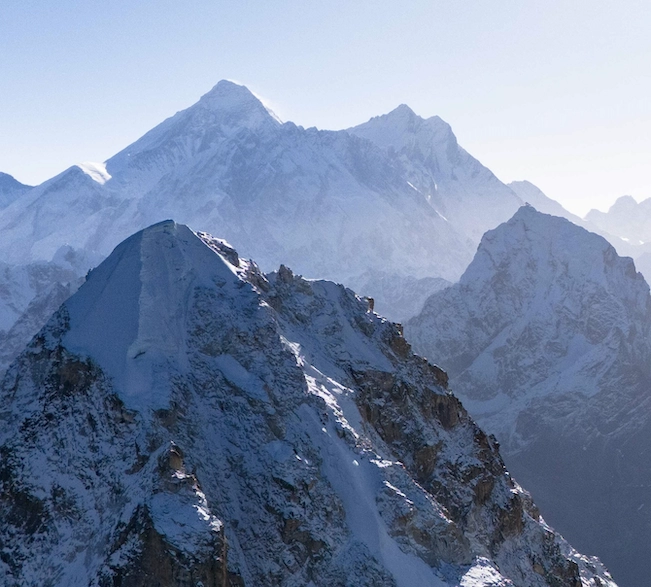
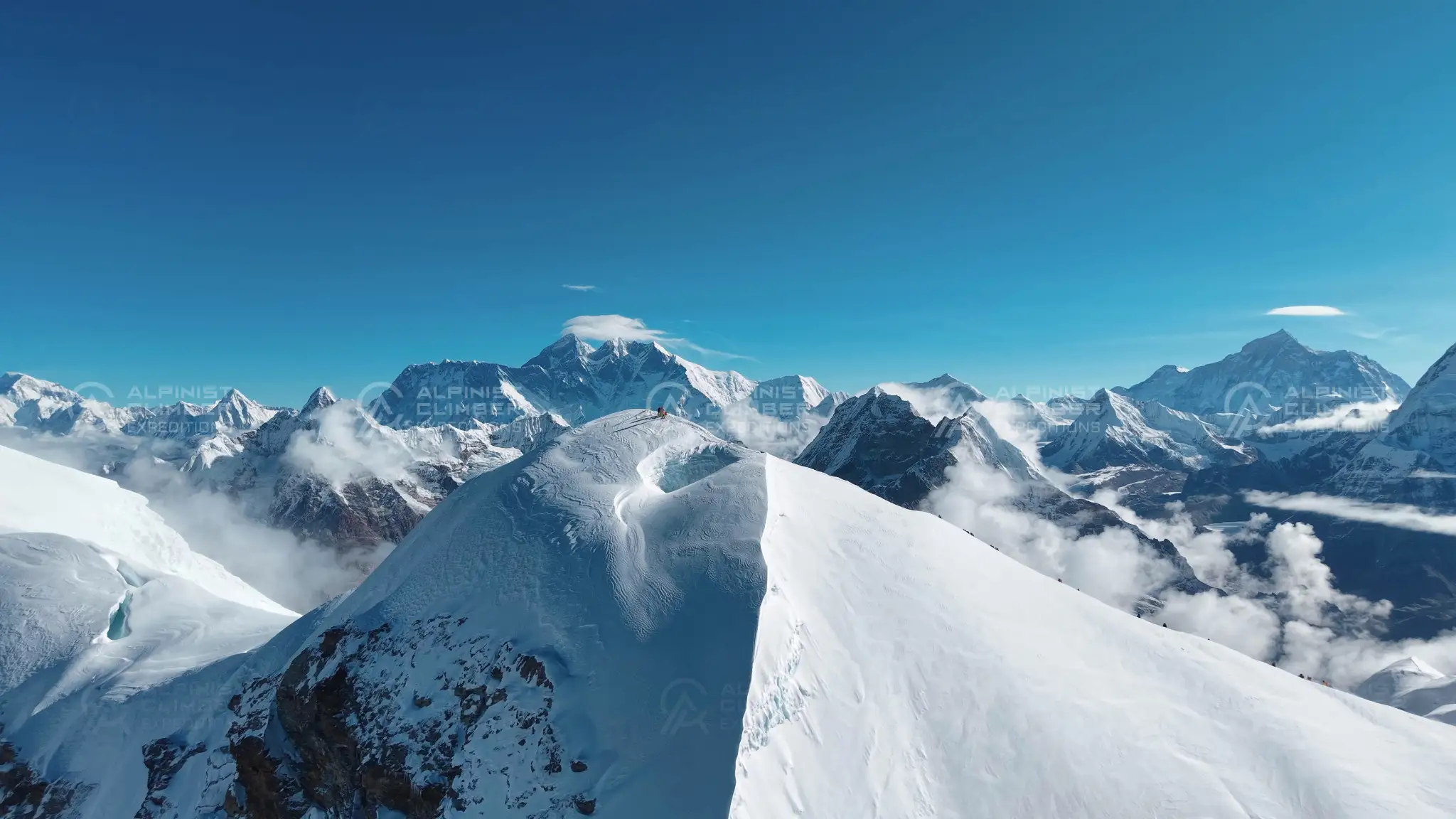
In September 2022, a team from Alpinist Climber Expeditions attempted Ama Dablam (6,812m) in alpine style, without fixed ropes. Ama Dablam is considered one of the most technical peaks in Nepal, and climbing it without fixed ropes requires more training and experience than the standard guided route, which most climbers attempt with fixed rope in place.

The team's IFMGA mountain guide led the climb toward Camp 3, then made the call to turn back due to unfavorable snow conditions. This report covers the route taken, including the Yellow Tower, the Grey Couloir, and the Mushroom Ridge, and the decision to end the attempt.


Expedition Overview

     Peak: Ama Dablam (6,812m)

     Region: Khumbu region, Sagarmatha National Park, Solukhumbu District, Nepal

     Attempt date: 28 September 2022 (the team did not summit, so this marks the high point / turn-back rather than a summit date)

     Style: Alpine style, climbing without fixed ropes, rather than the standard fixed-rope route most climbers use

     Route: Base Camp → Yellow Tower (5,800m) → Camp 2 → Grey Couloir → Mushroom Ridge → turned back below Camp 3

     Guiding: Led by an IFMGA-certified Mountain Guide with Alpinist Climber Expeditions

     Outcome: The team turned back due to unfavorable snow conditions and returned safely to Base Camp; the peak was not summited on this attempt


Full Expedition Report

The Route to Camp 2 and the Yellow Tower

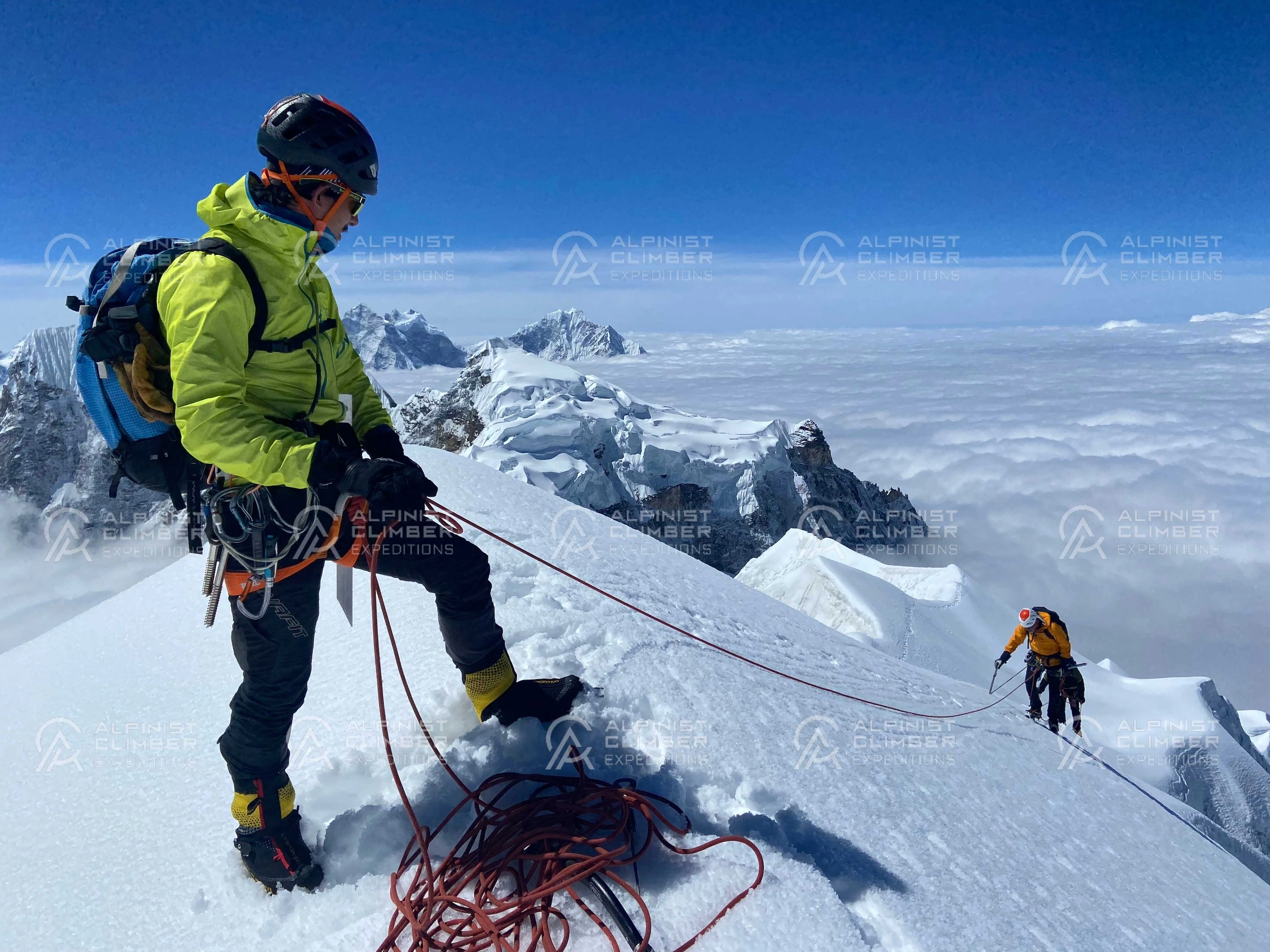
The route toward Camp 3 passes the Yellow Tower, a technical rock section at 5,800 metres, just below Camp 2. Climbing the Yellow Tower without fixed ropes is one of the hardest parts of the route, since climbing without a fixed line changes the difficulty of the section considerably compared to the standard, fixed-rope approach most climbers use.

Acclimatization Rotation to Camp 2

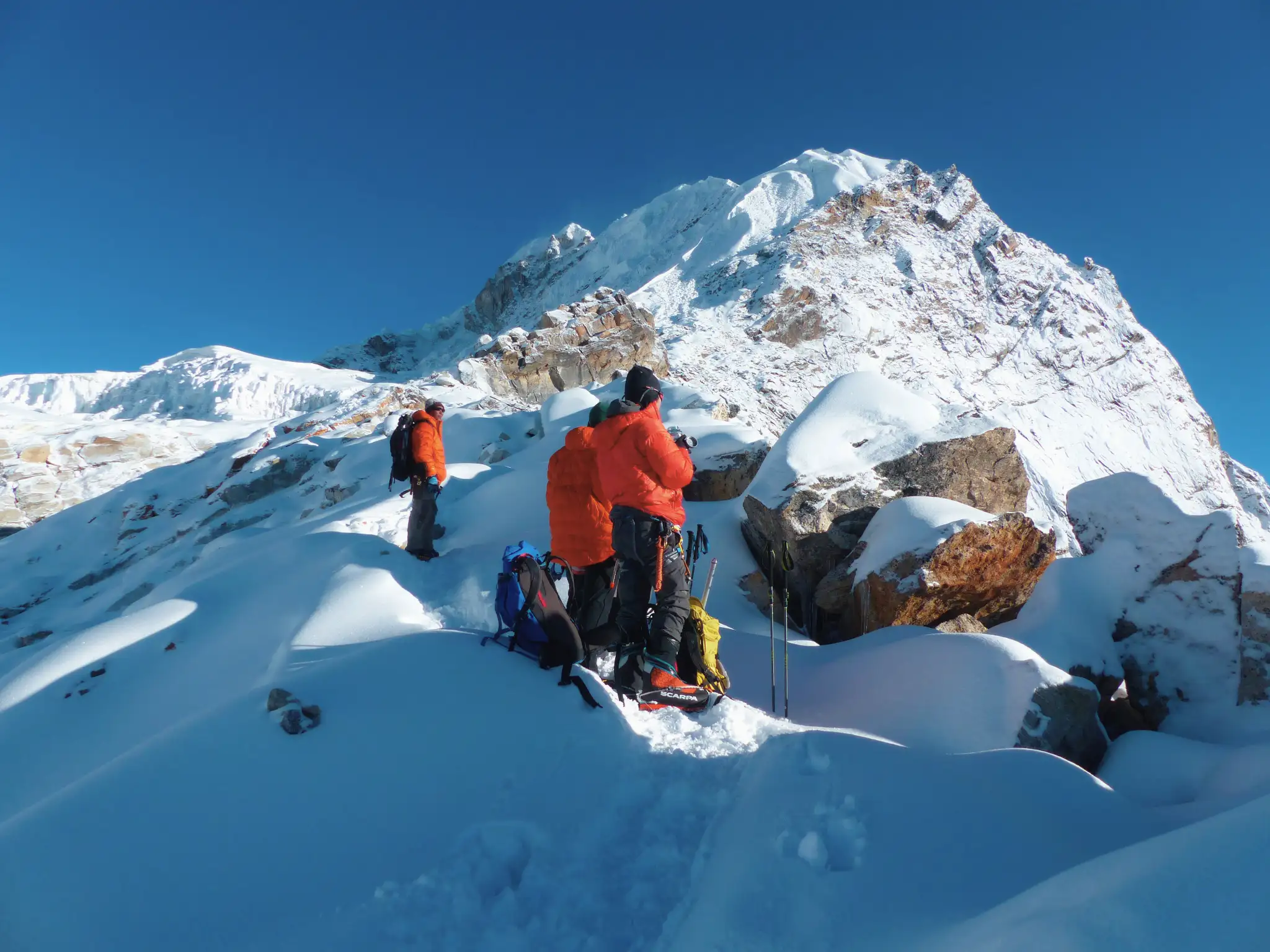
Before the push higher on the mountain, the team completed an acclimatization rotation to the exposed Camp 2, a standard part of preparing the body for the altitude and conditions above.

The Push Toward Camp 3: Grey Couloir and the Mushroom Ridge

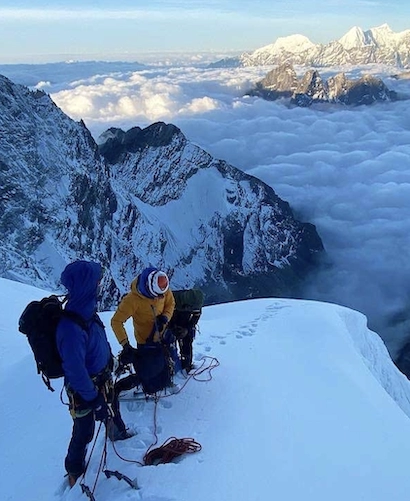
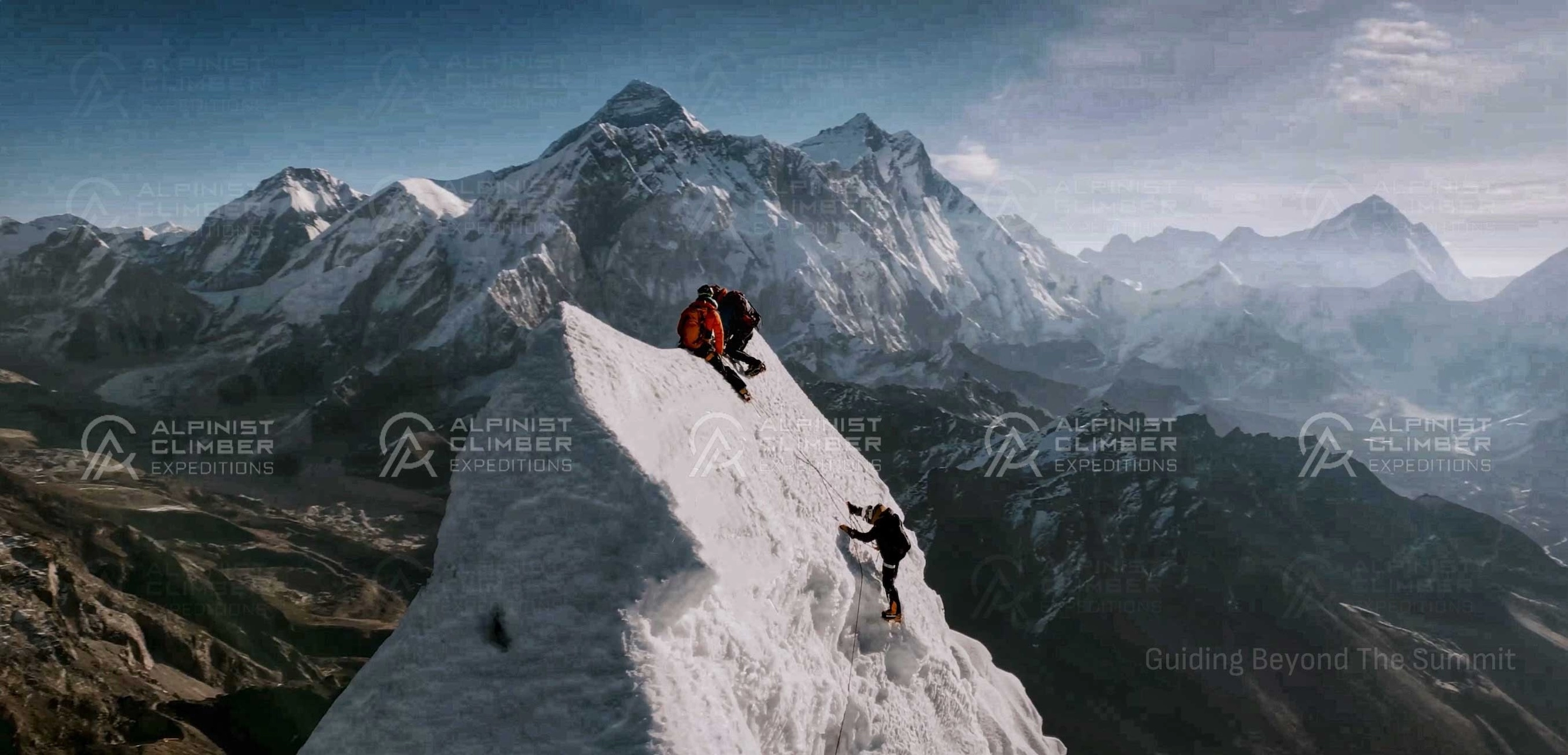
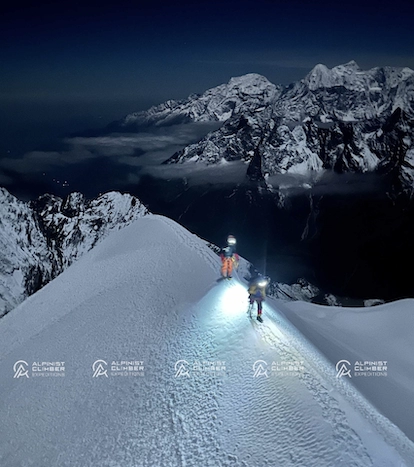
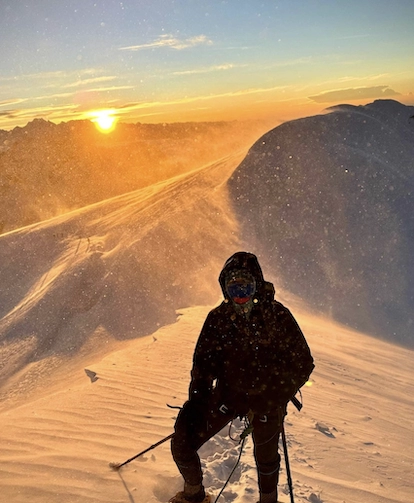
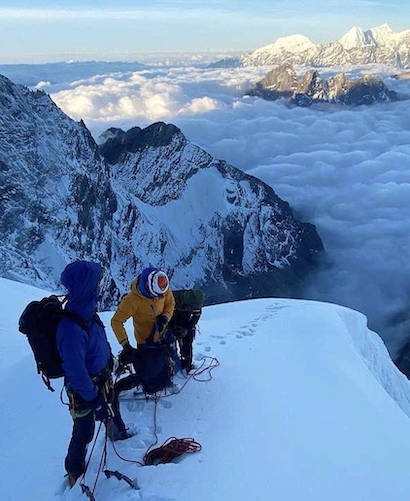
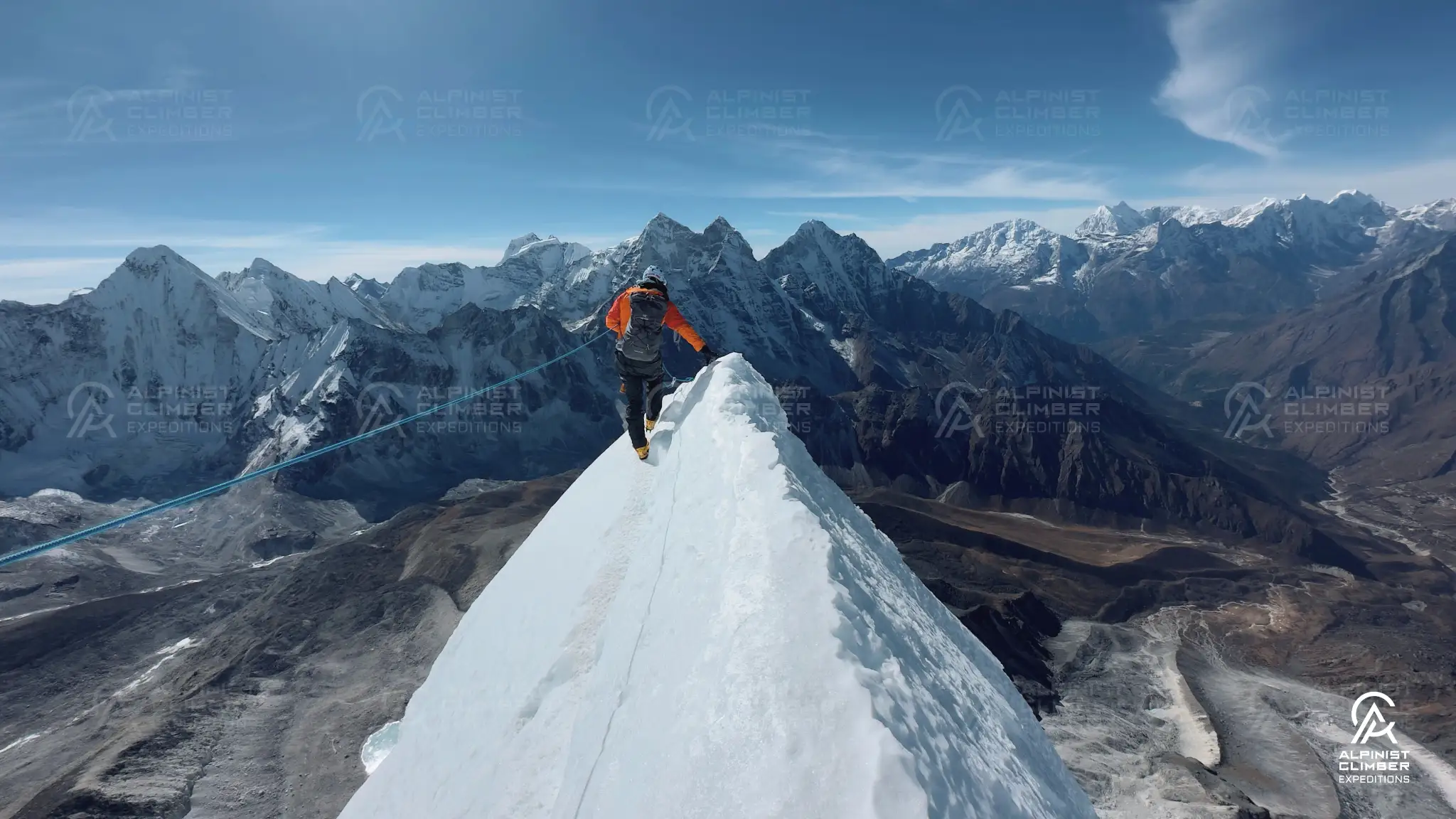
From Camp 2, the team set out for Camp 3 via the Grey Couloir and the Mushroom Ridge. Conditions were difficult: fresh, soft snow had fallen on the route, slowing the team's progress considerably.

Turning Back

After crossing the Mushroom Ridge, the team's IFMGA guide made the decision to turn back and end the attempt on Camp 3, due to the unfavorable snow conditions on the route. The team descended and returned to Base Camp. Despite not reaching the summit, the team enjoyed the climb and the experience of being on the mountain without crowds.


Challenges

     Climbing the Yellow Tower (5,800m) without fixed ropes, a considerably harder undertaking than the standard fixed-rope ascent most climbers use

     Fresh, soft snow on the Grey Couloir and Mushroom Ridge, which slowed the team's progress on the push toward Camp 3

     Making the call to turn back below Camp 3 due to unfavorable snow conditions, after an acclimatization rotation and a demanding push higher on the mountain


Highlights

     Attempting one of Nepal's most technical peaks in alpine style, without fixed ropes

     Climbing the Yellow Tower, one of the route's hardest technical sections

     An acclimatization rotation to the exposed Camp 2

     Crossing the Grey Couloir and the Mushroom Ridge

     Having the mountain without crowds


Safety

Alpine-style climbing on a peak as technical as Ama Dablam leaves little margin for error, particularly on sections like the Yellow Tower where climbing without fixed ropes raises the stakes considerably. When the team encountered soft, unstable snow on the push toward Camp 3, the team's IFMGA-certified guide made the decision to turn back rather than continue into unfavorable conditions. The team returned safely to Base Camp.


Conclusion

This attempt on Ama Dablam did not reach the summit, but it is a clear example of how alpine-style climbing decisions get made on a mountain this technical: when the snow on the Grey Couloir and Mushroom Ridge turned unfavorable, the team's IFMGA guide chose to turn back rather than push on. Ama Dablam remains one of Nepal's most demanding peaks, and an alpine-style attempt, without fixed ropes, adds a level of difficulty beyond the standard guided route.

Alpinist Climber Expeditions offers both standard, fixed-rope Ama Dablam expeditions and alpine-style attempts for climbers with the training and experience to take them on.

Related Blogs

Chhuama IV First Ascent Report 2026
Expedition Journal

Chhuama IV First Ascent Report 2026

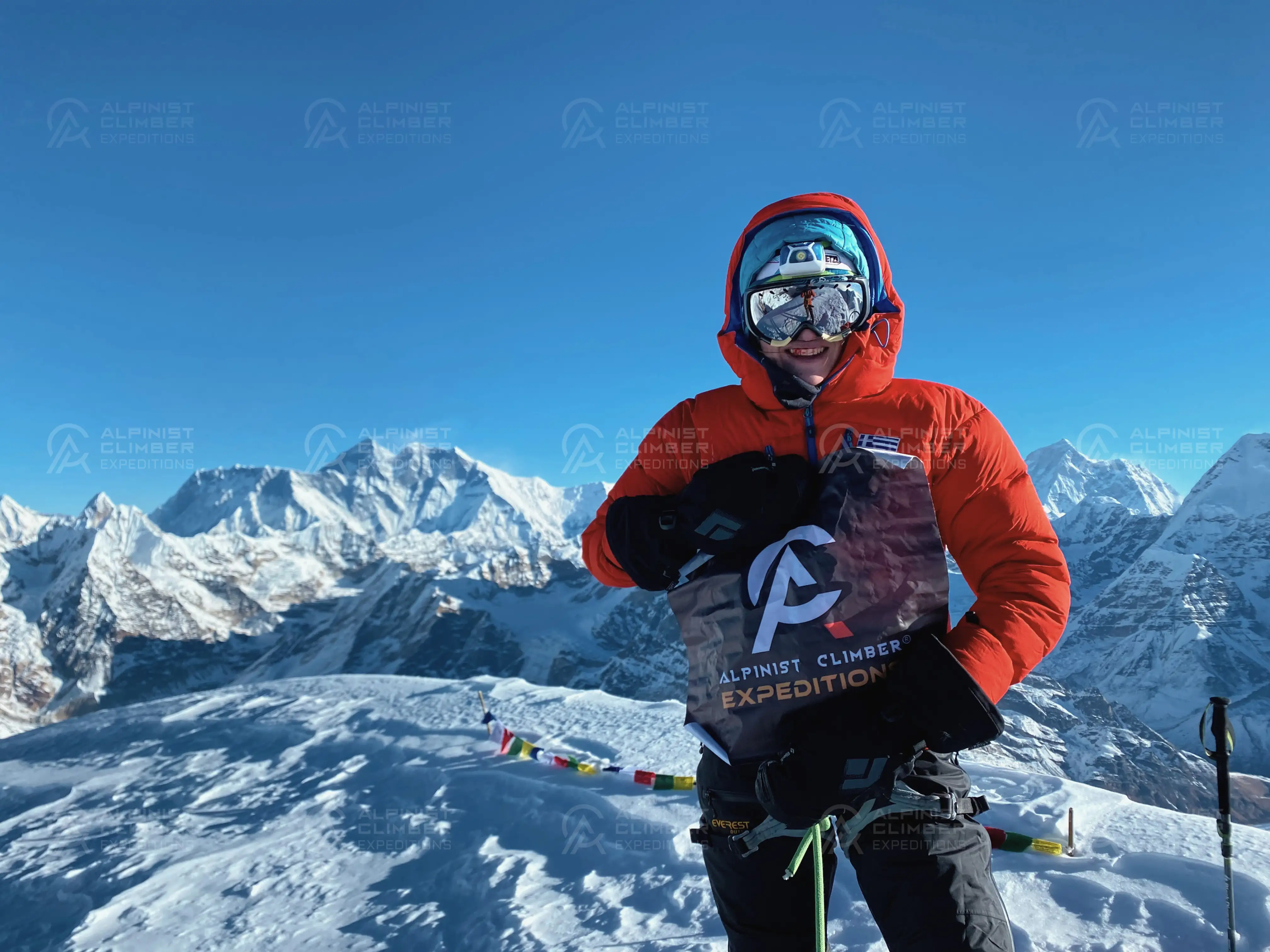
  In July 2026, a team from Alpinist Climber Expeditions climbed Chhuama IV, a 6,179-metre peak in the Mustang region of Nepal that no one had ever summited before. On 16 July, IFMGA Mountain Guide and Dynafit athlete Prakash Sherpa reached the top at 3:21 PM Nepal time, after teammate Barnaby Francis turned back roughly 250 metres from the summit because of dangerous rockfall. Six earlier permit teams had tried and failed to climb Chhuama IV. This was the seventh attempt, and it succeeded — making it the first recorded ascent of the mountain. This is the story of that expedition: how the team got to the mountain, what the route was actually like, and what happened during the final push to the summit.   About Alpinist Climber Expeditions Alpinist Climber Expeditions is a Nepal-based expedition company that has been running alpine-style expeditions in the Himalayan ranges of Nepal since 2021. The Chhuama IV climb fits the kind of objective the company tends to take on: a lesser-known peak, a small team, and a route that hadn't been fully worked out by anyone before them. Alpine-style climbing generally means moving with a small team and minimal fixed infrastructure on the mountain, relying on judgment and route-finding rather than large-scale siege tactics — and that approach mattered on Chhuama IV, where conditions changed quickly and decisions had to be made on the spot.   The Peak and Why This Expedition  Was Different Chhuama IV sits in the Mustang region of Nepal and stands 6,179 metres high. Before this expedition, six other permit teams had attempted the mountain. None of them reached the top. That history says something about the peak — this wasn't a case of nobody having tried. Climbers had gone up before, assessed the conditions, and turned back. Alpinist Climber Expeditions' team was the seventh group to hold a permit for Chhuama IV. Reaching the summit meant succeeding where six previous attempts hadn't, on a mountain with no established route and no prior summit to reference for conditions, timing, or line of ascent.   Preparing for the Expedition and the Approach  to Base Camp The trip began on 9 July 2026 with a drive from Kathmandu to Pokhara, followed the next day by the long drive from Pokhara to Jomsom. On 11 July, the team continued by road from Jomsom to Lo Manthang, the historic walled town in Upper Mustang. The team spent 12 July acclimatizing in Lo Manthang before moving on. On 13 July they drove from Lo Manthang to Nymdo, and on 14 July they trekked from Nymdo to Base Camp. The following day, 15 July, they moved up from Base Camp to Lower High Camp — the last stop before the summit attempt. This slower, staged approach — drive, acclimatize, drive again, then trek up in stages to Base Camp and Lower High Camp — gave the team time to adjust to altitude before the technical climbing began.   Climbing Conditions on Chhuama IV Once the team got onto the mountain itself, the terrain turned out to be the main obstacle. The route up Chhuama IV involved long stretches of loose, unstable rock, slopes that could shift underfoot, and frequent rockfall. In the upper sections, there were only limited safe options for where to actually put a route, which meant the team had to keep reassessing the terrain as they climbed rather than following a fixed line. Weather added another layer of difficulty. Conditions changed often during the expedition, and on the day chosen for the summit push, the team had only a short window of favourable weather to work with. That combination — unstable ground below and a narrow weather window above — shaped almost every decision made on summit day.   The Summit Push : 16 July 2026 The team began its summit push from Lower High Camp on 16 July 2026. From early on, the upper mountain was hazardous. Rockfall was continuous, and the loose terrain meant every section had to be evaluated as they went, not assumed safe because it had been climbed before. Barnaby Francis climbed with the team through this section but made the decision to turn back approximately 250 metres below the summit. The reason was straightforward: the rockfall and the state of the terrain above made continuing unsafe. It was a judgment call made in the moment, based on what was actually happening on the mountain rather than on how close the summit looked. From that point, IFMGA Mountain Guide Prakash Sherpa continued alone. He worked through the difficult, unstable upper section and kept going where the conditions had stopped his teammate. This wasn't a case of pushing through recklessly — it reflects the kind of terrain assessment that comes with IFMGA-level guiding experience, where the decision to continue or turn back is made section by section.   Reaching the Summit Prakash Sherpa reached the summit of Chhuama IV, at 6,179 metres, at 3:21 PM Nepal Local Time on 16 July 2026. With six previous permit teams having failed to summit the mountain, this made Alpinist Climber Expeditions' team the first to do so. The expedition is recorded by the team as the first recorded ascent of Chhuama IV — a first ascent of a Nepal peak that had resisted six prior attempts before this one succeeded. After the summit, the team descended back toward Lower High Camp on the same day.     The Team's Experience  and the Way Down The climbing team for this expedition was small: Barnaby Francis from the United Kingdom, IFMGA Mountain Guide Prakash Sherpa, and Ngima Tashi Sherpa as supporter. On a mountain with unstable rock and shifting weather, decisions had to be made quickly and by people who knew the terrain — which is part of why Barnaby Francis's decision to turn back, and Prakash Sherpa's decision to continue, both mattered as much as the summit itself. The descent and return followed a similarly staged plan to the approach. On 17 July, the team trekked roughly 2.5 hours down from Lower High Camp before driving on to Pokhara. On 18 July, they completed the trip with the drive from Pokhara back to Kathmandu.   What Made This First Ascent  Significant Chhuama IV wasn't an easy objective, and it wasn't an obscure line that simply hadn't attracted attention. Six permit teams before Alpinist Climber Expeditions had tried to climb it and hadn't succeeded, which points to real difficulty rather than a lack of interest. The loose rock, the rockfall, and the narrow weather windows on summit day were the actual obstacles that had stopped previous attempts — and they were still present for this expedition. What changed the outcome wasn't a shortcut around those conditions. Barnaby Francis's decision to turn back 250 metres from the top, made because the risk was too high, and Prakash Sherpa's decision to continue where conditions allowed it, together produced the first known summit of the mountain. Both decisions came from reading the same terrain and weather correctly.   Conclusion The Chhuama IV expedition, carried out by Alpinist Climber Expeditions in July 2026, resulted in the first recorded ascent of Chhuama IV 6,179-metre peak in Nepal's Mustang region — a mountain that had already turned back six permit teams before this one. On 16 July 2026, after Barnaby Francis turned back roughly 250 metres below the summit due to rockfall and unstable terrain, IFMGA Mountain Guide Prakash Sherpa continued and reached the top at 3:21 PM Nepal time. It wasn't a straightforward climb, and the notes from the expedition don't describe it as one. Loose rock, frequent rockfall, and a narrow weather window shaped nearly every part of the summit day. Given that history, reaching the summit of Chhuama IV for the first time is a meaningful outcome — one built on careful, terrain-by-terrain decision-making rather than a single dramatic push to the top.     #GuidingBeyondTheSummit  #Dynafit 
Aug 12, 2026 Read More →
Mera Peak Expedition Report 2021
Expedition Journal

Mera Peak Expedition Report 2021

A team from Alpinist Climber Expeditions climbed Mera Peak (6,476m), the highest trekking peak in Nepal, in October 2021. The expedition was guided by IFMGA Mountain Guide Prakash Sherpa.   The trip followed a route through remote Sherpa villages, forest trails, and high alpine camps in the Hinku Valley, ending with a summit push across the Mera Glacier. This report covers the full itinerary, from the trek out of Sotang through acclimatization at Khare to the climb from High Camp to the summit.   Expedition Overview •     Peak: Mera Peak (6,476m), Mera North summit •     Region: Hinku Valley, Makalu Barun National Park, Solukhumbu District, Nepal •     Summit date: 26 October 2021 •     Starting point: Kathmandu, with a jeep drive to Sotang to begin the trek •     Route: Sotang → Juke → Chholim-Kharka → Khote → Tangnag → Khare → High Camp → Mera Peak summit •     Guiding: Prakash Sherpa, IFMGA-certified Mountain Guide with Alpinist Climber Expeditions •     Weather: Clear skies through most of the trek; high winds in the hours before the summit push   Full Expedition Report   Day 1: Kathmandu to Sotang The expedition began with a long jeep drive from Kathmandu to Sotang, a large village that served as the starting point for the trek toward Mera Peak. Day 2: Sotang to Juke (2,200m) From Sotang, the team hiked three hours to Juke, a small and remote Sherpa village at 2,200 metres. Juke is not on the usual trekking route, so few trekkers pass through. Along the trail the group saw a Himalayan squirrel, wild birds, and deer. Day 3: Juke to Chholim-Kharka (3,600m) The next stage climbed to Chholim-Kharka at 3,600 metres, a five-hour walk through forest thick with rhododendron and fir. The change in vegetation marked the team's steady gain in altitude. Day 4: Chholim-Kharka to Khote Day four was the longest so far: a seven-hour day that skipped the usual stop at Kholakharka camp and went straight through to Khote. The day started with a long, steady ascent to 4,500 metres across rocky ground. Not far past the high point, the group reached Panch Pokhari, five glacial lakes visible from the trail. Porters carrying heavy loads for the lodges were also on the trail. Khote sits beside a wide river and has grown into a small hub with a cluster of lodges. It was here that the team had its first sight of Mera Peak, and clear night skies over the peak after dark. Day 5: Khote to Tangnag (4,300m) From Khote the trail eased into a gentler day, following the river toward Tangnag at 4,300 metres, with big mountains rising on either side the whole way. Partway along, the group stopped at a Buddhist monastery built into a rock cave which was one of the trip's quieter, more memorable moments. Day 6: Tangnag to Khare (4,900m) The walk to Khare continued in the same easy rhythm, past more striking mountain views, with a tea stop along the way at the Dig Kharka tea house to rest and rehydrate before altitude made that harder to do. Days 7–9: Acclimatizing in Khare Khare, at 4,900 metres, was where the team spent three full days preparing the body for what came next. The first day was dedicated to a straightforward acclimatization hike to 5,200 metres. On the second, the group walked up to Mera Base Camp and back down to Khare to sleep, gaining altitude exposure without staying high overnight. The third day was kept for rest and for sorting gear — boots, crampons, and everything else needed for the push above. Day 10: Khare to High Camp (5,800m) With the team acclimatized, they geared up in Khare and set out for High Camp at 5,800 metres. The five-hour walk crossed onto the Mera Glacier, with Everest, Makalu, Nuptse, Cho Oyu, and Lhotse visible behind them as they climbed. High Camp is located behind a large rock formation; because of the altitude, the last stretch took longer than it looked like it should. Only two groups were preparing to attempt the summit the next day, so High Camp was quiet. After dinner, the team wished each other luck and went to sleep early. Day 11: Summit Day — Mera Peak (6,476m) The team woke at 3 a.m. and had porridge and tea from the group's cook before setting out at 4 a.m. The other group at High Camp had already left, though the two parties crossed paths on the route up. The team climbed through the night, with high winds picking up in the final hours before dawn. After three hours of climbing, they reached the summit of Mera Peak at 6,476 metres, with clear views of nearby peaks over 8,000 metres. They were alone on the summit. After thirty minutes taking photos, the team began the descent, continuing back down to Khare the same day.   Challenges •     The seven-hour push from Chholim-Kharka to Khote, including a steep ascent to 4,500m over rocky terrain with no stop at the usual Kholakharka camp •     Building a proper base of acclimatization at altitude — three full days at Khare, with graded hikes to 5,200m and to Mera Base Camp, before the team could safely move higher •     The final stretch into High Camp, where thin air made a visually “close” landmark feel much farther away •     High winds in the hours before the summit, adding a physically demanding edge to an already long push •     A demanding descent on summit day, covering the return from 6,476 metres all the way down to Khare in a single stretch   Highlights •     Wildlife sightings on the first day out of Sotang — a Himalayan squirrel, wild birds, and deer •     The remote, rarely visited village of Juke •     Rhododendron and fir forest on the climb to Chholim-Kharka •     The beautiful sight of Panch Pokhari's five glacial lakes •     First views of Mera Peak and clear night skies from Khote •     A Buddhist monastery built into a rock cave near Tangnag •     Panoramic views of Everest, Makalu, Nuptse, Cho Oyu, and Lhotse from the Mera Glacier •     A quiet, uncrowded High Camp shared with just one other group •     Reaching the summit alone, with thirty minutes to take in the view before heading back down   Safety Every stage of this itinerary was shaped around the physical condition of the team, with IFMGA Mountain Guide Prakash Sherpa making the calls on pace and timing throughout. The three-day acclimatization block at Khare with a graded hike to 5,200 metres, a trip to Mera Base Camp and back, and a full rest day gave the group's bodies time to adjust before the push to High Camp and beyond. On summit morning, the team's cook made sure everyone had porridge and tea before setting out into the cold, and the group climbed together through the night and the high winds that picked up before dawn. The entire team returned safely to Khare, without incident which was a result of following the guide's judgment at every stage, with the expedition operated by Alpinist Climber Expeditions.   Conclusion This Mera Peak climb combined remote villages, forest trails, and a demanding but achievable summit day, with views of five of the world's 8,000-metre peaks from the top. The team's success came down to pacing the climb to match their condition and following an IFMGA-certified guide's judgment at each stage — a combination that develops the fitness, skills, and acclimatization habits needed for future high-altitude climbs. For climbers planning their own ascent, our Mera Peak Expedition follows a carefully paced itinerary designed around acclimatization, mountain skills, and the demands of the summit day. Alpinist Climber Expeditions has been leading guided climbs to Mera Peak, with IFMGA-certified guides, since 2021.

Oct 26, 2021 Read More →
Mera Peak Ski Expedition: A Guided Climb and Ski Descent of Nepal's Highest Trekking Peak
Expedition Journal

Mera Peak Ski Expedition: A Guided Climb and Ski Descent of Nepal's Highest Trekking Peak

In November 2022, two teams from Alpinist Climber Expeditions climbed Mera Peak (6,476m) as part of a ski expedition. One team skied down from the summit using Base Camp only; the other followed the standard route via High Camp. Both teams reached the summit safely. This report covers the trek in from Sotang, the acclimatization stops along the way, and the two different routes the teams took to the top.   Expedition Overview •     Peak: Mera Peak (6,476m) •     Region: Hinku Valley, Makalu Barun National Park, Solukhumbu District, Nepal •     Summit date: 14 November 2022 •     Starting point: Kathmandu, with a 12-hour jeep drive to Sotang •     Route: Sotang → a Sherpa village at 2,000m → high pass acclimatization (~4,500m) → Panch Pokhari → Kholakharka → Khote (3,600m) → Tangnag → Khare (4,900m) → Mera Peak summit, via two different routes •     Guiding: Led by Alpinist Climber Expeditions' team, with an experienced, professional mountain guide •     Style: Two teams — one completed a ski ascent and descent using Base Camp only; the other used the standard High Camp route •     Outcome: Both teams reached the summit safely; the ski team continued on toward Baruntse Base Camp afterward   Full Expedition Report   Day 1: Kathmandu to Sotang The trip began with a 12-hour jeep drive from Kathmandu to Sotang, starting at 4 a.m. The drive included stops in cultural villages along the way, with views of rural life away from the city. Day 2: Sotang to a Sherpa Village (2,000m) From Sotang, the team hiked four hours through a remote jungle trail used mainly by local people, to a Sherpa village at 2,000 metres, where they spent the night. Day 3: Village Rest and On to the Next Village The next day included a short tour of the village and a nearby monastery before the team continued toward the next village. The trail passed through rhododendron forest and past waterfalls coming down from the hillside. Day 4: Acclimatization at the High Pass (4,500m) As part of the acclimatization plan, the team hiked up to a high pass at around 4,500 metres and then slept lower, at 4,200 metres, a standard technique for adjusting to altitude. Day 5: Panch Pokhari to Kholakharka Past the high pass, the trail led through Panch Pokhari, five glacial lakes considered holy in the area. After a short break, the team continued to a lodge in a small valley called Kholakharka. Day 6: Kholakharka to Khote (3,600m) From Kholakharka, the route to Khote started with an hour-long ascent, followed by a steep descent through the jungle. Low cloud settled over the valley as the team walked down toward the Inkhu Khola river, which they crossed by bridge before reaching Khote in the afternoon. From Khote, the team had clear views of Mera Peak at night. Days 7–8: Acclimatizing in Khote The team spent two nights in Khote to acclimatize and rest before continuing higher. Day 9: Khote to Tangnag The walk from Khote to Tangnag followed the river through forest and moraine terrain, gaining about 700 metres in elevation on a gradual trail with no steep sections. The team arrived in Tangnag late in the morning, with more snow-covered peaks coming into view. Day 10: Tangnag to Khare (4,900m) After breakfast, the team continued to Khare, the last lodge before the higher camps and the final stop before the Mera Peak ascent. The afternoon was spent checking and preparing ski and climbing equipment for the days ahead. Days 11–12: Acclimatizing in Khare The team spent two days in Khare to acclimatize before moving higher. The Ski Team: Base Camp to Summit One team continued to Mera Peak Base Camp (5,300m), skipping High Camp: since the plan was a faster ski ascent and descent, Base Camp served as a better staging point. After further acclimatizing and preparing a summit plan at Base Camp, the team had dinner around 6 p.m. and went to sleep early to save energy. They woke at 1 a.m., had porridge and hot tea, and left Base Camp at around 2 a.m. for the summit.| The climb involved a steady, sustained elevation gain. The team reached the summit of Mera Peak (6,476m) and, after enjoying the view, skied back down to Khare, arriving after a few hours. After resting, they continued on toward Baruntse Base Camp, the next stage of the trip. The Second Team: High Camp to Summit A second group left Khare a day later and followed the standard route, spending the night at High Camp (5,800m). Climbing at night, the team saw a bright meteor streak across the sky and managed to photograph it. After a few hours of climbing, the second team also reached the summit of Mera Peak.   Challenges •     The 12-hour jeep drive from Kathmandu to Sotang to begin the trip •     A long acclimatization sequence — a high pass at 4,500m, sleeping lower at 4,200m, and further rest stops at Khote and Khare — before the summit push •     A steady, sustained elevation gain on the final push to the summit, particularly for the ski team's faster Base Camp-only ascent •     Skiing a technical descent from 6,476m after a demanding summit push •     Early, cold starts (1 a.m. wake-ups) for both teams' summit pushes   Highlights •     Cultural stops in rural villages on the drive from Kathmandu to Sotang •     A remote jungle trail to a Sherpa village at 2,000m •     Rhododendron forest and waterfalls on the trail to the next village •     Panch Pokhari's five holy lakes •     Clear night views of Mera Peak from Khote •     A ski descent from the 6,476m summit •     A bright meteor spotted and photographed by the second team during their night climb •     Both teams reaching the summit safely   Safety The trip's acclimatization plan followed a staged approach: a high pass ascent followed by a lower sleeping altitude, two nights in Khote, and two more days in Khare before the summit push. The two teams also split into different routes suited to their plans — the ski team used Base Camp only for a faster ascent and descent, while the second team took the standard route via High Camp. Both teams summited and returned safely, with the notes crediting an experienced, professional guide for keeping the climb safe throughout.   Conclusion This Mera Peak expedition combined a standard guided route with a ski descent, run as two teams with different plans suited to their goals. Both teams reached the 6,476m summit safely, and the ski team's descent, along with the second team's meteor sighting from High Camp, made for two distinct accounts of the same mountain. Mera Peak's mix of manageable technical difficulty and big-mountain views is why the notes describe it as suitable for both beginners and advanced climbers, provided the climb is guided by an experienced, professional mountain guide. Alpinist Climber Expeditions has been leading guided climbs, and ski expeditions, on Mera Peak since 2021.

Nov 14, 2022 Read More →
Client Stories

From the Summit

Daniel Puttkemery
Daniel Puttkemery
Kyajo Ri Expedition
5/5 Rating

Prakash and his team are a couple of notches above totally professional! Everyone in the Alpinist Climber Expeditions family goes out of their way to provide the best possible experience. Superb core values and safety principles. I had the good fortune of climbing Kyajo Ri with Alpinist Climber Expeditions and I can not say enough positive things. All gear is first rate, exceptional food and beautiful base camp in particular. I have climbed with a few different outfits in the past, now I need look no further, whenever I’m in the Himalaya. I will only climb with Alpinist Climber Expeditions. It sounds cliche but they very much made me feel like family. Top marks to a top outfit!

Verified Client Story
Luca Smargiasso
Luca Smargiasso
Ama Dablam 6,812m
5/5 Rating

I have been climbing for 15 years, over 4 continents. This was my 3rd trip to Nepal. And this was undoubtedly one of the Best-organised expeditions have participated in. Cannot thank Prakash and his Team enough. The attention to detail both in terms of equipment, climbing conditions, and accommodation/food was outstanding. And despite having limited exposure to high altitude alpine style climbing, always felt comfortable in the climbs and approach. I put this down to Prakash and his experience as well as the unique approach to team size. The small team ensures that a more flexible and sensible approach is applied to all technical aspects of the climb-including importantly how you physically feel and acclimatise. I needed to spend 5 days at Namche due to a sinus infection, and never felt that this jeopardised the rest of my climb. The same goes for weather delays. I eventually overran the climbing calendar by 5 days without a single complaint from Prakash and his team. You feel like a climbing partner rather than a paying client. My only regret is that Alpinist Climber Expeditions does not have a more international footprint as would have liked to climb with Prakash and his Team internationally as well as in Nepal.

Verified Client Story
Andy Tronsberg
Andy Tronsberg
Kyajo Ri & Island Peak
5/5 Rating
“Perfect organised and guided expedition I ever took part! We climbed island peak and kyajo ri alpine style! Safety is always first, all team members are super kind and professional and also laughing comes not to short! Thanks for this unforgettable experience!! Andreas.

Verified Client Story
Rogier Keulen
Rogier Keulen
Mt. Kyajo Ri & Mt. Cholatse
5/5 Rating
“With IFMGA guide Prakash we climbed Kyajo Ri and Cholatse. Our expedition couldn't have been any better! We had a lot of fun and summiting stunning Cholatse is the most intense thing I've done. We did it alpine style, so without fixed ropes from bottom to top. Safety was a priority - Prakash summited Everest 3 times and is always in control - and we had a very strong drive to reach the summit - which we did!”
Verified Client Story
Ludwig Beer
Ludwig Beer
Baruntse 7,162m + Mera Peak 6,476m
5/5 Rating
“Vielen Dank lieber Pemba für die tolle Zeit. Deine Professionalität und stete Fürsorge waren allgegenwärtig. Die gute Planung, der Ablauf und die gute Stimmung waren großartig. Mit Dir und Deinem Team fühlt man sich wohl am Berg. Dadurch ist der Erfolg gesichert!”
Verified Client Story
Christiaan Jong
Christiaan Jong
Mt. Kyajo Ri & Mt. Cholatse
5/5 Rating
“The Kyajo Ri and Cholatse climbing expedition I did with Alpinist Climber Expeditions was great! Our guide Prakash is a very strong and professional guide.
We share our values regarding alpine-style climbing and succeeded on both summits in a very safe manner.
Apart from the climbing, the whole team was super supportive, helpful, and friendly. Nothing was too much to ask.
For future expeditions or other endeavors in the mountains, I would definitely reach out to Alpinist Climber Expeditions again.”
Verified Client Story
Expedition Journal

Dispatches from the Mountains

All Articles
Chhuama IV First Ascent Report 2026
Expedition Report

Chhuama IV First Ascent Report 2026

  In July 2026, a team from Alpinist Climber Expeditions climbed Chhuama IV, a 6,179-metre peak in the Mustang region of Nepal that no one had ever summited before. On 16 July, IFMGA Mountain Guide and Dynafit athlete Prakash Sherpa reached the top at 3:21 PM Nepal time, after teammate Barnaby Francis turned back roughly 250 metres from the summit because of dangerous rockfall. Six earlier permit teams had tried and failed to climb Chhuama IV. This was the seventh attempt, and it succeeded — making it the first recorded ascent of the mountain. This is the story of that expedition: how the team got to the mountain, what the route was actually like, and what happened during the final push to the summit.   About Alpinist Climber Expeditions Alpinist Climber Expeditions is a Nepal-based expedition company that has been running alpine-style expeditions in the Himalayan ranges of Nepal since 2021. The Chhuama IV climb fits the kind of objective the company tends to take on: a lesser-known peak, a small team, and a route that hadn't been fully worked out by anyone before them. Alpine-style climbing generally means moving with a small team and minimal fixed infrastructure on the mountain, relying on judgment and route-finding rather than large-scale siege tactics — and that approach mattered on Chhuama IV, where conditions changed quickly and decisions had to be made on the spot.   The Peak and Why This Expedition  Was Different Chhuama IV sits in the Mustang region of Nepal and stands 6,179 metres high. Before this expedition, six other permit teams had attempted the mountain. None of them reached the top. That history says something about the peak — this wasn't a case of nobody having tried. Climbers had gone up before, assessed the conditions, and turned back. Alpinist Climber Expeditions' team was the seventh group to hold a permit for Chhuama IV. Reaching the summit meant succeeding where six previous attempts hadn't, on a mountain with no established route and no prior summit to reference for conditions, timing, or line of ascent.   Preparing for the Expedition and the Approach  to Base Camp The trip began on 9 July 2026 with a drive from Kathmandu to Pokhara, followed the next day by the long drive from Pokhara to Jomsom. On 11 July, the team continued by road from Jomsom to Lo Manthang, the historic walled town in Upper Mustang. The team spent 12 July acclimatizing in Lo Manthang before moving on. On 13 July they drove from Lo Manthang to Nymdo, and on 14 July they trekked from Nymdo to Base Camp. The following day, 15 July, they moved up from Base Camp to Lower High Camp — the last stop before the summit attempt. This slower, staged approach — drive, acclimatize, drive again, then trek up in stages to Base Camp and Lower High Camp — gave the team time to adjust to altitude before the technical climbing began.   Climbing Conditions on Chhuama IV Once the team got onto the mountain itself, the terrain turned out to be the main obstacle. The route up Chhuama IV involved long stretches of loose, unstable rock, slopes that could shift underfoot, and frequent rockfall. In the upper sections, there were only limited safe options for where to actually put a route, which meant the team had to keep reassessing the terrain as they climbed rather than following a fixed line. Weather added another layer of difficulty. Conditions changed often during the expedition, and on the day chosen for the summit push, the team had only a short window of favourable weather to work with. That combination — unstable ground below and a narrow weather window above — shaped almost every decision made on summit day.   The Summit Push : 16 July 2026 The team began its summit push from Lower High Camp on 16 July 2026. From early on, the upper mountain was hazardous. Rockfall was continuous, and the loose terrain meant every section had to be evaluated as they went, not assumed safe because it had been climbed before. Barnaby Francis climbed with the team through this section but made the decision to turn back approximately 250 metres below the summit. The reason was straightforward: the rockfall and the state of the terrain above made continuing unsafe. It was a judgment call made in the moment, based on what was actually happening on the mountain rather than on how close the summit looked. From that point, IFMGA Mountain Guide Prakash Sherpa continued alone. He worked through the difficult, unstable upper section and kept going where the conditions had stopped his teammate. This wasn't a case of pushing through recklessly — it reflects the kind of terrain assessment that comes with IFMGA-level guiding experience, where the decision to continue or turn back is made section by section.   Reaching the Summit Prakash Sherpa reached the summit of Chhuama IV, at 6,179 metres, at 3:21 PM Nepal Local Time on 16 July 2026. With six previous permit teams having failed to summit the mountain, this made Alpinist Climber Expeditions' team the first to do so. The expedition is recorded by the team as the first recorded ascent of Chhuama IV — a first ascent of a Nepal peak that had resisted six prior attempts before this one succeeded. After the summit, the team descended back toward Lower High Camp on the same day.     The Team's Experience  and the Way Down The climbing team for this expedition was small: Barnaby Francis from the United Kingdom, IFMGA Mountain Guide Prakash Sherpa, and Ngima Tashi Sherpa as supporter. On a mountain with unstable rock and shifting weather, decisions had to be made quickly and by people who knew the terrain — which is part of why Barnaby Francis's decision to turn back, and Prakash Sherpa's decision to continue, both mattered as much as the summit itself. The descent and return followed a similarly staged plan to the approach. On 17 July, the team trekked roughly 2.5 hours down from Lower High Camp before driving on to Pokhara. On 18 July, they completed the trip with the drive from Pokhara back to Kathmandu.   What Made This First Ascent  Significant Chhuama IV wasn't an easy objective, and it wasn't an obscure line that simply hadn't attracted attention. Six permit teams before Alpinist Climber Expeditions had tried to climb it and hadn't succeeded, which points to real difficulty rather than a lack of interest. The loose rock, the rockfall, and the narrow weather windows on summit day were the actual obstacles that had stopped previous attempts — and they were still present for this expedition. What changed the outcome wasn't a shortcut around those conditions. Barnaby Francis's decision to turn back 250 metres from the top, made because the risk was too high, and Prakash Sherpa's decision to continue where conditions allowed it, together produced the first known summit of the mountain. Both decisions came from reading the same terrain and weather correctly.   Conclusion The Chhuama IV expedition, carried out by Alpinist Climber Expeditions in July 2026, resulted in the first recorded ascent of Chhuama IV 6,179-metre peak in Nepal's Mustang region — a mountain that had already turned back six permit teams before this one. On 16 July 2026, after Barnaby Francis turned back roughly 250 metres below the summit due to rockfall and unstable terrain, IFMGA Mountain Guide Prakash Sherpa continued and reached the top at 3:21 PM Nepal time. It wasn't a straightforward climb, and the notes from the expedition don't describe it as one. Loose rock, frequent rockfall, and a narrow weather window shaped nearly every part of the summit day. Given that history, reaching the summit of Chhuama IV for the first time is a meaningful outcome — one built on careful, terrain-by-terrain decision-making rather than a single dramatic push to the top.     #GuidingBeyondTheSummit  #Dynafit 
Aug 12, 2026 Read Article →
Stay Connected