Lobuche East Expedition Report 2022
Home / Lobuche East Expedition Report 2022

Lobuche East Expedition Report 2022


This is the story of one of our Lobuche East expeditions, climbed in the Khumbu region of Nepal under clear spring skies. Our team crossed Cho La Pass, rested and acclimatized in Lobuche village, pushed up to high camp, and stood on the summit of Lobuche East as the sun came up over Everest, Lhotse, and Nuptse. It's a climb that rewards patience, fitness, and good decision-making — and this report walks through exactly how it unfolded.


If you're researching Lobuche East before booking your own climb, this report also answers the questions most climbers ask us: how hard is it, how long does it take, and what does the summit push actually feel like.


Expedition Overview


     Peak: Lobuche East, 6,119 m (20,075 ft)

     Region: Khumbu Region, Everest Region, Nepal

     Summit Date: 21 May 2022

     Starting Point: Dragnak, via Cho La Pass (5,420 m)

     Route: Standard Lobuche East route — Lobuche village to High Camp (5,270 m), then the summit ridge via the crampon point

     Guiding: Led by an IFMGA-certified mountain guide from Alpinist Climber Expeditions, supported by our climbing Sherpa staff

     Weather: Clear, cold, and stable throughout, with a fully clear night sky on summit day


Lobuche East sits close to the classic Everest Base Camp trekking trail, which is part of what makes it such a popular introduction to Himalayan peak climbing as you get glacier travel, a real alpine summit push, and some of the best mountain views in the Khumbu, all within a route that's shorter and less committing than an Everest-scale expedition.


Full Expedition Report


Dragnak to Lobuche Village via Cho La Pass


We left Dragnak early in the morning to cross Cho La Pass (5,420 m). The trail up to the pass is one of the most scenic stretches in the entire Khumbu — big mountains on every side, and Mount Cho Oyu standing out clearly in the distance.


We reached Dzongla earlier than expected, and with good energy in the team and daylight still on our side, we made the call to keep moving to Lobuche village rather than stopping early. The trail from Dzongla to Lobuche is quiet compared to the main Everest Base Camp corridor, and we had the path almost to ourselves — a rare kind of stillness in a region that's usually busy with trekkers.


Arriving in Lobuche village, we got our first real look at Nuptse (7,861 m), rising directly across the valley. It's a mountain that draws the eye immediately — steep, dramatic, and climbed by only a small number of mountaineers over the years.


Rest and Acclimatization in Lobuche


We spent two full days resting in Lobuche before heading up to high camp. These weren't idle days — this is when the real preparation happens. We sorted gear, checked equipment one more time, and let our bodies adjust to the altitude. There's a particular kind of anticipation that builds during rest days like these, everyone quietly aware that the technical part of the climb is now close.


Lobuche to High Camp (5,270 m)


The move up to high camp is short on paper but tough in practice. The trail follows a valley before turning into a steep, rocky, short climb right at the end. High camp itself sits in a rocky area above a small lake, which we used as our water source.


We had dinner at camp and were in our tents by around 7 p.m. — an early night, but a necessary one, with a 1 a.m. wake-up call ahead of us.


Summit Day (21 May 2022)


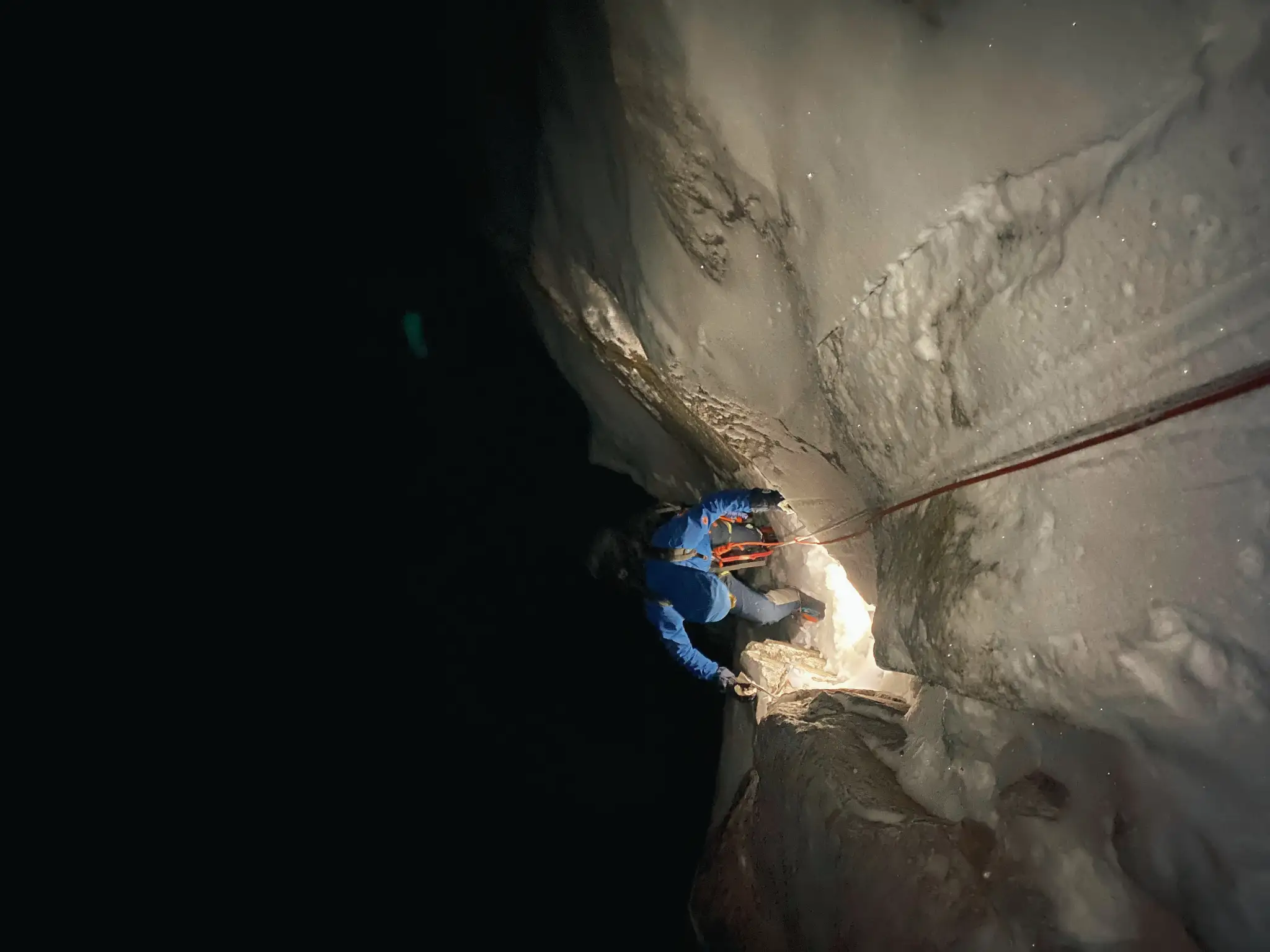
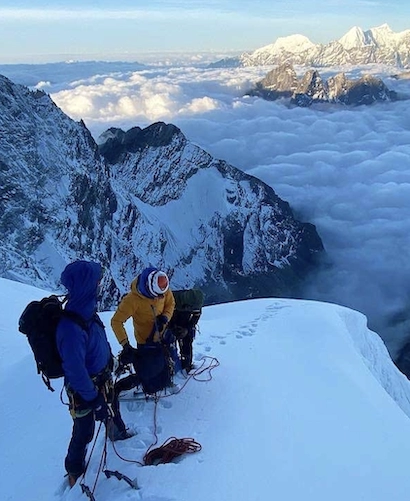
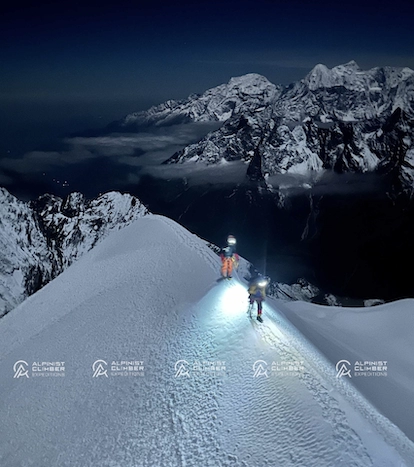
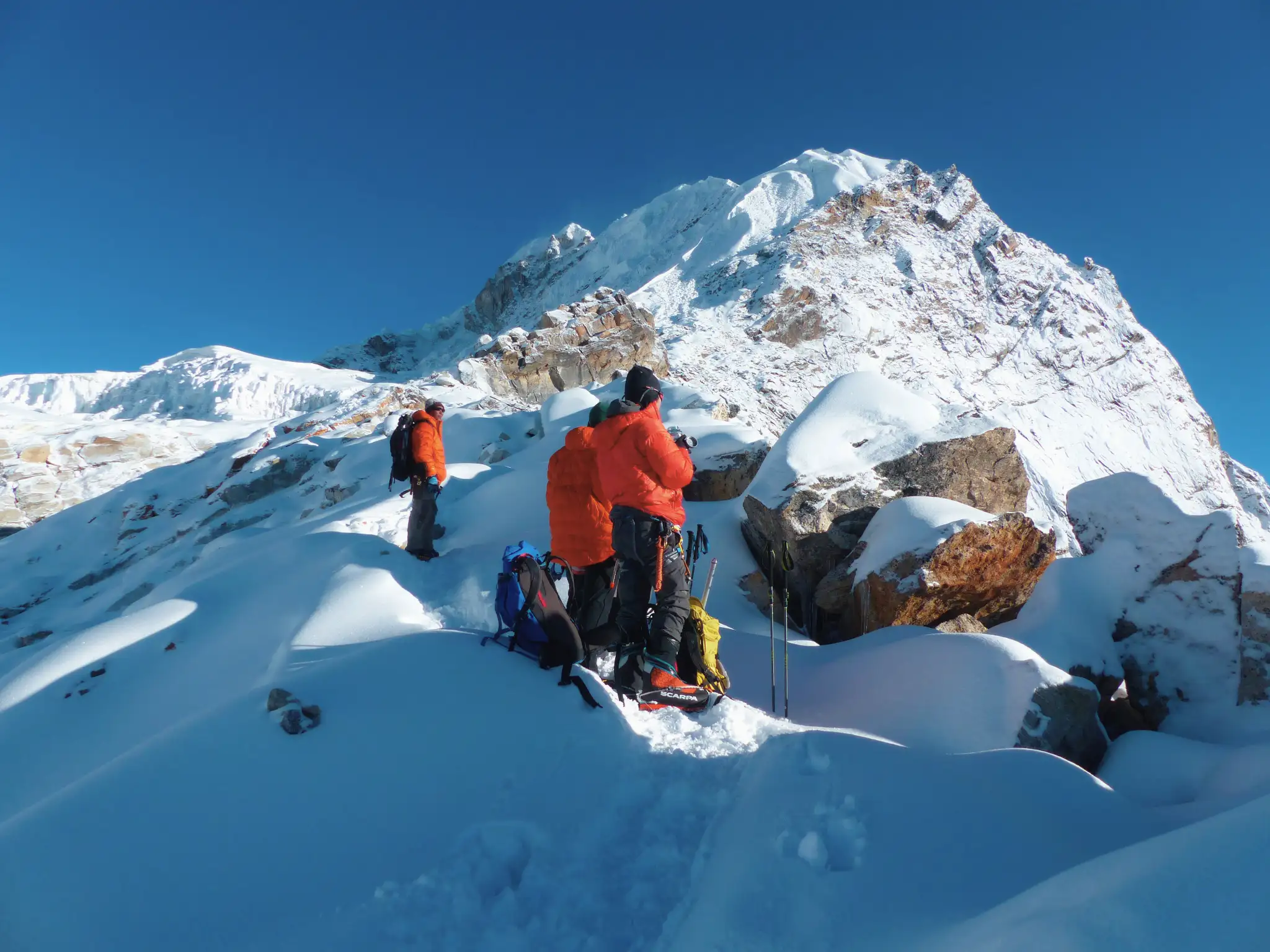
We were up at 1 a.m. Breakfast was simple — porridge and plenty of tea — and by 2 a.m. we were moving. Everything outside the tent had frozen overnight, and the early sections of the route were rocky and largely free of snow, which made our journey technical before we'd even reached the crampon point.


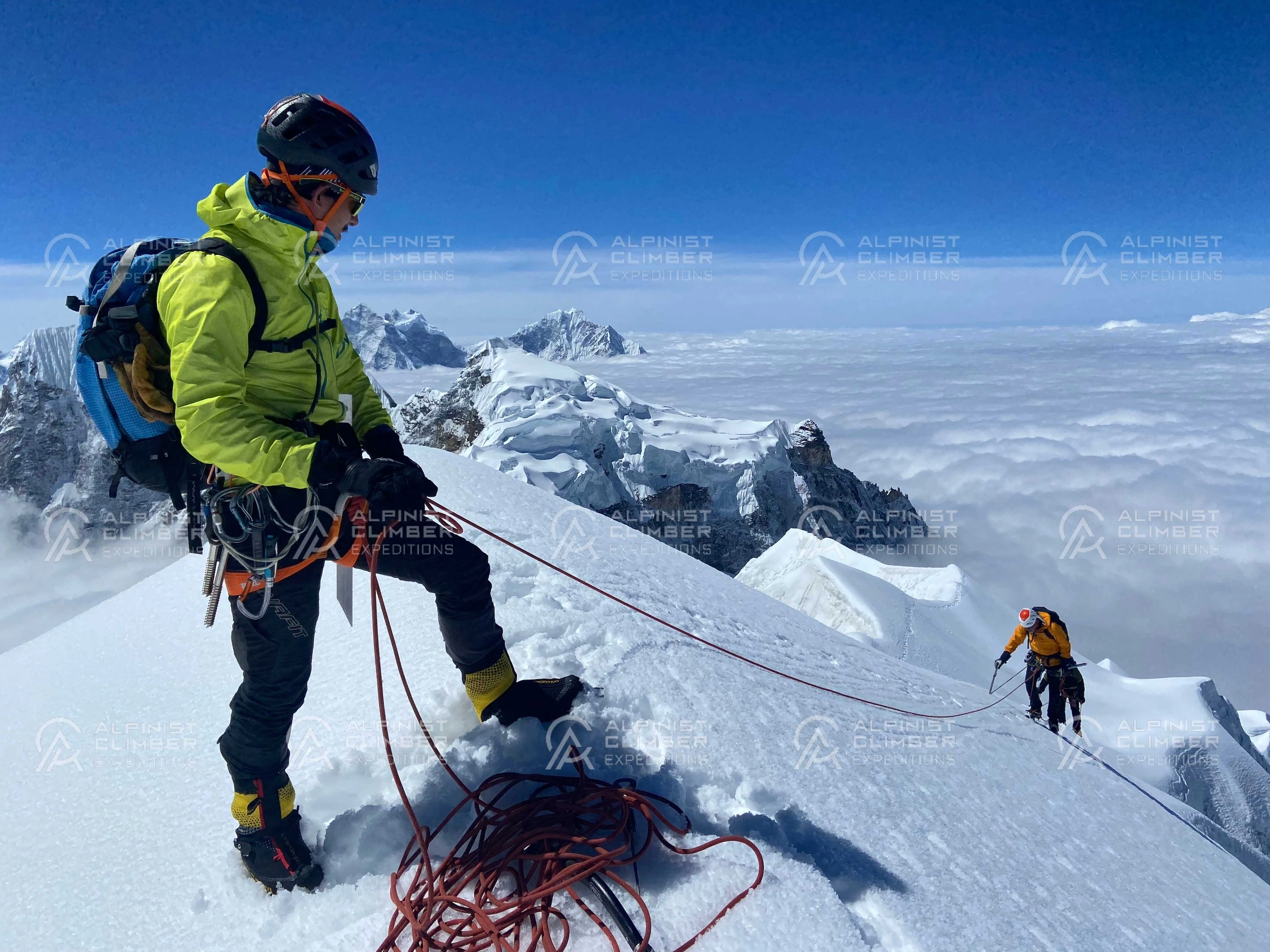
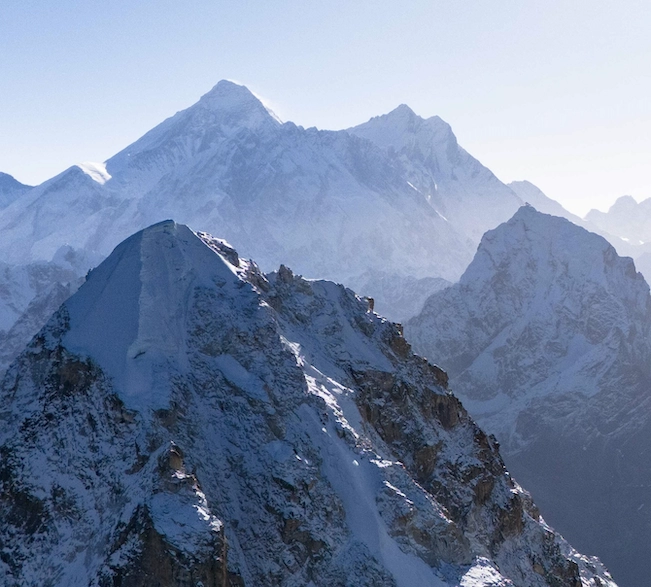
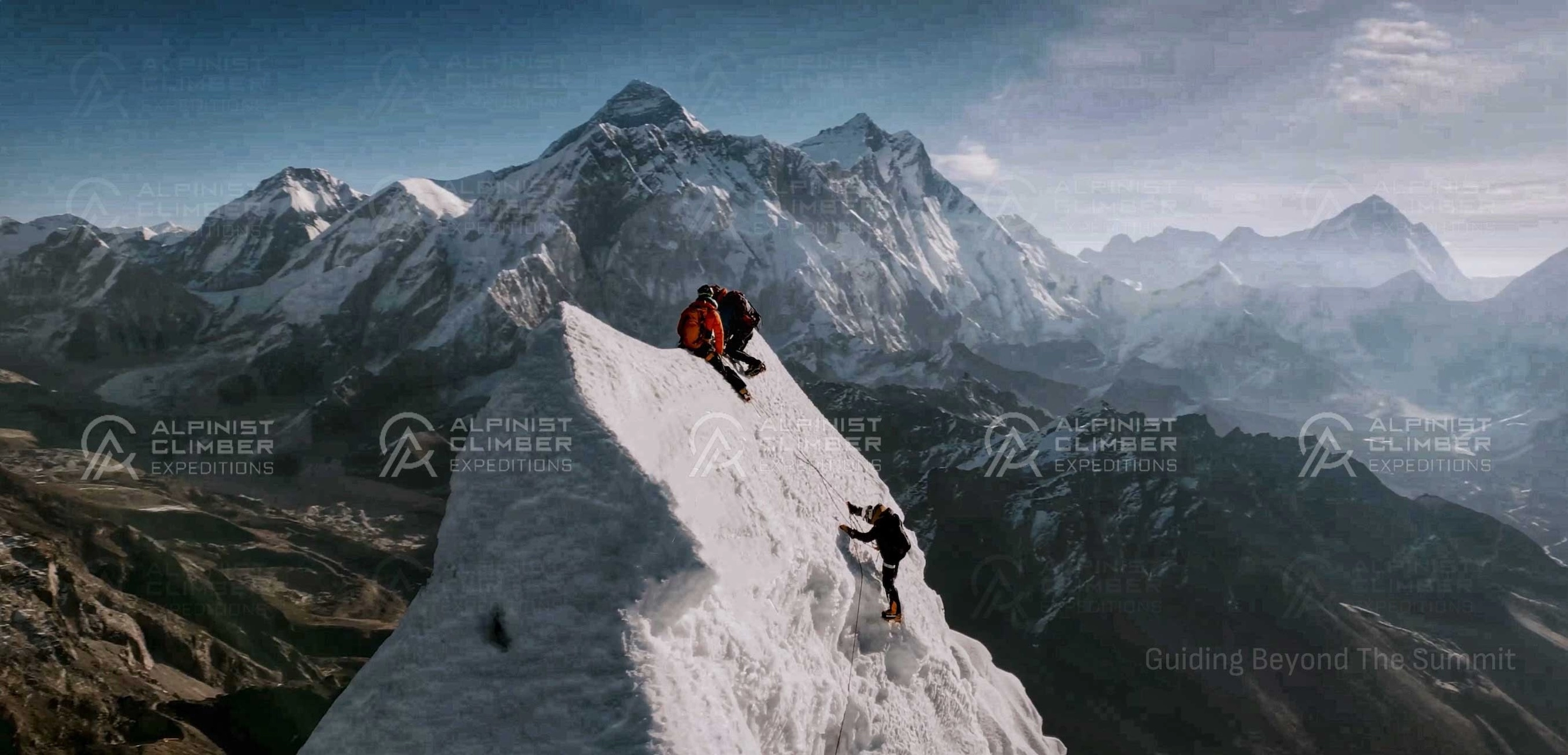
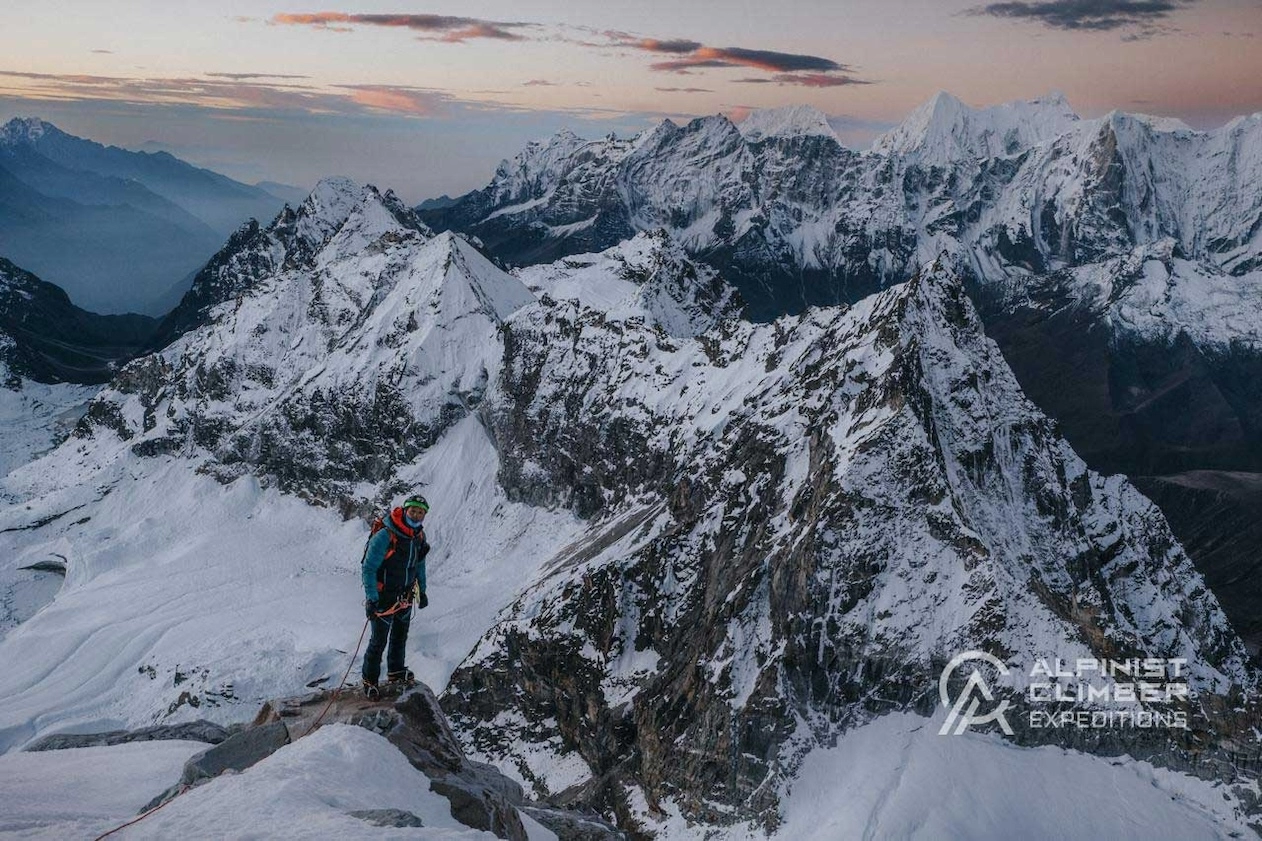
Past the crampon point, the climbing changed character completely: sustained 45-degree slopes that demand real stamina and upper-body strength to move through efficiently. The night was clear the entire time, and as we climbed we could pick out Everest, Lhotse, Nuptse, Pumori, Makalu, Cholatse, and Ama Dablam standing sharp against the sky.


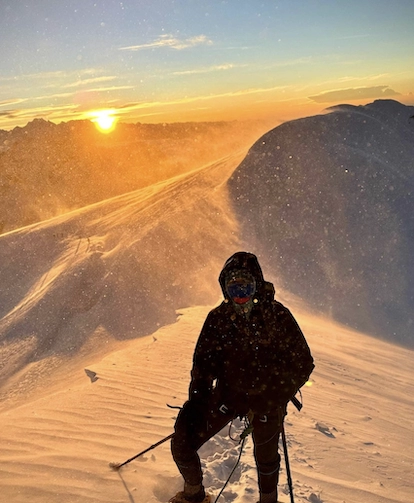
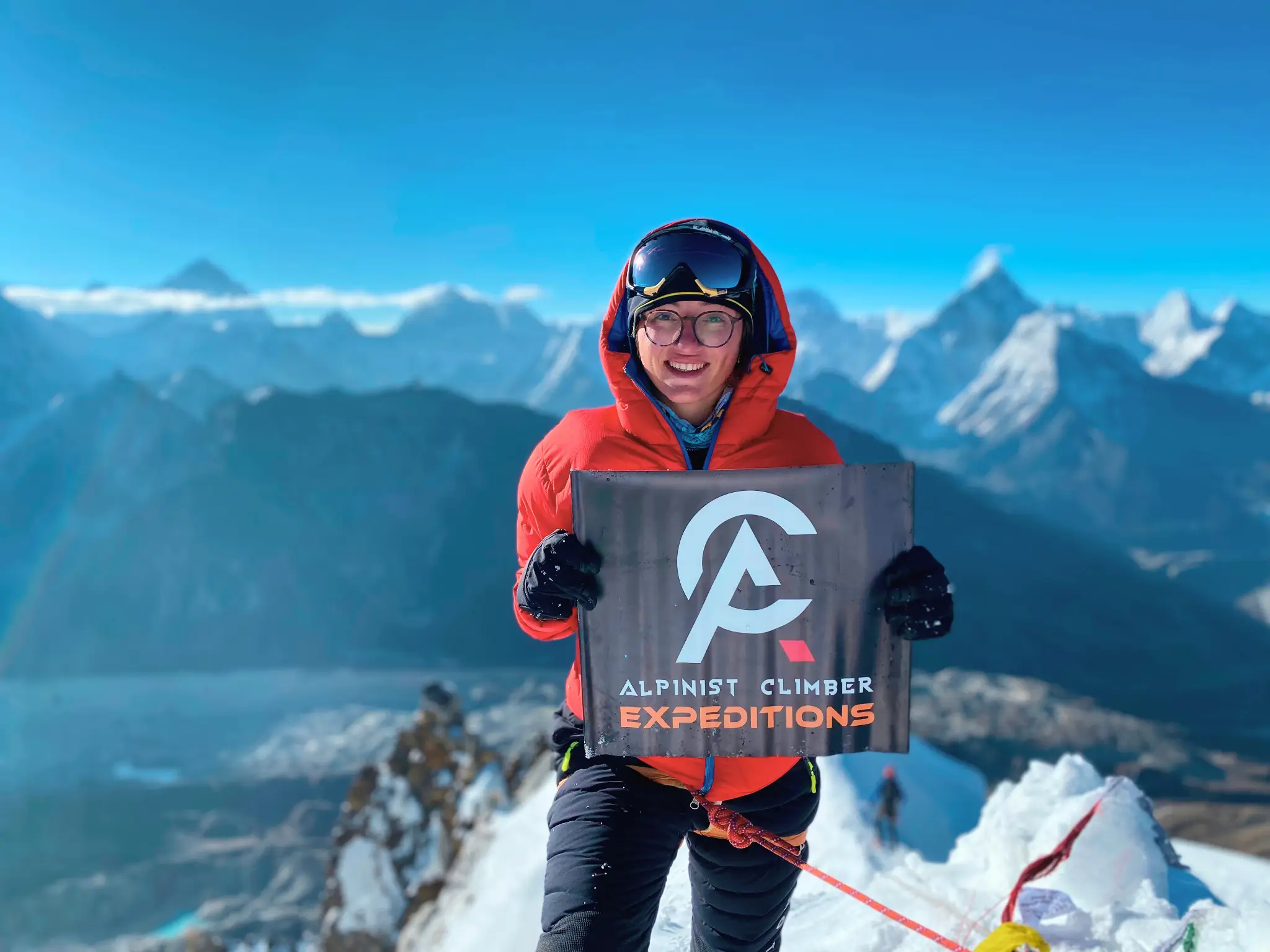
At 6:02 a.m., we stood on the summit of Lobuche East. It's a small summit so there wasn't room for a large group up there and on this particular morning, we were the only team on the mountain. Standing on top with clear views in every direction, entirely alone, is not something every expedition gets to experience.


After taking it in, we began the descent back to high camp to rest, well aware that reaching the top is only half the job as we always have to think about a safe descent as well.


Challenges


     Rocky, snow-free terrain below the crampon point — technical and slow-going before the real climbing even started

     Sustained 45-degree slopes above the crampon point, demanding stamina and physical strength rather than pure technique

     Overnight freezing conditions, which affected gear, pace, and comfort during the alpine start

     Short acclimatization window between Lobuche village and the summit push, managed carefully through the two rest days

     Ongoing decision-making about pacing and timing, since a strong summit push means nothing without a controlled descent


Highlights


     A perfectly clear summit night with views of Everest, Lhotse, Nuptse, Pumori, Makalu, Cholatse, and Ama Dablam

     Reaching the summit of Lobuche East completely alone as a team, with no one else on the mountain that morning

     The 6:02 a.m. summit moment itself, arriving just as the light came up

     The first view of Nuptse from Lobuche village

     Cho Oyu dominating the skyline from Cho La Pass

     The quiet, uncrowded trail between Dzongla and Lobuche village


Safety


Safety on Lobuche East comes down to a few things done consistently well: proper acclimatization, sound route decisions, and a team that communicates clearly under pressure.


On this climb, that meant building in two rest days in Lobuche before pushing to high camp, reading the rocky, snow-free terrain carefully before the crampon point, and pacing the 45-degree summit slopes so the team still had strength in reserve for the descent. Reaching a summit is only ever half the climb — getting back down safely is what actually defines a successful expedition.


This is the same safety-first approach that runs through every expedition we run at Alpinist Climber Expeditions: IFMGA-certified guides, experienced Sherpa climbing staff, and decisions that always prioritize the team's safety over summit ambition.


Conclusion


Standing on the summit of Lobuche East at 6:02 a.m., alone on the mountain with Everest, Lhotse, and Ama Dablam laid out in every direction, is the kind of moment that reminds you why this region draws climbers back again and again. It wasn't an easy climb — the rocky sections before the crampon point and the sustained slopes above it saw to that — but it was a controlled one, front to back.


The biggest lesson from this expedition is one worth repeating: safety and success aren't competing priorities. Done right, they're the same thing. We're grateful to the mountain, to the route, and to the team that made the climb what it was.


If Lobuche East is on your own list, we'd be glad to help you plan a safe, well-guided climb with Alpinist Climber Expeditions — explore our upcoming Lobuche East expeditions to see what's next.


Related Blogs

Cholatse Expedition Report 2022
Expedition Journal

Cholatse Expedition Report 2022

  Two high camps, a 250m headwall, and a midnight departure into deep snow and crevasses — Cholatse doesn't give up its summit easily. This report picks up right after our team's successful climb of Kyajo Ri, as we turned toward one of the most technical 6,000m peaks in the Khumbu.   This is the story of our Cholatse expedition (6,440m): a trek through Gokyo and across the Ngozumpa Glacier to reach Dragnak, a two-camp summit push through crevasses and steep snow, and a hard-earned summit that made every bit of the effort worth it.   If you're researching Cholatse before booking your own climb, this report also covers what most climbers ask us: how technical the route really is, what the two-camp system looks like, and what kind of experience you need before attempting it.   Expedition Overview   •     Peak: Cholatse, 6,440 m (21,128 ft) •     Region: Khumbu Region, near Gokyo and Dragnak, Everest Region, Nepal •     Summit Date: 15 May 2022 •     Starting Point: Namche Bazaar, via Gokyo and Dragnak •     Route: Namche Bazaar → Gokyo → Dragnak (via the Ngozumpa Glacier) → Base Camp (4,700 m) → Camp 1 (5,600 m) → Camp 2 (5,850 m) → Summit •     Guiding: Led by an IFMGA-certified mountain guide from Alpinist Climber Expeditions, supported by our climbing Sherpa staff •     Weather: Warm and sunny during the base camp rest days, with a long, demanding summit night through deep snow   Cholatse is widely regarded as one of the most technical 6,000m peaks in the Khumbu, with sustained mixed rock, ice, and snow climbing that's often compared to Ama Dablam in difficulty. It's a serious step up from trekking peaks like Kyajo Ri or Lobuche East, which is exactly why our team climbed it directly after Kyajo Ri — using the acclimatization already built up to take on a harder, more committing objective.   Full Expedition Report   Recovery in Namche Bazaar   After the successful summit of Kyajo Ri, we headed back to Namche Bazaar for two days to recover and get ready for Cholatse. It was a chance to rest properly before turning toward a much more technical objective.   Gokyo and the Climb to Gokyo Ri (5,357 m)   From Namche, we ascended to Gokyo, where we spent two days. Gokyo sits beside a large glacial lake, ringed by 6,000m peaks in every direction. We climbed up to Gokyo Ri (5,357 m) for a panoramic view over the lake and the surrounding mountains — one of the best viewpoints in the entire region.   Gokyo to Dragnak via the Ngozumpa Glacier   Leaving Gokyo, we hiked to Dragnak, the last village before Cholatse base camp. Getting there means crossing a long glacier flowing down from Mount Cho Oyu — the Ngozumpa Glacier. Along the way we passed several glacier lakes in a striking light-blue color, and at the far end of the glacier, Cho Oyu filled the skyline. We reached Dragnak and spent the rest of the day on final preparations for the climb.   Dragnak to Cholatse Base Camp (4,700 m)   The walk to base camp took about an hour and a half from Dragnak. Base camp sits at 4,700 m in a flat valley that yaks wander through during the day to graze on the fresh grass. Our staff welcomed us with hot tea and a good meal as soon as we arrived.   Rest at Base Camp   We took two rest days at base camp, though we didn't need much extra acclimatization since we were already adjusted from the Kyajo Ri climb. The days were warm and sunny — good conditions to relax and prepare gear before the summit push.   Base Camp to Camp 1 (5,600 m)   After two days of rest, we left base camp and the summit push began. Because the route to the top is long, we planned it around two camps. On the way to Camp 1 we crossed several crevasses before climbing a 250m headwall. Camp 1 turned out to be a comfortable spot, set on a ridge col.   Camp 1 to Camp 2 (5,850 m)   The next day we reached Camp 2 — small, exposed, but with a beautiful view in every direction. We rested for a few hours before heading out at midnight for the summit.   Summit Day (15 May 2022)   The route from Camp 2 was long, with deep snow and numerous crevasses to negotiate through the night. We reached the summit of Cholatse in the morning, and after taking in the views, descended back to Camp 2 to sleep — the summit day had been long and genuinely tiring.   Return to Base Camp   The next day we made it back down to base camp, where we celebrated our Cholatse summit. It had been a hard climb, but the views along the way made us forget about the effort it took to get there.   Challenges   •     Multiple crevasse crossings on the way to Camp 1, requiring careful rope work •     A 250m headwall between base camp and Camp 1 •     A small, exposed Camp 2 (5,850 m) with only a few hours of rest before the summit push •     A long midnight summit push through deep snow and numerous crevasses •     A genuinely tiring summit day, requiring a recovery stop at Camp 2 before continuing the descent •     Tackling one of the Khumbu's more technical 6,000m peaks directly after a separate expedition on Kyajo Ri   Highlights   •     The panoramic view from Gokyo Ri (5,357 m) over Gokyo Lake and the surrounding 6,000m peaks •     Crossing the Ngozumpa Glacier, with light-blue glacier lakes and Cho Oyu filling the skyline •     Yaks grazing beside base camp during warm, sunny rest days •     A comfortable Camp 1 set on a scenic ridge col •     Reaching the summit of Cholatse after a long, technical night climb •     Celebrating the summit back at base camp with the whole team   Safety   Cholatse is not a peak that allows for shortcuts. Multiple crevasse crossings, a 250m headwall, and a long summit night through deep snow all demand careful, deliberate decision-making.   Having already acclimatized on Kyajo Ri gave the team a real advantage heading into Cholatse, reducing the extra rest needed at base camp and letting us focus on the technical demands of the route itself. Splitting the summit push across two camps — 5,600 m and 5,850 m — kept the climb manageable, and resting at Camp 2 on the way down after a long summit day was an important call rather than pushing straight through to base camp.   As with every expedition we run, our IFMGA-certified guide and Sherpa climbing staff led the technical sections — the crevasse crossings, the headwall, and the roped travel through deep snow on summit night — with safety as the deciding factor at every stage.   Conclusion   Climbing Cholatse directly after Kyajo Ri pushed the team in a different way — this wasn't a technical trekking peak, but one of the more serious technical objectives in the Khumbu, with a long two-camp summit push through crevasses and deep snow. It was a hard climb from start to finish.   But the views — from Gokyo Ri, across the Ngozumpa Glacier, and finally from the summit itself — made the effort worth it. We're grateful for a safe climb, a strong team, and a mountain that earned every bit of our respect.   If a serious technical objective like Cholatse is on your list, we'd be glad to help you plan a safe, well-guided climb with Alpinist Climber Expeditions — explore our upcoming expeditions to see what's next.  

May 15, 2022 Read More →
Kyajo Ri Expedition Report 2022
Expedition Journal

Kyajo Ri Expedition Report 2022

  This report follows the climb from Kathmandu to the summit of Kyajo Ri (6,186m), through Lukla, Namche Bazaar, and the quiet Khumjung valley, up to a base camp shared with fresh snow leopard tracks, and finally to a 7:58 a.m. summit reached with no other team on the mountain.   If you're researching Kyajo Ri before booking your own climb, this report also covers what most climbers want to know: how technical it is, how it compares to other Khumbu trekking peaks, and what the summit push really involves.   Expedition Overview   •     Peak: Kyajo Ri, 6,186 m (20,296 ft) •     Region: Khumbu Region, between the Gokyo and Thame valleys, Everest Region, Nepal •     Summit Date: 3 May 2022 •     Starting Point: Kathmandu, via mountain flight to Lukla (Tenzing-Hillary Airport) •     Route: Lukla → Phakding → Namche Bazaar → Khumjung → Base Camp (4,550 m) → Camp 1 (acclimatization) → High Camp (5,300 m) → Summit, climbed in alpine style •     Guiding: Led by an IFMGA-certified mountain guide from Alpinist Climber Expeditions, supported by our climbing Sherpa staff •     Weather: Clear and stable on summit day, which made the demanding alpine-style push possible   Kyajo Ri is classified as a Group A trekking peak by the Nepal Mountaineering Association, but don't let that label undersell it. It's widely considered more technical than neighboring peaks like Island Peak or Lobuche East, with sustained sections of ice, rock, and snow that call for real alpine climbing skills rather than a straightforward walk-up.   Full Expedition Report   Kathmandu to Phakding   The expedition began with a 30-minute mountain flight from Kathmandu to Tenzing-Hillary Airport in Lukla. We had lunch there with a beautiful view over the airport before setting off on a short hike down to Phakding village to spend the first night on the trail.   Phakding to Namche Bazaar   The trail to Namche Bazaar crosses several bridges, including the Hillary suspension bridge, the highest in the region. The final kilometers climb steeply, but the views make you forget the effort. Arriving in Namche, we had a warm welcome from the local Sherpa community and settled into the Sherpa Barista Home lodge for the next two nights.   Acclimatization in Namche Bazaar   We spent two days in Namche to acclimatize, using the time to visit local cultural museums and get to know the Sherpa community a little better. We also hiked up to the Everest View Point, both for altitude adjustment and for a first look at the highest mountain in the world.   Namche Bazaar to Khumjung   From Namche, we continued to Khumjung village at 3,800 m, where we stayed overnight, rested, and made our final preparations before heading toward Kyajo Ri base camp.   Khumjung to Kyajo Ri Base Camp (4,550 m)   Leaving Khumjung, the trail climbed over a steep hill before opening into a flat valley, where we set up base camp at 4,550 m.   Acclimatization at Base Camp and Camp 1   We spent two nights at base camp to acclimatize, including a hike up to Camp 1 to adjust to the higher elevation. The route to Camp 1 crosses moraine terrain, with striking views the whole way. This remote valley is also home to more wildlife than you'd expect — on the way up, we spotted fresh snow leopard tracks in the snow, left just minutes before we arrived. It's a reminder of how wild and untouched this part of the Khumbu still is.   Base Camp to High Camp (5,300 m)   From base camp, we moved up to a high camp set between Camp 1 and Camp 2, at 5,300 m. We slept for only a few hours before the summit push. With no other teams climbing Kyajo Ri that season, the camps and the mountain itself were entirely ours.   Summit Day (3 May 2022)   We left high camp at 1:00 a.m. Climbing in true alpine style through the night was demanding — the route mixed ice, rock, and deep snow, and with no other team having climbed the mountain that period, there was no packed trail to follow. Every section had to be worked out as we went.   The summit push was long and hard because of the snow conditions, but the weather stayed perfect throughout, which made it possible to keep pushing despite the difficulty. At 7:58 a.m., we reached the summit of Kyajo Ri. With the entire mountain to ourselves, we took time to enjoy the spectacular views before beginning the descent back to base camp.   Return to Namche Bazaar   Everyone made it back safely to Namche Bazaar to rest, tired but glad to be down. Safety remained the priority from the first step in Lukla to the last one back in Namche — and it's that same approach we carry into every expedition that follows.   Challenges   •     Climbing alpine style through the night with no packed trail to follow, since no other team had climbed the mountain that season •     Mixed technical terrain — ice, rock, and deep snow — on the summit push •     Difficult snow conditions that made the summit push longer and more physically demanding than expected •     A short rest window at high camp (5,300 m) before a 1:00 a.m. departure •     Multiple staged acclimatization stops (Namche, Khumjung, base camp, Camp 1) needed to prepare the body for a technical push above 5,000 m   Highlights   •     Crossing the Hillary suspension bridge, the highest bridge in the region •     A first view of Everest from the Everest View Point above Namche Bazaar •     Fresh snow leopard tracks spotted on the way to Camp 1 •     Having the high camp — and the entire mountain — to ourselves for the whole climb •     Reaching the summit at 7:58 a.m. under a perfectly clear sky •     The warm welcome and cultural museums experienced in Namche Bazaar   Safety   Kyajo Ri doesn't forgive careless decisions, and this climb reinforced why. With no other team on the mountain and no trail already broken, every route-finding call during the night push mattered.   We built the itinerary around layered acclimatization — two nights in Namche, an overnight in Khumjung, two nights at base camp with a hike to Camp 1 — before committing to a high camp at 5,300 m and the summit push. That staged approach, combined with careful pacing through the mixed ice, rock, and snow terrain, is what allowed the team to reach the summit and return safely despite the difficult conditions.   Safety is our number one priority at Alpinist Climber Expeditions, and on a peak as technical and remote as Kyajo Ri, that meant leaning fully on the judgment of our IFMGA-certified guide and experienced Sherpa climbing staff at every stage of the climb.   Conclusion   Kyajo Ri gave us a mountain entirely to ourselves — no crowds, no packed trail, just our team working through ice, rock, and snow toward a 7:58 a.m. summit. It's a climb that demands more than most trekking peaks in the Khumbu, and it rewards that effort with a kind of solitude that's increasingly rare in this region.   The snow leopard tracks near Camp 1 stay with us as a reminder of how wild this valley still is, and how much respect a mountain like Kyajo Ri deserves. We're grateful for the safe climb, the clear weather on summit day, and the team that made it happen.   If a technical, less-crowded Himalayan summit is what you're after, we'd be glad to help you plan a safe, guided Kyajo Ri expedition with Alpinist Climber Expeditions — explore our upcoming departures to see what's next.  

May 03, 2022 Read More →
Client Stories

From the Summit

Daniel Puttkemery
Daniel Puttkemery
Kyajo Ri Expedition
5/5 Rating

Prakash and his team are a couple of notches above totally professional! Everyone in the Alpinist Climber Expeditions family goes out of their way to provide the best possible experience. Superb core values and safety principles. I had the good fortune of climbing Kyajo Ri with Alpinist Climber Expeditions and I can not say enough positive things. All gear is first rate, exceptional food and beautiful base camp in particular. I have climbed with a few different outfits in the past, now I need look no further, whenever I’m in the Himalaya. I will only climb with Alpinist Climber Expeditions. It sounds cliche but they very much made me feel like family. Top marks to a top outfit!

Verified Client Story
Luca Smargiasso
Luca Smargiasso
Ama Dablam 6,812m
5/5 Rating

I have been climbing for 15 years, over 4 continents. This was my 3rd trip to Nepal. And this was undoubtedly one of the Best-organised expeditions have participated in. Cannot thank Prakash and his Team enough. The attention to detail both in terms of equipment, climbing conditions, and accommodation/food was outstanding. And despite having limited exposure to high altitude alpine style climbing, always felt comfortable in the climbs and approach. I put this down to Prakash and his experience as well as the unique approach to team size. The small team ensures that a more flexible and sensible approach is applied to all technical aspects of the climb-including importantly how you physically feel and acclimatise. I needed to spend 5 days at Namche due to a sinus infection, and never felt that this jeopardised the rest of my climb. The same goes for weather delays. I eventually overran the climbing calendar by 5 days without a single complaint from Prakash and his team. You feel like a climbing partner rather than a paying client. My only regret is that Alpinist Climber Expeditions does not have a more international footprint as would have liked to climb with Prakash and his Team internationally as well as in Nepal.

Verified Client Story
Andy Tronsberg
Andy Tronsberg
Kyajo Ri & Island Peak
5/5 Rating
“Perfect organised and guided expedition I ever took part! We climbed island peak and kyajo ri alpine style! Safety is always first, all team members are super kind and professional and also laughing comes not to short! Thanks for this unforgettable experience!! Andreas.

Verified Client Story
Rogier Keulen
Rogier Keulen
Mt. Kyajo Ri & Mt. Cholatse
5/5 Rating
“With IFMGA guide Prakash we climbed Kyajo Ri and Cholatse. Our expedition couldn't have been any better! We had a lot of fun and summiting stunning Cholatse is the most intense thing I've done. We did it alpine style, so without fixed ropes from bottom to top. Safety was a priority - Prakash summited Everest 3 times and is always in control - and we had a very strong drive to reach the summit - which we did!”
Verified Client Story
Ludwig Beer
Ludwig Beer
Baruntse 7,162m + Mera Peak 6,476m
5/5 Rating
“Vielen Dank lieber Pemba für die tolle Zeit. Deine Professionalität und stete Fürsorge waren allgegenwärtig. Die gute Planung, der Ablauf und die gute Stimmung waren großartig. Mit Dir und Deinem Team fühlt man sich wohl am Berg. Dadurch ist der Erfolg gesichert!”
Verified Client Story
Christiaan Jong
Christiaan Jong
Mt. Kyajo Ri & Mt. Cholatse
5/5 Rating
“The Kyajo Ri and Cholatse climbing expedition I did with Alpinist Climber Expeditions was great! Our guide Prakash is a very strong and professional guide.
We share our values regarding alpine-style climbing and succeeded on both summits in a very safe manner.
Apart from the climbing, the whole team was super supportive, helpful, and friendly. Nothing was too much to ask.
For future expeditions or other endeavors in the mountains, I would definitely reach out to Alpinist Climber Expeditions again.”
Verified Client Story
Expedition Journal

Dispatches from the Mountains

All Articles
Cholatse Expedition Report 2022
Expedition Report

Cholatse Expedition Report 2022

  Two high camps, a 250m headwall, and a midnight departure into deep snow and crevasses — Cholatse doesn't give up its summit easily. This report picks up right after our team's successful climb of Kyajo Ri, as we turned toward one of the most technical 6,000m peaks in the Khumbu.   This is the story of our Cholatse expedition (6,440m): a trek through Gokyo and across the Ngozumpa Glacier to reach Dragnak, a two-camp summit push through crevasses and steep snow, and a hard-earned summit that made every bit of the effort worth it.   If you're researching Cholatse before booking your own climb, this report also covers what most climbers ask us: how technical the route really is, what the two-camp system looks like, and what kind of experience you need before attempting it.   Expedition Overview   •     Peak: Cholatse, 6,440 m (21,128 ft) •     Region: Khumbu Region, near Gokyo and Dragnak, Everest Region, Nepal •     Summit Date: 15 May 2022 •     Starting Point: Namche Bazaar, via Gokyo and Dragnak •     Route: Namche Bazaar → Gokyo → Dragnak (via the Ngozumpa Glacier) → Base Camp (4,700 m) → Camp 1 (5,600 m) → Camp 2 (5,850 m) → Summit •     Guiding: Led by an IFMGA-certified mountain guide from Alpinist Climber Expeditions, supported by our climbing Sherpa staff •     Weather: Warm and sunny during the base camp rest days, with a long, demanding summit night through deep snow   Cholatse is widely regarded as one of the most technical 6,000m peaks in the Khumbu, with sustained mixed rock, ice, and snow climbing that's often compared to Ama Dablam in difficulty. It's a serious step up from trekking peaks like Kyajo Ri or Lobuche East, which is exactly why our team climbed it directly after Kyajo Ri — using the acclimatization already built up to take on a harder, more committing objective.   Full Expedition Report   Recovery in Namche Bazaar   After the successful summit of Kyajo Ri, we headed back to Namche Bazaar for two days to recover and get ready for Cholatse. It was a chance to rest properly before turning toward a much more technical objective.   Gokyo and the Climb to Gokyo Ri (5,357 m)   From Namche, we ascended to Gokyo, where we spent two days. Gokyo sits beside a large glacial lake, ringed by 6,000m peaks in every direction. We climbed up to Gokyo Ri (5,357 m) for a panoramic view over the lake and the surrounding mountains — one of the best viewpoints in the entire region.   Gokyo to Dragnak via the Ngozumpa Glacier   Leaving Gokyo, we hiked to Dragnak, the last village before Cholatse base camp. Getting there means crossing a long glacier flowing down from Mount Cho Oyu — the Ngozumpa Glacier. Along the way we passed several glacier lakes in a striking light-blue color, and at the far end of the glacier, Cho Oyu filled the skyline. We reached Dragnak and spent the rest of the day on final preparations for the climb.   Dragnak to Cholatse Base Camp (4,700 m)   The walk to base camp took about an hour and a half from Dragnak. Base camp sits at 4,700 m in a flat valley that yaks wander through during the day to graze on the fresh grass. Our staff welcomed us with hot tea and a good meal as soon as we arrived.   Rest at Base Camp   We took two rest days at base camp, though we didn't need much extra acclimatization since we were already adjusted from the Kyajo Ri climb. The days were warm and sunny — good conditions to relax and prepare gear before the summit push.   Base Camp to Camp 1 (5,600 m)   After two days of rest, we left base camp and the summit push began. Because the route to the top is long, we planned it around two camps. On the way to Camp 1 we crossed several crevasses before climbing a 250m headwall. Camp 1 turned out to be a comfortable spot, set on a ridge col.   Camp 1 to Camp 2 (5,850 m)   The next day we reached Camp 2 — small, exposed, but with a beautiful view in every direction. We rested for a few hours before heading out at midnight for the summit.   Summit Day (15 May 2022)   The route from Camp 2 was long, with deep snow and numerous crevasses to negotiate through the night. We reached the summit of Cholatse in the morning, and after taking in the views, descended back to Camp 2 to sleep — the summit day had been long and genuinely tiring.   Return to Base Camp   The next day we made it back down to base camp, where we celebrated our Cholatse summit. It had been a hard climb, but the views along the way made us forget about the effort it took to get there.   Challenges   •     Multiple crevasse crossings on the way to Camp 1, requiring careful rope work •     A 250m headwall between base camp and Camp 1 •     A small, exposed Camp 2 (5,850 m) with only a few hours of rest before the summit push •     A long midnight summit push through deep snow and numerous crevasses •     A genuinely tiring summit day, requiring a recovery stop at Camp 2 before continuing the descent •     Tackling one of the Khumbu's more technical 6,000m peaks directly after a separate expedition on Kyajo Ri   Highlights   •     The panoramic view from Gokyo Ri (5,357 m) over Gokyo Lake and the surrounding 6,000m peaks •     Crossing the Ngozumpa Glacier, with light-blue glacier lakes and Cho Oyu filling the skyline •     Yaks grazing beside base camp during warm, sunny rest days •     A comfortable Camp 1 set on a scenic ridge col •     Reaching the summit of Cholatse after a long, technical night climb •     Celebrating the summit back at base camp with the whole team   Safety   Cholatse is not a peak that allows for shortcuts. Multiple crevasse crossings, a 250m headwall, and a long summit night through deep snow all demand careful, deliberate decision-making.   Having already acclimatized on Kyajo Ri gave the team a real advantage heading into Cholatse, reducing the extra rest needed at base camp and letting us focus on the technical demands of the route itself. Splitting the summit push across two camps — 5,600 m and 5,850 m — kept the climb manageable, and resting at Camp 2 on the way down after a long summit day was an important call rather than pushing straight through to base camp.   As with every expedition we run, our IFMGA-certified guide and Sherpa climbing staff led the technical sections — the crevasse crossings, the headwall, and the roped travel through deep snow on summit night — with safety as the deciding factor at every stage.   Conclusion   Climbing Cholatse directly after Kyajo Ri pushed the team in a different way — this wasn't a technical trekking peak, but one of the more serious technical objectives in the Khumbu, with a long two-camp summit push through crevasses and deep snow. It was a hard climb from start to finish.   But the views — from Gokyo Ri, across the Ngozumpa Glacier, and finally from the summit itself — made the effort worth it. We're grateful for a safe climb, a strong team, and a mountain that earned every bit of our respect.   If a serious technical objective like Cholatse is on your list, we'd be glad to help you plan a safe, well-guided climb with Alpinist Climber Expeditions — explore our upcoming expeditions to see what's next.  

May 15, 2022 Read Article →
Stay Connected