Lenka Poláčková Makes History on Everest Without Supplemental Oxygen
Home / Lenka Poláčková Makes History on Everest Without Supplemental Oxygen

Lenka Poláčková Makes History on Everest Without Supplemental Oxygen


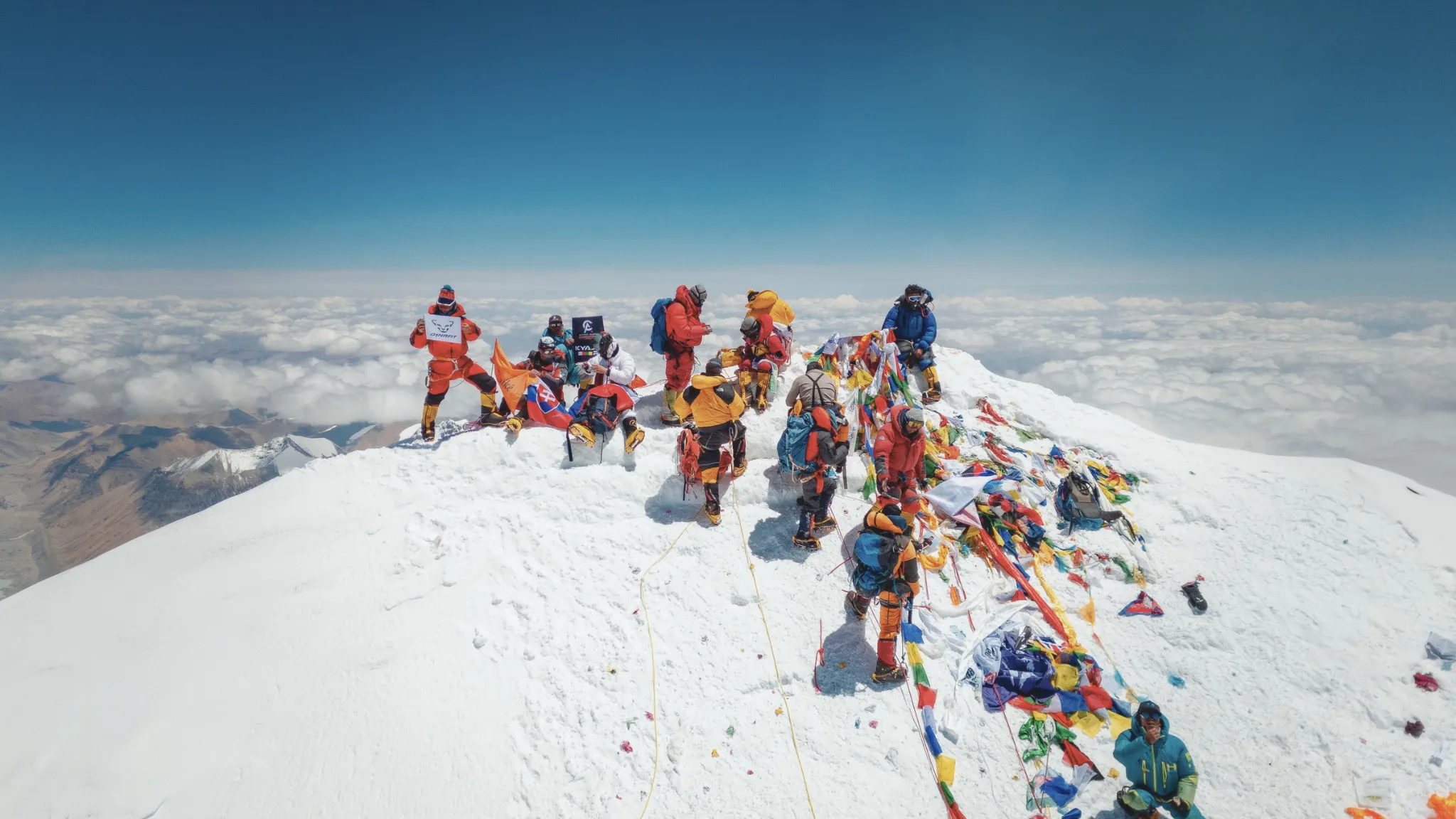
On 21 May 2024, at about 10:30 AM Nepal time, Lenka Poláčková stood on top of Mount Everest (8,849 m). She had not used bottled oxygen during her climb. She breathed the thin air of the highest mountain on Earth by herself.


With this summit, Lenka became the first Slovak woman to climb Everest without supplemental oxygen. She is also the tenth woman in recorded history to do it. She climbed the South Col route from Nepal, together with her husband Jan Poláček and two experienced Sherpa guides, Prakash Sherpa and Sona Chhiri Sherpa.


For all of us at Alpinist Climber Expeditions (ACE), this was a proud moment. Prakash Sherpa, our founder and lead IFMGA mountain guide, was with Lenka on her summit day.


Expedition Overview

Detail

Information

Climber

Lenka Poláčková (Slovakia)

Mountain

Mount Everest, 8,849 m, in the Khumbu (Everest) Region of Nepal

Summit date and time

21 May 2024, at about 10:30 AM Nepal time

Route

South Col route from the Nepal side

Oxygen

Lenka used no supplemental oxygen. Her husband, Jan Poláček, used supplemental oxygen.

Team on the mountain

Lenka Poláčková, Jan Poláček, Prakash Sherpa, Sona Chhiri Sherpa

Guides

Prakash Sherpa (founder and lead IFMGA mountain guide of ACE) and Sona Chhiri Sherpa

Conditions

Dangerous conditions and delays caused by heavy traffic on the mountain

Expedition company

Alpinist Climber Expeditions, a Nepal-based company working since 2021

Record

First Slovak woman, and tenth woman in the world, to summit Everest without supplemental oxygen


Who Is Lenka Poláčková?


Lenka is a Slovak mountain and endurance athlete. She started her career as an actress and TV presenter. Later, she turned to long-distance running, especially ultra races. Everest was her first 8,000-metre peak, and she had worked towards this dream for several years.


The Route: Everest by the South Col

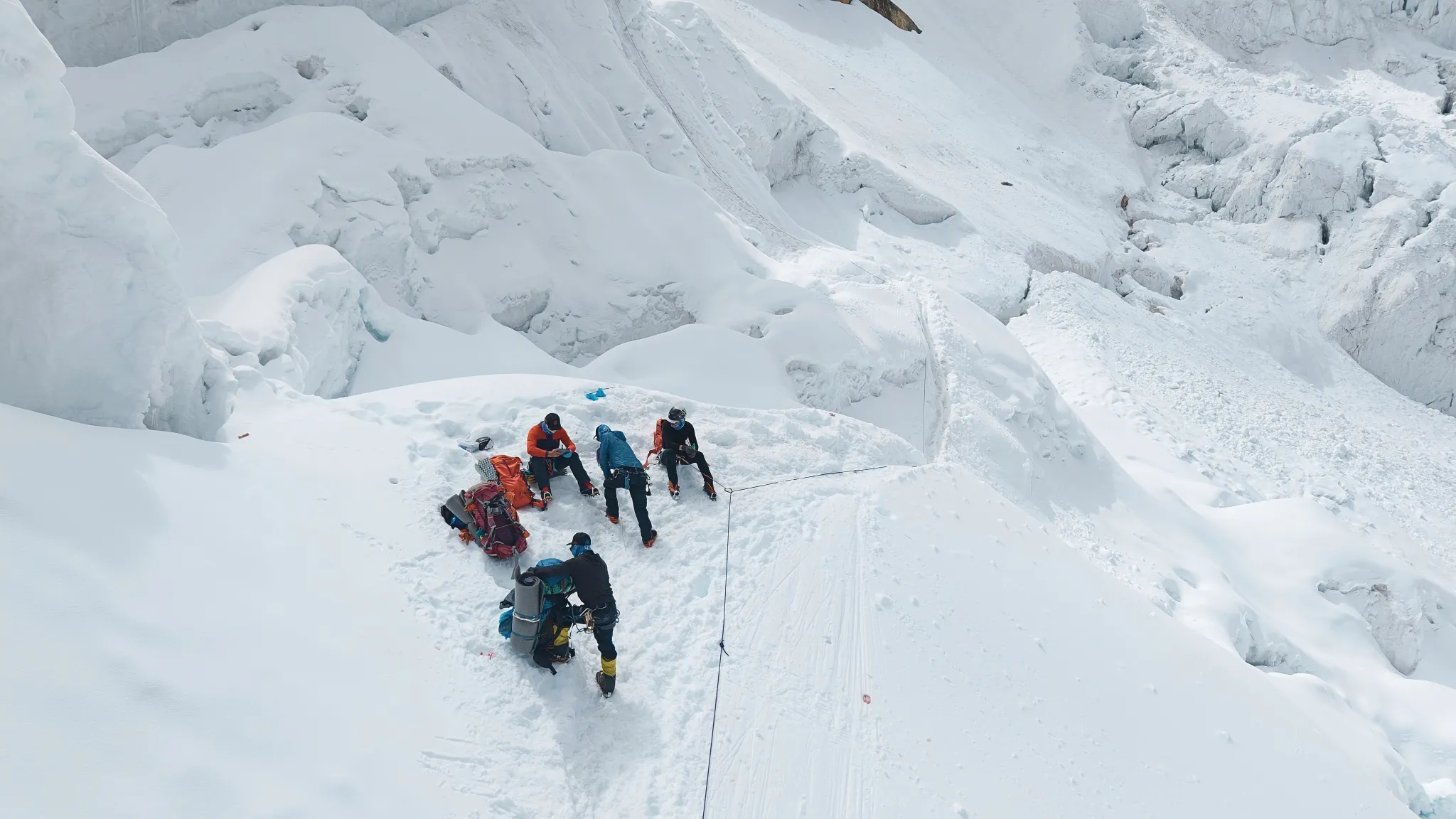
The South Col route is the main route to the summit of Everest from Nepal. It starts at Everest Base Camp, inside Sagarmatha National Park. From there, climbers cross the Khumbu Icefall and walk up the Western Cwm. Then they climb to the South Col, a high pass between Everest and Lhotse at about 7,900 m. The final push to the summit starts from there.


This is the route Lenka and her team chose. It is a long climb on any day. Without bottled oxygen, it asks even more from the body.


Climbing Without Oxygen: What It Asks From a Climber


Many climbers use bottled oxygen on Everest. Lenka chose not to. Climbing Everest without supplemental oxygen is one of the hardest things a mountaineer can try. It needs:

•        Strong physical fitness built over many months and years

•        Good acclimatization, so the body can work in very thin air

•        Careful pacing, so energy lasts the whole summit day

•        Clear decisions, especially about timing, weather, and safety


Lenka worked on all of these. Her climb shows what a calm, patient, well-prepared approach can do.


Waiting for the Right Day


Before the summit push, Lenka reached the South Col at about 7,900 m. Public reports say she wrote that she could have gone for the top with oxygen, but that was not what her Everest was about. Instead, she chose to rest and wait for a good day to climb without it.


This kind of patience is a big part of safe high-altitude climbing. A strong climber does not rush. A strong climber waits for the right moment.


Summit Day: 21 May 2024


On 21 May 2024, Lenka, Jan, Prakash Sherpa, and Sona Chhiri Sherpa reached the summit of Mount Everest. The time was about 10:30 AM Nepal time. Lenka was on top of the world without using supplemental oxygen. Jan, who used oxygen, was with her.


Prakash Sherpa and Sona Chhiri Sherpa guided Lenka on her summit attempt. Their experience on this mountain, and their calm decisions, were a big part of the team’s success.


Challenges on the Mountain


Altitude


At the summit of Everest, each breath holds only about one third of the oxygen found at sea level. Climbing here without bottled oxygen puts a very heavy load on the body.


Heavy traffic and delays


The days around Lenka’s summit were very busy on Everest. Heavy traffic on the mountain caused delays. For a climber who is not using bottled oxygen, delays are a serious matter. Every extra hour in the thin air can use up energy that is hard to get back.


Dangerous conditions


Lenka and her team also met dangerous conditions on the mountain. In these moments, good judgment matters as much as strength.


Decision making


On a mountain like Everest, every step needs a choice: when to go, when to wait, and when to turn around. Lenka and her guides worked through these choices together, and they reached the summit.


Highlights

•        The summit itself. Standing on top of Everest at about 10:30 AM, without bottled oxygen.

•        A team effort. Lenka climbed with her husband and two Sherpa guides who knew the mountain well.

•        A first for Slovakia. Lenka is the first Slovak woman to do this, and the tenth woman in the world.

•        Climbing on her own terms. Lenka waited for the right day and kept to her plan.


Safety on Everest


Safety is not one single thing on Everest. It comes from many small choices made by a team that trusts each other. On this climb, safety meant:

•        Patience. Waiting for a good day instead of rushing.

•        Experienced guides. Prakash Sherpa and Sona Chhiri Sherpa guided Lenka the whole way.

•        Careful pacing. Saving energy for the long summit day.

•        Good decisions in busy and risky conditions.


Since 2021, Alpinist Climber Expeditions has worked with IFMGA-certified guides, experienced Sherpas, and trained climbing staff. We put safety first on every expedition, big or small.


Why Climb With an IFMGA Guide?


IFMGA stands for the International Federation of Mountain Guides Associations. Its certificate is a high international standard for mountain guides. On a mountain like Everest, an IFMGA guide helps with route choices, weather decisions, and safety. When this is mixed with the deep local knowledge of Sherpa guides, a team has the best chance to climb well and return safely.


Conclusion: Respect for the Mountain


Lenka Poláčková’s summit on 21 May 2024 was a success of strong legs, a calm mind, and a good team. It was also a proud step for Slovak mountaineering.


The lessons are simple. Prepare well. Be patient. Listen to your guides. And respect the mountain, because Everest decides who goes up and who goes back down.


We thank Lenka and Jan for choosing to climb with us, and we thank Sona Chhiri Sherpa for the strength and care he showed on the mountain. We are proud of this climb.


If you dream of the Himalayas, from a first peak to the biggest mountains in the world, we would be happy to help you plan your next step with Alpinist Climber Expeditions.


Frequently Asked Questions


Who was the first Slovak woman to climb Everest without oxygen?

Lenka Poláčková. She reached the summit of Mount Everest on 21 May 2024 without supplemental oxygen.


When did Lenka Poláčková reach the summit of Everest?

She reached the summit on 21 May 2024 at about 10:30 AM Nepal time.


What route did Lenka use to climb Everest?

She climbed the South Col route from Nepal.


Did Lenka’s husband use oxygen?

Yes. Her husband, Jan Poláček, used supplemental oxygen. Lenka did not.


How many women have climbed Everest without oxygen?

When Lenka summited in May 2024, she became the tenth woman in recorded history to do it.


How high is Mount Everest?

Mount Everest is 8,849 m high. It is the highest mountain in the world and stands in the Khumbu Region of Nepal.


Who guided Lenka on Everest?

Prakash Sherpa, the founder and lead IFMGA mountain guide of Alpinist Climber Expeditions, and Sona Chhiri Sherpa guided Lenka.


Why is climbing Everest without oxygen so difficult?

The air near the summit has about one third of the oxygen found at sea level. A climber needs top fitness, good acclimatization, steady pacing, and sound decisions.


Can beginners climb Everest?

No. Everest is a goal for experienced climbers. Most people first build their skills on smaller Himalayan peaks, such as Lobuche East or Island Peak, with experienced guides.


Why climb with an IFMGA-certified guide?

IFMGA guides are trained to a high international standard. They help with safety, weather and route decisions, and they know how to manage risk on big mountains.


Related Blogs

Manaslu 2026: A Season of Extremes — Our Full Expedition Coverage
Expedition Journal

Manaslu 2026: A Season of Extremes — Our Full Expedition Coverage

  Every climbing season on Manaslu is different. Record numbers of climbers arrived at Base Camp this autumn, hoping for a straightforward summit. What they found instead was a mountain that tested every team on it, ours included.   This article looks back at the full season: how it started, what went wrong, and why we believe the outcome, difficult as it was, was the right one.     A Record Season, and a Crowded Mountain   Manaslu is usually one of the more approachable 8,000-meter peaks, which is exactly why it drew so many climbers this year. Nepal's Department of Tourism listed close to 500 foreign climbers this season, with a similar number of local guides and support staff on the mountain, making it a record year for permits. Once the fixed ropes reached the top, that many people converging on one route created real congestion.   Climbers described long queues on the fixed ropes, especially through the crowded, icy section between Camp 1 and Camp 2, and on the narrow final ridge that leads to Manaslu's true summit, which can only hold one or two people at a time. A mountain built for small, careful teams was suddenly hosting a crowd. That combination, a narrow summit and hundreds of climbers all aiming for the same short weather window, set the stage for the difficulties that followed.   Traffic Jam in Manaslu 2026 Season     The Danger Builds: Avalanches on the Upper Slopes   Manaslu's upper mountain is known among guides for its avalanche-prone slopes, and this season made that reputation clear early. An avalanche swept down near Camp 4 and buried a freshly fixed section of rope, just hours before the rope-fixing team planned to use it. No one was hurt in that incident, but it was an early sign of how loaded and unstable the snowpack had become.   Persistent snowfall over the following days made conditions worse, not better. Layers of fresh, loose snow sat on top of older snow, creating the unstable slab conditions that guides watch for closely. Our own team, positioned on the mountain at the time, could see and feel how quickly things were changing.   Heavy Snowfall in Manaslu Base Camp     Tragedy on the Mountain: Two Lives Lost   During this period, a slab avalanche struck a tent at Camp 3, killing a foreign climber and his guide, who had pushed higher than the rest of their team in hopes of an early summit attempt. A rescue team later found them buried under roughly two meters of snow.   This loss affected the entire mountain, not just the team involved. Climbers, guides, and outfitters from every expedition, including ours, felt the weight of it. The ACE team holds the memory of these two lives in our thoughts, and we offer our condolences to their families and their expedition family.     A Narrow Escape for Our Own Team   During this stretch of unstable weather, one of our guide's tent was buried by snow. Luckily, he was not inside and had went outside just before the snow sturk the tent and buried it. There was no serious damage to any of our members or our climbing Sherpa guides. It was a close call, and a clear reminder of how quickly conditions on Manaslu can turn serious, even at camps that are normally considered safe.   We share this not to alarm anyone, but because it is part of an honest account of this season. Every member of our team, guides and clients alike, came home safe. We are deeply grateful for that.   One of our guide's tent buried by snow. (Luckily, the guide was outside the tent in that moment)     Racing the Cyclone   As if avalanche danger were not enough, the weather forecast added more pressure. A cyclone forming over the Bay of Bengal was tracked heading toward Nepal, expected to bring heavy new snow and force every team off the mountain before it arrived. That left teams still on Manaslu with a hard choice: wait it out for days or weeks, call off their climb and go home, or rush a summit attempt with less rest and more crowding on the ropes than anyone would prefer.   This kind of pressure is exactly when accidents tend to happen. Rushed decisions, tired climbers, and a shrinking safety margin are a difficult combination on any 8,000-meter peak.     Our Team's Highest Point: 7,100 Meters   Our team completed two full rotations to prepare for the summit push, and once the route was fixed, we climbed to 7,100 meters, the highest point reached by any team on Manaslu this season. Reaching that height took real skill, discipline, and teamwork from our Sherpa staff and our clients.   From there, the combination of unstable snow, the recent avalanche, and the approaching storm made it clear that going higher was not worth the risk. We turned back.   ACE Team's Acclimatization Rotation     Not Alone: How the Rest of the Mountain Responded   Our decision was not made in isolation. As conditions worsened, a large number of operators on Manaslu came to the same conclusion, ending their seasons and sending their climbers home. Almost all teams on the mountain have now left. A small number remain at Base Camp, hoping for one more weather window, but current forecasts make that increasingly unlikely, and it's likely most of them will also head home before the season is out.   Seeing so many experienced teams and guides reach the same decision, independently, said a lot about how serious this season's conditions really were. This was not one operator being overly cautious. It was a mountain-wide judgment call.     A Message: Respect the Mountain   Manaslu did not give us the summit this year. It gave us something else instead: a clear reminder of where we stand next to a mountain like this.   We are not greater than nature. No amount of preparation, experience, or determination changes that. The avalanche danger, the storm, the loss of life this season, none of it cared about summit dreams or expedition budgets. The mountain simply did what mountains do, and our job was to listen.   We believe real mountaineering is not only about reaching the top. It is about knowing the mountain deserves your respect more than your ambition does. This season asked a lot of every team on Manaslu, and we are proud that ours listened when it mattered most.   Manaslu will still be there next year. So will we, and we'll return when conditions, and the mountain, are ready to welcome us back.     About Alpinist Climber Expeditions   Alpinist Climber Expeditions has run Himalayan climbs and treks in Nepal since 2021, guided by IFMGA-certified mountain guides and experienced Sherpa climbing staff. Safety has always come first in every decision we make, on Manaslu and every mountain we climb.  
Sep 23, 2026 Read More →
Manaslu Expedition 2026 Ends: Why We Brought Our Team Home Safe
Expedition Journal

Manaslu Expedition 2026 Ends: Why We Brought Our Team Home Safe

  Our 2026 Manaslu expedition is over. We did not reach the summit this year. Every client and every staff member on our team is safe, and most of the team is already back in Kathmandu. Here is why we made that call, and what was happening on the mountain around us.   Two Solid Rotations, Then a Change in the Weather   Under the guidance of IFMGA guide Prakash Sherpa, our team completed two full rotations on Manaslu to prepare for the summit push. Climbers slept at the higher camps, tested their gear, and let their bodies adjust to thinner air. This is normal, careful expedition work, and our team did it well.   Then the weather turned. Snow began falling and did not let up. Our guide, who has climbed on Manaslu for many seasons, described this year's pattern as something he had not seen before on this mountain. The upper slopes filled with loose, unstable snow, known as slab, and avalanche risk climbed fast. Even Base Camp itself was no longer fully clear of danger, with avalanche risk building on the slopes nearby.   The forecast made the picture clearer. Starting Thursday, a band of very humid air was due to reach Manaslu, and forecasters expected between 150 and 350 millimeters of new snow, an unusually large amount for a short period. This system was expected to affect weather across Nepal, not only on this one mountain.     The Highest Point We Reached   After the rope-fixing team opened the route toward the summit earlier in the season, our team was the only team this season to reach 7,100 meters. Getting that far took real skill and teamwork from every Sherpa on our staff and every client on the trip. But 7,100 meters is not the summit, and pushing higher in these conditions was not a risk worth taking.   Manaslu 2026 Expedition with ACE     What Was Happening Across the Mountain   We were not making this decision alone. According to ExplorersWeb, a mountaineering news site that has followed the 2026 Manaslu season closely, high avalanche risk led several outfitters to end their seasons this same week, with climbers and rope-fixing staff alike returning to Base Camp. Even the professional rope-fixing team responsible for maintaining the line toward the summit turned back rather than cross the loaded upper slopes.   This was shaping up to be a record season on Manaslu, with permits reportedly issued to more than 500 foreign climbers and a similar number of supporting guides. A large number of operators on the mountain confirmed that they were closing their Manaslu 2026 season for the safety of everyone involved. It says something about how serious conditions had become for everybody on the mountain, not only for smaller teams like ours.   Helicopters carried climbers from Base Camp down to the village of Samagaun, and on to Pokhara or Kathmandu, as teams evacuated over the following days. Our own clients and Sherpa staff followed a similar path home.                              Why We Didn't Wait It Out   Waiting is sometimes the right choice in the mountains. This time, the numbers did not favor waiting. Forecasters were tracking a large storm system building over the Bay of Bengal, expected to reach Nepal within a day or two and bring more heavy snow, with helicopter flights likely grounded for weeks. A similar storm hit Nepal's mountains around this time last year and kept high trails closed for an extended stretch.   Climbing permits for Nepal's 8,000-meter peaks are usually valid for about a month, with some room to extend by one or two weeks before the season closes at the end of November. Even with that extra time, a storm expected to last for weeks, combined with a summit route that would likely need to be refixed from scratch afterward, made a return summit push very unlikely for us this season.   Good conditions on Manaslu can also close as fast as they open. In the 2025 season, 659 climbers reached the summit, but nearly all of them did so inside a single nine-day window in late September. When that kind of window does not appear, there is no shortcut around it. Waiting and hoping does not build a safe route up an 8,000-meter mountain.     Not the Only Ones to Turn Back   Roughly 90% of the expedition teams on Manaslu this season have now left the mountain. A small number of teams are still at Base Camp, hoping conditions might improve enough for one more attempt, but the chances of a safe weather window opening again this season are low.     Safety Is Not Just a Slogan for Us   At Alpinist Climber Expeditions, we say that safety comes first, but we would rather show it than just say it. Reaching the summit is the goal every climber trains for, and it was ours too. But it has never been the only measure of success we hold ourselves to. Success, for us, also means making the right call when conditions turn dangerous, and bringing every client and every staff member home safely.   Manaslu 2026 Expedition ACE Team   We are proud of the effort, patience, and teamwork our clients and our Sherpa team showed this season, from the trek in, through two demanding rotations, to the decision to turn back. This is what real mountain guiding looks like, on the easy days and the hard ones.   In the mountains, there is one thing every guide eventually learns to respect: nature decides, not us. Manaslu will still be there next year, and so will we.     About Our Guide and Team   This expedition was led by Prakash Sherpa, an IFMGA-certified mountain guide, working alongside our full team of experienced Sherpa climbers. IFMGA certification is the highest standard in mountain guiding worldwide. It means our lead guide has trained not only in climbing, but in weather judgment, rope systems, rescue skills, and expedition leadership. That training matters most in exactly this kind of moment, when the safe choice and the popular choice are not the same thing.     Alpinist Climber Expeditions Since 2021   We have run Himalayan climbs and treks in Nepal since 2021. Every expedition we lead is guided by experienced Sherpa climbing guides, with the same safety-first approach behind every decision, on Manaslu and on every mountain we climb.     What Comes Next   We are preparing a follow-up article that looks more closely at what happened on Manaslu this season, the conditions our team and others faced, and why every climbing team should respect the mountain's limits. Watch this space for that update.   If you are planning a future Himalayan expedition, our team would be glad to help you plan a climb built around the same safety-first approach you have read about here.     FAQs   Why was the Manaslu 2026 season called off? Heavy snow loaded the upper slopes with unstable slab, and several of Nepal's largest operators ended their seasons the same week. A forecast cyclone threatened weeks of further snow and grounded helicopters, so Alpinist Climber Expeditions brought its full team home rather than push higher.   How high did Alpinist Climber Expeditions reach on Manaslu in 2026? After completing two rotations, our team reached 7,100 meters, the highest point of any team on Manaslu this season, before turning back due to avalanche danger and incoming heavy snow. Safety, not the summit, guided the final decision.   Why did Alpinist Climber Expeditions end the Manaslu 2026 climb? Heavy, unstable snow on the upper mountain created high avalanche danger, and a big storm was forecast to bring more snow for weeks. We chose to bring our team home rather than wait for conditions that might not improve this season.   Did the team reach the summit of Manaslu in 2026? No. The team reached 7,100 meters, the highest point of any team this season, but turned back before the final push for safety reasons.   Was anyone hurt on our expedition? No. Every client and every staff member returned to Kathmandu safely. One of our tents was buried by snow but none of our team members were hurt.   Were other teams also leaving Manaslu this week? Yes. Around 90% of teams on the mountain had left or were leaving, including some of Nepal's largest operators.   Why didn't the team wait a few more weeks for the weather to clear? A large storm system was forecast to reach Nepal within a day or two and was expected to ground helicopters and block trails for an extended stretch. Even with extended permits, a safe summit window this season became very unlikely.   Who guided this expedition? The Manaslu 2026 Expedition organized by ACE was led by Prakash Sherpa, an IFMGA-certified mountain guide, together with our full Sherpa climbing team.  

Sep 23, 2026 Read More →
Manaslu Expedition 2026 Update: Summit Push Plan and Weather at Base Camp
Expedition Journal

Manaslu Expedition 2026 Update: Summit Push Plan and Weather at Base Camp

Heavy snow has covered Manaslu Base Camp. Our team has finished its acclimatization rotation and is preparing for the summit push. But on an 8,000-meter mountain, the weather makes the final call.   Alpinist Climber Expeditions is on Manaslu (8,163 m) in Nepal, led by IFMGA guide Prakash Sherpa. This page shows where the team is and what the summit push plan looks like. We will update it as things change.   Heavy Snowfall in Manaslu Base Camp   Expedition Overview   Mountain Manaslu, 8,163 m, the 8th highest mountain in the world Location Gorkha District, Nepal (Manaslu Conservation Area) Season Autumn 2026 Guide Prakash Sherpa, IFMGA Certified Mountain Guide Base Camp Near Samagaun Weather now Heavy snowfall and unpredictable conditions Current status Resting at Base Camp     Where the Team Is Now   The team is resting at Manaslu Base Camp. Heavy snow has fallen, and the weather is hard to predict. When conditions are like this, moving up is not a good idea. We will go higher only when the weather and snow conditions allow it.     The Rotation Is Complete   Our climbers have finished their acclimatization rotation on the mountain. They will be waiting at base camp till the snowfall settles down and favourable conditions are met.     The Summit Push Plan   This is our original schedule. It may change if the weather changes.   Date Plan 19th Rest at Base Camp 20th Move to Camp 2 21st Move to Camp 3 22nd Move to Camp 4. Start the summit push at 10 pm 23rd Summit day. Return to Camp 2 24th Return to Base Camp 25th Pack up at Base Camp 26th Trek to Samagaun 27th Rest day in Samagaun 28th Flight to Kathmandu   Because of the snow, the team is holding at Base Camp. We will post the new dates here when the plan is set.     Why Does the Summit Push Start at Night?   On 8,000-meter peaks, many teams leave the last high camp at night. This lets them reach the top in the morning and come down while there is still daylight. It also helps the team avoid strong winds and clouds that often come later in the day.     Why Fresh Snow Matters   Heavy snowfall makes the route slower and harder to see. It can also raise avalanche risk on the slopes. Guides usually wait for the snow to settle and for a clear weather window. Waiting is not a delay in the plan. It is part of the plan.     Safety Comes First   •        The team has completed its acclimatization rotation. •        The team moves only when the guides are happy with the conditions. •        Weather decisions are made together by the guide team.     What Comes Next   The team will be waiting at base camp for favourable conditions while resting and acclimatizing their body as safety is always the number one concern and the summit comes second. If favourable conditions are met, the team will be preparing for the summit push accordingly.     About This Expedition   Alpinist Climber Expeditions is a Nepal-based company that has run Himalayan expeditions since 2021. Our climbs are led by IFMGA certified guides and experienced Sherpas, with safety as our first priority. If you dream of climbing a Himalayan peak, you are welcome to explore our upcoming expeditions.

Sep 19, 2026 Read More →
Client Stories

From the Summit

Daniel Puttkemery
Daniel Puttkemery
Kyajo Ri Expedition
Prakash and his team are a couple of notches above totally professional! Everyone in the Alpinist Climber Expeditions family goes out of their way to provide the best possible experience. Superb core values and safety principles. I had the good fortune of climbing Kyajo Ri with Alpinist Climber Expeditions and…
★ ★ ★ ★ ★
Luca Smargiasso
Luca Smargiasso
Ama Dablam + Kyajo Ri + Cholatse
I have been climbing for 15 years, over 4 continents. This was my 3rd trip to Nepal. And this was undoubtedly one of the Best-organised expeditions have participated in. Cannot thank Prakash and his Team enough. The attention to detail both in terms of equipment, climbing conditions, and accommodation/food was…
★ ★ ★ ★ ★
Raphael Lindenmann
Raphael Lindenmann
Kyajo Ri
In April 2025, we completed an unforgettable expedition to Kyajo Ri with ACE. We were four friends from Switzerland and enjoyed about two and a half weeks in the Khumbu region. From our arrival in Kathmandu to the summit and back, ACE's organization was impeccable.A well-coordinated team, superb support, excellent…
★ ★ ★ ★ ★
Andy Tronsberg
Andy Tronsberg
Kyajo Ri & Island Peak
Perfect organised and guided expedition I ever took part! We climbed island peak and kyajo ri alpine style! Safety is always first, all team members are super kind and professional and also laughing comes not to short! Thanks for this unforgettable experience!! Andreas.
★ ★ ★ ★ ★
Rogier Keulen
Rogier Keulen
Kyajo Ri & Cholatse
With IFMGA guide Prakash we climbed Kyajo Ri and Cholatse. Our expedition couldn't have been any better! We had a lot of fun and summiting stunning Cholatse is the most intense thing I've done. We did it alpine style, so without fixed ropes from bottom to top. Safety was a…
★ ★ ★ ★ ★
Manu Laireiter
Manu Laireiter
Kyajo Ri
I participated in a private expedition to Kiayo Ri with Alpinist Climber Expeditions and it was simply fantastic. From the initial consultation to the final summit push, everything was perfectly organized and tailored to my individual needs. The guides were not only highly professional and extremely experienced in high-altitude mountaineering,…
★ ★ ★ ★ ★
Expedition Journal

Dispatches from the Mountains

All Articles
Ama Dablam Base Camp Weather Update
Expedition Report

Ama Dablam Base Camp Weather Update

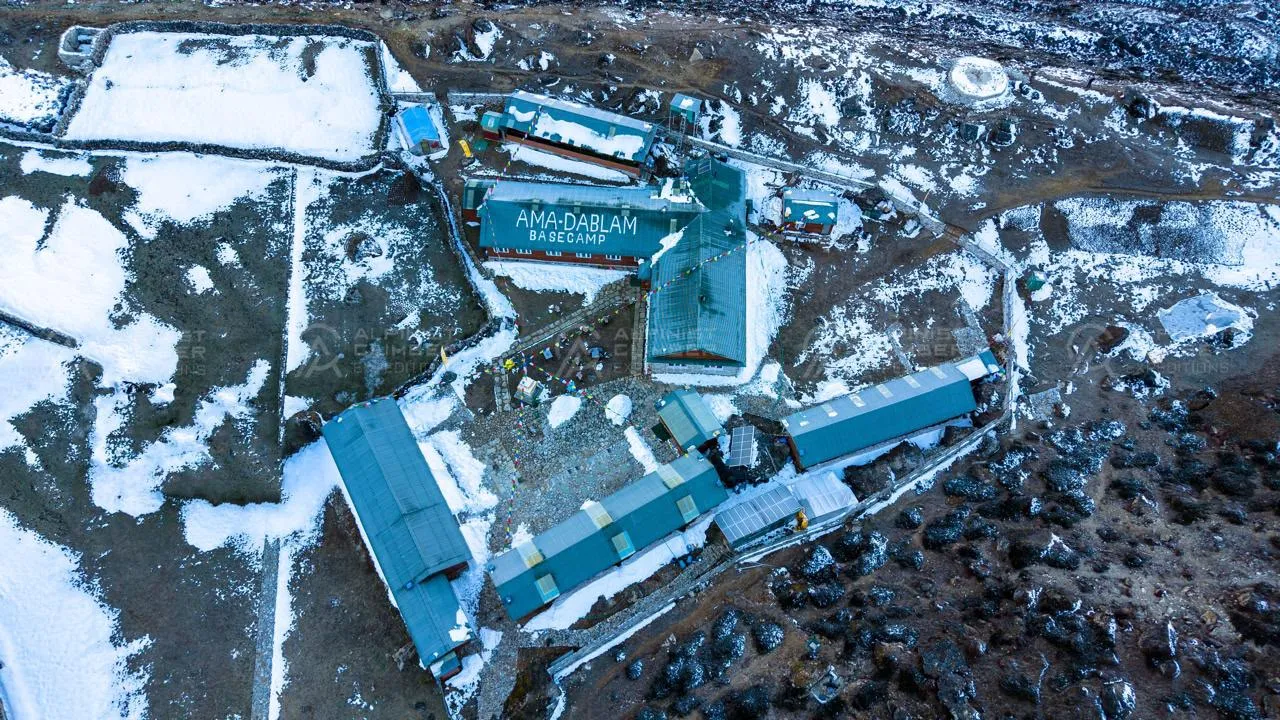
  Good news from the Khumbu Region. The weather at Ama Dablam Base Camp has improved since this morning, and the mountain is now clearly visible.   Ama Dablam (6,812 m) is one of the most beautiful peaks in the Himalayas. After a few hours of changing weather, it was a great moment to see it clear and bright from camp. Weather can change fast in the Everest Region, so our team keeps checking the conditions through the day. Clear spells like this one help us plan with confidence and keep everyone safe.   Take a look at the photos below to see the view from Base Camp today.     Ama Dablam, clear and bright from Base Camp this morning   Planning a climb in the Himalayas? Learn more about our Ama Dablam Expedition with Alpinist Climber Expeditions.    

Oct 11, 2026 Read Article →
Stay Connected