Nepal Visa Requirements 2026: Fees, Forms and Who Can Get a Visa on Arrival
Home / Nepal Visa Requirements 2026: Fees, Forms and Who Can Get a Visa on Arrival

Nepal Visa Requirements 2026: Fees, Forms and Who Can Get a Visa on Arrival


Visa rules can change. Please open the official links in this guide before you travel.


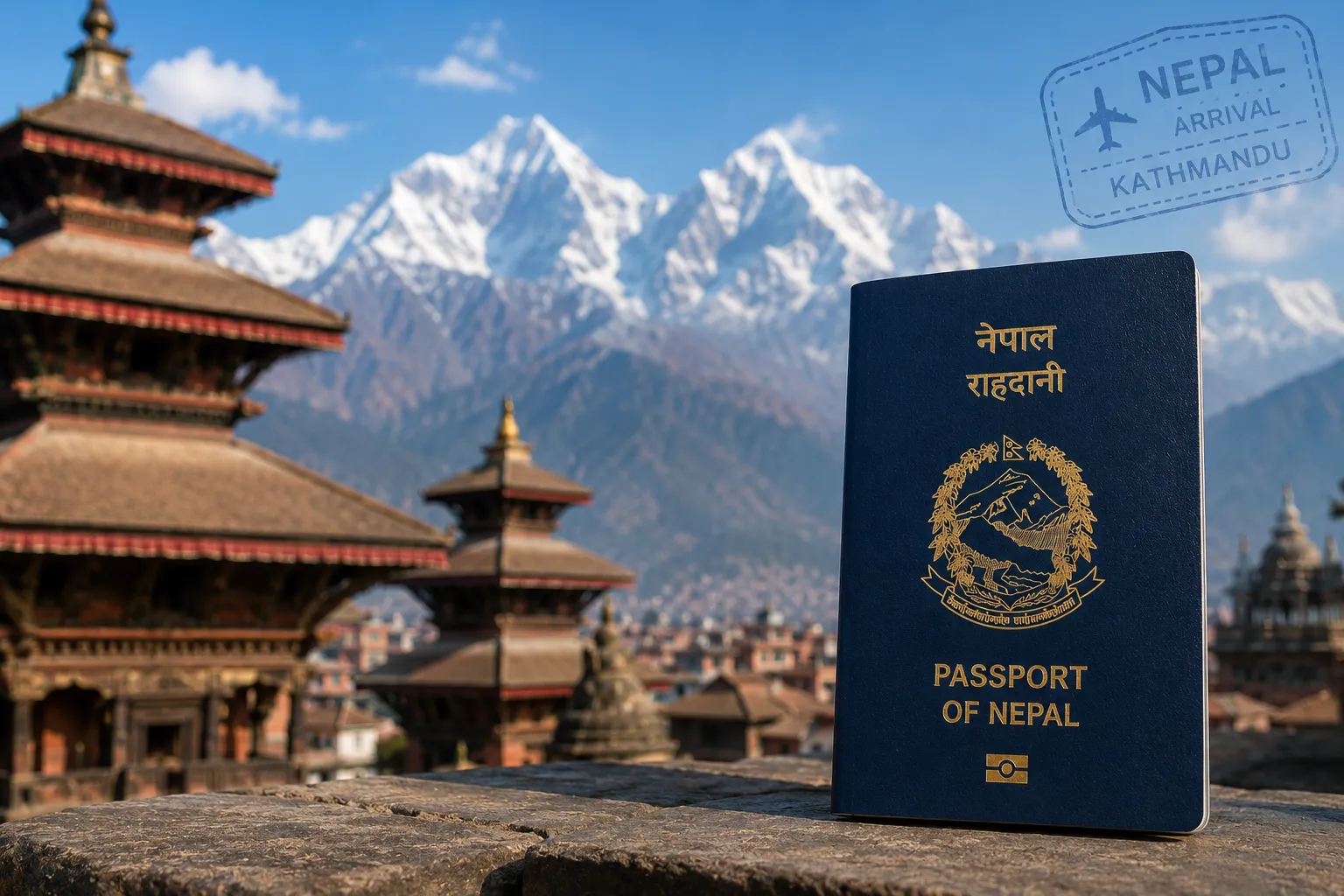
Almost every visitor to Nepal needs a tourist visa. The main exception are citizens of India. Most travellers can get the visa when they arrive at Kathmandu airport or at an official land border, or they can apply online before they fly. A tourist visa costs US$30 for 15 days, US$50 for 30 days or US$125 for 90 days. In total, you can stay up to 150 days in one visa year (January to December).


This guide explains who needs a visa, what to bring, what it costs, where the official forms are, who gets a free visa and what to do if you need more time. It uses information from Nepal's Department of Immigration, the Nepal Tourism Board and the US State Department. Where these sources do not agree, we tell you.


Nepal visa quick facts


Question

Short answer

Do I need a visa?

Yes, unless you are a citizen of India.

Where can I get one?

On arrival at listed airports and land borders, online before you travel, or from a Nepali embassy or consulate.

What does it cost?

US$30 (15 days), US$50 (30 days), US$125 (90 days).

How long can I stay in total?

Up to 150 days in one visa year (January to December), including extensions.

Passport rules

At least 6 months of validity after your arrival date, with a blank page for the visa stamp.

How much is an extension?

US$45 for the minimum 15 days, then US$3 for each extra day.

Fine for staying late

US$5 per day.

Who gets a free visa?

Children under 10 (not US citizens), first-time SAARC visitors for up to 30 days, Chinese nationals, and NRN card holders.

Who cannot get a visa on arrival?

Citizens of 13 countries, and people travelling on refugee travel documents. See the list below.


Who needs a visa to enter Nepal?


Every foreign visitor needs a tourist visa to enter Nepal, except citizens of India. This applies if you come to trek, climb, visit family, or just stay a few days.


If you come for another reason, such as study or work, you still enter on a tourist visa first. After you arrive, you ask the Department of Immigration to change your visa category. There is more on this in the section on other visa types.


Three ways to get a Nepal tourist visa


1. Visa on arrival

Most visitors use this route. You can get a visa on arrival at Tribhuvan International Airport in Kathmandu, Pokhara International Airport, Gautam Buddha International Airport in Lumbini, and Nepal's land border entry points. Check which airport your flight lands at before you travel.


You fill in a form, pay the fee, and an immigration officer issues the visa. You can complete the form online before you travel and bring the printed receipt, or complete it at the airport. The steps are explained below.


2. Online visa (ETA or eVisa)

In 2026, the Department of Immigration added an online option called the Electronic Travel Authorisation (ETA), also called an eVisa. You apply on the official website, upload your passport and photo, pay the fee online, and receive the approved visa by email. You then print it and carry it with you.


This system is new. A travel news site reported that a Department of Immigration spokesperson gave 17 August 2026 as the date for the full launch, and the Department's website now has a page for the ETA and eVisa. Reports differ on how long approval takes and on what you must show at the airport. We could not confirm one fixed approval time. Read the instructions on the official page, and apply early.


3. Visa from a Nepali embassy or consulate

You can also get a tourist visa before you travel from a Nepali embassy or consulate. If you do, you must enter Nepal within six months of the day the visa was issued. Your stay is counted from the day you enter Nepal, not the day the visa was issued. Citizens of the countries in the restricted list below must use this route.


Nepal tourist visa fees in 2026


Visa length

Fee

15 days

US$30

30 days

US$50

90 days

US$125


These fees are set by the Department of Immigration. You can pay in US dollars or another convertible currency. The Nepal Tourism Board says international credit cards are accepted, and the US State Department says cards may be accepted at the airport. Card machines can fail, so bring enough US dollars in cash as a backup. If you arrive by land, see the border section below for the cash rules that apply to US citizens.


Children under 10 and some other groups get a free visa. See the section on free visas.


Is the Nepal tourist visa multiple-entry?

The Nepal Tourism Board says tourist visas issued at entry points have a multiple re-entry facility, and it lists the 15, 30 and 90-day fees as multiple-entry. However, the Department of Immigration's fee table also has a separate line for an extra US$25 for multiple re-entry under tourist visas. If you plan to leave Nepal and come back during your trip, for example for a side trip to India or Bhutan, ask the officer to confirm that your visa is multiple-entry before you pay.


Which visa length should you choose?

Plan for delays. The US State Department says bad weather often disrupts domestic flights in Nepal, and it advises leaving extra time before an international flight. A visa that ends close to your departure day leaves you no room.


Extending a visa costs more per day than buying a longer visa at the start, and it means a visit to an immigration office. This table compares total costs for some example stays, using the official fees.

Planned stay

Cheapest option

Total cost

15 days or less

15-day visa

US$30

30 days

30-day visa

US$50

(15-day visa plus a 15-day extension would be US$75)

45 days

30-day visa plus a 15-day extension

US$95

60 days

90-day visa

US$125

(30-day visa plus a 30-day extension would be US$140)

90 days

90-day visa

US$125


If your trip might run past 30 days, the 90-day visa is often the easier choice. You pay one fee and you do not need to go to the immigration office for an extension.


What to bring

•       Passport. It must be valid for at least 6 months after your arrival date. Keep a blank page free for the visa stamp.

•       Passport-size photo with a light background. The Nepal Tourism Board lists this as part of the visa requirements. The online form asks for a digital photo.

•       Completed visa form. This is either your printed online receipt or the form you complete at the airport.

•       Visa fee in US dollars or another convertible currency. Bring cash as well as a card.

•       Travel details. The online form asks for your travel information and an address where you will stay in Nepal.

•       Cash declaration, if needed. If you carry more than US$5,000 into or out of Nepal, you must declare it on a customs form.


Travel insurance is not listed as a visa document in the sources we checked. The US State Department strongly recommends it, with cover for medical evacuation, if you plan to trek or climb.


Application forms and official links


Apply only through official government websites. The Department of Immigration sets the visa fee, so you do not need to pay anyone else to submit a form for you.

What

Link

Use it for

NepaliPort (online visa services)

nepaliport.immigration.gov.np

The official online tourist visa form and other visa services. The Department says foreigners can apply for visas here.

ETA / eVisa page

immigration.gov.np/eta-visa-nepal

The Department of Immigration page that explains the online ETA and eVisa.

Department of Immigration

immigration.gov.np

Official notices, visa information and contact details.

Visa fees and documents

Department fee table

Fees and required documents for tourist and other visa types.

Countries without visa on arrival

Department notice

The official list of nationalities that cannot get a visa on arrival.

Nepal Tourism Board

Tourist visa page

A plain summary of visa rules for tourists.

Ministry of Foreign Affairs

mofa.gov.np

Find a Nepali embassy or consulate in your country.

US State Department

Nepal travel page

Entry rules, advisories and tips for US travellers. Useful for other nationalities too.


How visa on arrival works at Kathmandu airport

1.      Fill in the form. Complete the online form before you fly and print the receipt, or complete the form at the airport.

2.      Pay the fee. Pay at the payment counter and keep the receipt.

3.      Go to the immigration desk. Give the officer your passport, your form receipt and your payment receipt.

4.      Collect your passport. The officer issues the visa and your passport is stamped.


The US State Department warns that getting a visa on arrival may take several hours. Travel guides report that queues are longest in the main trekking seasons, in spring and autumn. If you fill in the online form before you fly, several guides say the receipt is valid for only 15 days, so do not complete it too early.


Visa on arrival at land borders


You need a visa to enter Nepal by land too. The US State Department notes that officials at some crossings do not stop every foreign visitor. If you do not get an entry stamp from an immigration officer, you may not be allowed to leave Nepal later and may face other problems. Find the immigration office and complete the process, even if nobody asks you to.


The State Department lists these land border points where you can buy a tourist visa on arrival. Immigration offices at official land crossings are open 24 hours.

•       Kakarvitta, Jhapa District (east)

•       Biratnagar, Morang District (south-east)

•       Birgunj, Parsa District (central)

•       Belahiya, Bhairahawa, Rupandehi District (south)

•       Gadda Chauki, Mahendranagar, Kanchanpur District (west)

•       Timure, Rasuwa District (north border)


US citizens must pay land border visa fees in US cash. Cards and other currencies are not accepted. Bills must be dated 2003 or later and be in good condition, with no tears or heavy wear. Other travellers should also carry clean US dollars in cash.


Important: As of the US State Department advisory dated 4 September 2026, travellers are told not to go to the Rasuwagadhi-Timure-Syafrubesi area of Rasuwa District, including the Nepal-China border crossing, after a major flash flood and landslide on 26 August 2026. Check current conditions before planning a route through this area.


Who gets a free (gratis) visa?


Group

What you get

Children under 10

Free visa for all nationalities except US citizens.

SAARC citizens (except Afghanistan)

Free visa for up to 30 days on a first visit in a visa year. Travel guides list Bangladesh, Bhutan, the Maldives, Pakistan and Sri Lanka. A second visit in the same visa year is not covered.

Chinese nationals

Free tourist visa for up to 150 days in a visa year.

Non-Resident Nepali (NRN) card holders

Free visa. The card is issued by the Ministry of Foreign Affairs or Nepali missions abroad.

Afghan citizens

Free visa on arrival only if the Department of Immigration recommends it.

Diplomatic and official passport holders

The Department lists a free 30-day entry visa for diplomatic and official visits, with the right paperwork from the diplomatic mission.


A free visa still needs a form. You complete the same process, but the fee is zero. The "visa year" runs from January to December, so a first visit in December and another in January fall in different visa years.


Indian citizens


Citizens of India do not need a visa to enter Nepal. You must carry one of these as proof of identity when you enter and leave:

•       A valid Indian passport

•       An Election Commission of India voter card

•       For travellers over 65: a PAN card, driving licence or ration card that shows a photo and age

•       For travellers under 18: an identity card issued by the school principal


The Nepal Tourism Board says the Aadhaar (UID) card is not accepted as a travel document. A Certificate of Registration from the Embassy of India in Kathmandu is also not accepted.


Countries that cannot get a visa on arrival


The Nepal Tourism Board lists the nationalities below as having no visa on arrival. People from these countries must get a visa from a Nepali embassy or consulate before they travel. Iran was added on 13 March 2026, which raised the total to 13 countries. People travelling on refugee travel documents must also get a visa in advance.

Africa

Middle East

Asia

Cameroon

Eswatini (Swaziland)

Ethiopia

Ghana

Liberia

Nigeria

Somalia

Zimbabwe

Iran

Iraq

Palestine

Syria

Afghanistan


News reports on the Iran decision say holders of government and diplomatic passports are treated differently. If you hold an official or diplomatic passport, ask the nearest Nepali embassy what applies to you. Because this list has changed before, check the Department of Immigration notice before you book.


How to extend your Nepal tourist visa


You can extend a tourist visa inside Nepal. The Nepal Tourism Board names the Department of Immigration in Kathmandu (Kalikasthan) and the immigration office in Pokhara. The US State Department adds that offices in Kakarvitta, Birgunj and Belahiya can also extend tourist visas, but only the Kathmandu office can extend every visa type.

•       Minimum extension: 15 days, for US$45.

•       Each extra day after that: US$3.

•       Maximum total stay: 150 days in one visa year (January to December), counting your first visa and all extensions.

•       How to pay: at the Department of Immigration in cash, in Nepali rupees or US dollars, according to the US State Department.


Example: You have a 30-day visa and want 20 more days. You pay US$45 for the first 15 days, plus 5 extra days at US$3, which is US$15. The total is US$60.


Bring your passport and your current visa, and ask the office what other papers it needs. Some guides say the extension form is filled in on the NepaliPort website first, so check the portal before you go.


Extend before your visa ends. The immigration office at Tribhuvan International Airport cannot extend visas. The US State Department says travellers who reach the airport with an expired visa are sent to the Kathmandu office to pay, and this can take a couple of days. Government offices close on public holidays, so plan ahead.


What happens if you overstay?


If you stay after your visa ends, you pay a late fine of US$5 per day, on top of the extension fee. The US State Department says that staying after your visa expires can lead to large fines, arrest and a ban on returning, and that staying more than 150 days on a tourist visa can lead to deportation. A person who is deported must travel straight to their home country at their own cost.


One more rule: if you replace your passport in Kathmandu, go to the Department of Immigration to move your visa into the new passport. Do not transfer it yourself. The State Department says doing so is a crime in Nepal.


Other visa types


The tourist visa is the only entry visa. If you plan to work, study, invest or live in Nepal, you enter on a tourist visa and then apply to change the category. The US State Department advises starting at least two months before your tourist visa ends, and says non-tourist visas can take months.


Working or volunteering on a tourist visa is not allowed. The Department of Immigration treats volunteering as work. The US State Department says volunteering on a tourist visa can lead to detention, fines, expulsion and a long ban on returning.

Visa type

Who it is for

Fee listed by the Department

Transit visa

Passengers changing flights in Nepal, up to 24 hours. Proof of transit, such as an air ticket, is needed.

US$5

Work visa

Foreign nationals with a job in Nepal. Needs a recommendation, a labour permit and a work agreement.

US$30, US$50 or US$75 per month, depending on the employer

Study visa

Students and researchers. Needs a recommendation from the Ministry of Education.

From US$30 per month (degree students). US$75 per month (non-degree)

Business visa

Investors and business owners.

US$35 per month, US$400 per year or US$1,000 for five years for smaller investments. Lower fees apply to investments over NPR 100 million

Marriage visa

Foreigners married to Nepali citizens.

US$15 per month

Relation visa

Foreigners with a direct relation, or a relation by marriage, to Nepali citizens.

US$10 per month (direct relation). US$25 per month (relation by marriage)

Press visa

Journalists and press representatives.

US$15 per month

NRN visa

Non-Resident Nepali card holders.

Free

Tourist reciprocity visa (US citizens)

A 5-year visa with up to 180 days of stay per year. Needs a bank statement showing at least US$10,000, a health insurance certificate and a police report.

US$160

Fees from the Department of Immigration fee table, last updated 2 January 2026. Single and multiple re-entry add-ons (US$20 and US$60) apply to most non-tourist visas. Check the Department before you apply.


A visa is not a trekking or climbing permit


Your visa lets you enter and stay in Nepal. It does not let you enter a national park or a restricted area. The US State Department says some remote areas and national parks need extra permits and fees, and that foreign trekkers must hire a licensed local guide in national parks and protected areas.


Climbing and expedition trips usually have their own permits too. Your trekking or climbing company can tell you which permits apply to your route and when to arrange them.


Common mistakes that cause trouble

•       Passport with less than 6 months left. Check the expiry date before you book flights.

•       A visa that is too short. Weather delays are common. Choose a few spare days.

•       Relying only on a card. Card machines can fail. Carry US dollars in cash.

•       Skipping the stamp at a land border. You may have trouble when you try to leave Nepal.

•       Torn or old US notes at a land border. US citizens need bills dated 2003 or later in good condition.

•       Waiting until the visa expires to extend. The airport cannot extend it for you.

•       Filling in the online arrival form too early. Guides say the receipt is valid for 15 days.

•       Working or volunteering on a tourist visa. This is not allowed.


Frequently asked questions


Do I need a visa to visit Nepal?

Yes, unless you are a citizen of India. All other foreign visitors need a tourist visa. You can get it on arrival, online, or from a Nepali embassy or consulate.


How much does a Nepal visa cost in 2026?

The tourist visa costs US$30 for 15 days, US$50 for 30 days and US$125 for 90 days. Children under 10 (except US citizens) and some other groups get a free visa.


Can I get a Nepal visa on arrival?

Yes, at Kathmandu airport, the other airports named by the Nepal Tourism Board, and official land border points. Citizens of 13 countries and people with refugee travel documents cannot. They must get a visa from a Nepali embassy first.


Can I apply for a Nepal visa online?

Yes. Use the official NepaliPort site or the Department of Immigration's ETA and eVisa page. You can also fill in the visa-on-arrival form online and bring the printed receipt.


How long can I stay in Nepal on a tourist visa?

Up to 150 days in one visa year (January to December). This includes your first visa and any extensions.


How do I extend my Nepal visa?

Go to the Department of Immigration in Kalikasthan, Kathmandu, or the Pokhara immigration office before your visa ends. The minimum extension is 15 days for US$45, then US$3 for each extra day.


What is the fine for overstaying?

The late fine is US$5 per day on top of the extension fee. Long overstays can lead to arrest, deportation and a ban on returning, according to the US State Department.


Is the Nepal tourist visa multiple-entry?

The Nepal Tourism Board lists the 15, 30 and 90-day tourist visas as multiple-entry. The Department of Immigration fee table also mentions an extra US$25 for multiple re-entry, so ask the officer to confirm before you pay if you plan to leave and return.


Does a tourist visa cover trekking or climbing?

No. The visa covers entry and stay only. National parks, restricted areas and climbing routes can need separate permits. Ask your trekking or climbing company which ones you need.


Do I need a visa if I am only changing flights in Nepal?

Nepal has a transit visa for up to 24 hours, listed at US$5. You need proof of transit, such as an air ticket. Check with your airline or the Department of Immigration whether your connection needs one.


Can I work or volunteer on a tourist visa?

No. Nepal treats volunteering as work. You need the right non-tourist visa first.


Before you travel


Do three checks before you book. Make sure your passport has at least 6 months left after your arrival day. Choose a visa length with a few spare days. Use only the official government sites for forms and payments.


Alpinist Climber Expeditions is based in Nepal and has operated since 2021, running high-altitude mountaineering expeditions and trekking in the Nepal Himalaya. If you are planning a trek or a climb and want to talk through your dates or route, you can reach us through our website, alpinistclimberexpeditions.com.


This guide is general information, not legal or immigration advice. Always confirm current rules with the Department of Immigration or the nearest Nepali embassy or consulate.


Sources

•       Nepal Tourism Board: Tourist Visa

•       Department of Immigration, Nepal: Visa Fee and Documents

•       Department of Immigration, Nepal: Online visa services (NepaliPort)

•       Department of Immigration, Nepal: ETA / eVisa

•       Department of Immigration, Nepal: Prohibition to Visa on Arrival

•       US State Department: Nepal travel advisory and entry requirements

•       The Himalayan Times: Nepal govt stops providing on-arrival visas to Iranian nationals, 13 March 2026

•       The Kathmandu Post: Nepal stops on-arrival visas for Iranians, 14 March 2026

•       VisasNews: Nepal to fully roll out its e-Visa system on August 17, 2026


Related Blogs

Second Nirekha Summit of 2026: Ruben Guthorle and Yannik Steeb Reach 6,159m
Expedition Journal

Second Nirekha Summit of 2026: Ruben Guthorle and Yannik Steeb Reach 6,159m

  Alpinist Climber Expeditions (ACE) has completed a second successful summit of Nirekha this season. Ruben Alfred Guthorle and Yannik Steeb reached the top of the 6,159 m peak at 9:25 am on 16 November 2026. They climbed with guides Sona Chhiri Sherpa and Tenzing Dorji Sherpa.   This follows the team’s first Nirekha summit of the season on 7 November.     Summit details Peak: Nirekha, 6,159 m, Khumbu region, Nepal Summit date and time: 16 November 2026, 9:25 am Climbers: Ruben Alfred Guthorle and Yannik Steeb Climbing guides: Sona Chhiri Sherpa and Tenzing Dorji Sherpa Base camp guide: Ongchhu Sherpa      Congratulations to the team   We congratulate Ruben and Yannik on their summit and thank Sona Chhiri Sherpa and Tenzing Dorji Sherpa for guiding the team on the mountain. ACE has been guiding in the Himalayas since 2021, and our expeditions run with small teams and IFMGA-certified leadership. Two summits in one autumn is a good result for a peak that sees few climbers each year.   Mt. Nirekha Second Summit by ACE 2026 (Autumn Season)     About Nirekha   Nirekha is in the Khumbu region of Nepal, near the Cho La Col. If you want the route, grade, itinerary and permit details, they are all on our Nirekha Peak Expedition page.     Spring 2027 Bookings Now Open   Learn more about our 2027 Spring Expedition, you can view the trip and book on our Nirekha Expedition page or see our other peak climbing trips in Nepal. Follow us for more updates from the Himalayas.   To plan your next expedition, message us on WhatsApp at +977 9843314253 or email info@alpinistclimberexpeditions.com.    

Nov 16, 2026 Read More →
Alpine and Fitness Grading in Mountaineering: What the Grades Mean and How to Use Them
Expedition Journal

Alpine and Fitness Grading in Mountaineering: What the Grades Mean and How to Use Them

  An alpine grade tells you how hard and how serious a mountain route is. A fitness grade tells you how much physical preparation a trip expects from you. They answer different questions, so you need to read both before you decide whether a climb suits you.   Alpine grades follow a six-step scale: F (easy), PD, AD, D, TD and ED (extremely difficult). Fitness grades are different. There is no worldwide standard, because each operator writes its own. This guide explains how both kinds of grade work, what they leave out, and how to use them when you are choosing a Himalayan climb.   Key points An alpine grade (F to ED) describes the whole route: its hardest sections, its length, its hazards, and how hard it would be to retreat. Rock, ice and mixed grades describe single sections. They are separate from the alpine grade. Fitness grades are not standardised. Read the description behind the label, not just the label. In Nepal, "trekking peak" is a permit category. It does not mean the climb is easy. Fitness helps on the mountain, but it does not protect you from altitude illness. A steady ascent with time to acclimatise is the main defence.     Why mountaineers use grades   A mountain route cannot be described with one number. It may be steep in one place, long in another, and exposed to falling rock after that. A grade is a shorthand. It lets a climber compare routes quickly and decide whether to look closer.   Grades are opinions, though, not measurements. They usually come from the first ascent party or a guidebook author, and they can change as conditions change and more people climb the route. Even magazines related to alpinism and mountaineering tells its readers that the alpine grades it publishes are subjective. Treat a grade as a good starting point, not a promise.   Trekking at High Altitude     Alpine grades: the overall rating of a route   The alpine grade, also called the overall grade, is the one you see most often on expedition pages. It comes from the French system, now usually written as the International French Adjectival System, or IFAS. The six main grades are abbreviations of French words. Grade French name In plain English Typical ground (approximate) F Facile Easy Mostly walking, with some easy scrambling. Easy snow slopes or glaciers with few crevasses. PD Peu difficile A little difficult Real mountaineering begins. Crampons and an ice axe, short steeper sections, more complex glaciers and basic route-finding. A rope is used for glacier travel and steeper ground. AD Assez difficile Fairly difficult Longer, steeper and more exposed. Snow and ice slopes that sources put at roughly 40° to 55°. Most of the route is usually roped. D Difficile Difficult Sustained and serious. Steeper snow and ice, roughly 50° to 70° in some guidebooks, and longer rock sections. Efficient rope work is expected. TD Très difficile Very difficult Long, hard routes with continuous difficulty and high objective danger. Often remote. ED Extrêmement difficile Extremely difficult The hardest and most committing routes. The scale continues above this: some sources add ABO (abominable), and others split ED into ED1, ED2 and so on. The last column differs from one guidebook to the next. Use it to get a feel for each step, not as a rule.   What + and − mean Each letter can be split further: PD−, PD and PD+. A PD+ route is harder than a plain PD route but is not yet AD. The Swiss Alpine Club's mountaineering scale also moves a route up a step when certain "help criteria" apply. These include hard navigation, poor protection, loose or unreliable rock, and a retreat that would be difficult.   What goes into an alpine grade One letter covers a lot. Guidebook authors usually weigh: the hardest single section, and how long the hard parts last the length and expected duration of the whole route altitude hazards you cannot control, such as rockfall, falling ice, avalanche and weather how easy it would be to retreat if things go wrong Because of this, two routes can share a grade for different reasons. One may be short but steep. Another may be technically simple but long, cold and far from help.   A short history The UIAA, the international mountaineering federation, adopted proposals made in 1943 by Lucien Devies and the Groupe de Haute Montagne for a broad "global assessment" of alpine routes. That became the French alpine system. The UIAA later dropped its own Roman-numeral version of the overall scale to avoid confusion with the UIAA rock scale.     Technical grades for rock, ice and mixed ground   The alpine grade sits on top of separate grades for individual sections. These answer a narrower question: how hard are the hardest moves?   Rock. Three scales are common. The Yosemite Decimal System (YDS), used mostly in North America, has five classes. Class 1 is walking and Class 5 is technical rock climbing with a rope. Class 5 is split further with decimals, from 5.0 up to 5.15. The French system uses numbers and letters, such as 5a or 6b. The UIAA scale uses Roman numerals, such as IV or VI. Conversion charts exist, but they are only approximate.   Ice. Ice grades use WI (water ice) or AI (alpine ice) with a number. The scale runs from WI1 to WI7. WI1 is low-angle ice that needs no ice tools. WI2 is steeper, around 60°, with good protection available. The top of the scale is steep or overhanging ice that very few people climb.   Mixed and aid. M grades describe routes that mix rock and ice, climbed with ice tools. A grades describe aid climbing, where equipment carries your weight.   Many Himalayan trip pages give only the alpine grade. Harder routes can carry a whole stack of grades. Guidebooks, for example, list the 1938 Heckmair Route on the Eiger as ED2 overall, VI− for rock, A0 for aid and WI4 for ice, on a 60° slope.   You may also meet regional systems. Alaska grades, from 1 to 6, were designed around the storms, cold and remoteness of Alaskan routes and are rarely used elsewhere. American commitment grades, from I to VII, describe how much time a route takes. High Altitude Expedition Training Organized by ACE       Fitness grades: what they try to tell you   Fitness grades are the other half of the picture. Unlike alpine grades, they have no governing body and no shared definitions. Each operator makes its own.   You will see them in several forms: a number from 1 to 5, a letter from A to E, a combined label such as 3C (a technical level plus a fitness level), or a pair of scales for physical and technical demand. A "4" with one operator can mean something quite different with another.   Whatever the label, a good fitness grade tries to describe the same few things: how many hours you will be on your feet each day how many days in a row you will do it how much weight you will carry how high you will sleep and climb how much cold, wind and rough weather you must be able to handle how much training or earlier experience the operator expects   So read the written description, not just the symbol. If the description is vague, ask the operator to put it in numbers: hours, days and kilograms.   A simple self-check Ask yourself Why it matters Have I walked for several hours a day, several days in a row, with a loaded pack? Expedition days repeat, and tiredness builds. Can I hold a steady uphill pace for hours without stopping? Most high-altitude climbing is slow and sustained. Have I slept in tents or huts in the cold and still functioned the next day? Rest, food and warmth are part of the workload. Have I used crampons, an ice axe and a harness, and moved on a rope? Technical grades assume you can do these things. Have I been above 4,000 m or 5,000 m before, and how did I feel? Your past response to altitude is useful information. Have I trained consistently over a long period? Fitness builds slowly and cannot be rushed in the last weeks. If you answer "no" to several of these, choose an easier objective first, or ask the operator about courses and preparation.     Fitness and altitude are different problems   Many climbers assume that a high level of fitness will keep altitude sickness away. It does not. The UIAA Medical Commission describes altitude illness as a result of poor acclimatisation. It names a cautious ascent profile, enough fluids and food, and early recognition of problems as the main ways to prevent it. Researchers writing for UKClimbing add that the likely cause of acute mountain sickness is not influenced by fitness.   What fitness does give you is a reserve. You tire less, recover faster and have energy left when you need speed, for example to get off a mountain before the weather changes. So train hard, and still respect the acclimatisation schedule. If a trip saves time by cutting rest days, fitness will not make up for it.   This is general information, not medical advice. If you are planning a high climb, talk to a doctor who knows altitude medicine.     How Nepal labels its peaks   In Nepal, the Nepal Mountaineering Association (NMA) manages permits for a list of peaks that are commonly called "trekking peaks". They sit mostly between about 5,500 m and 6,600 m. They are split into Group A and Group B, which carry different permit fees.   Two points matter for grading. "Trekking peak" is a permit category, not a difficulty rating. All of these peaks involve climbing, and some need solid mountaineering skills. The A and B groups relate to permits and fees, not to how hard a climb is. Some operators say Group A peaks tend to be more technical, but the group alone will not tell you what the climb involves. Look at the alpine grade and the route description.   Higher peaks, including the 8,000 m peaks, fall under a separate expedition permit system. On those mountains, altitude, cold, wind and weeks away from home weigh more than any single technical move, so one grade says even less.     Two peaks, two different challenges   Mera Peak and Island Peak (Imja Tse) are both NMA Group B peaks and are often chosen as a first Himalayan climb. Their grades show why one number is not enough.   Mera Peak Island Peak (Imja Tse) Approximate height About 6,470 m About 6,160 m Region Hinku Valley Khumbu (Imja Valley) Alpine grade as commonly published PD (a few operators list F) PD to PD+ Main challenge Altitude and endurance on a long glacier walk A steeper snow and ice section near the summit, usually climbed on fixed ropes Heights vary slightly by source, and operators publish slightly different grades for both peaks. That is normal. Always check the grade given for the specific trip you are looking at.   Mera is higher but less technical. Island Peak is lower but steeper near the top. A climber with strong endurance and no rope experience may find Mera the better fit. A climber with alpine skills may find Island Peak natural. Both sit in the PD family, yet they ask for different things. That is why the route description matters as much as the label.     How to read a grade when you are choosing a trip Find out which scale is being used. "PD" belongs to the French overall system. "3C" or "Grade 5" may be an operator's own scale. Look for a key, or ask. Read the technical description. Look for the steepest snow or ice, whether you will use fixed ropes, how much rock there is, and whether you will be roped for glacier travel. Read the fitness description. Look for daily hours, consecutive days, load and altitude. Look at the schedule. Check the number of rest days, how the itinerary builds altitude in stages, and what the plan is if someone feels unwell or the weather turns. Compare it with your own record. Be honest about your recent days in the mountains, not your best day.     Questions worth asking before you book Which grading system do you use, and who set the grades? What does summit day involve: the steepest section, the number of hours, and any fixed ropes? Do I need to arrive with experience in using crampons, an ice axe and an ascender, or are those skills taught on the trip? How does the itinerary build altitude, and how many rest days are there? Who will lead my group, what are their qualifications, and how many climbers does each guide look after? What happens if I am too slow or I become unwell? How do you decide when to turn around because of weather or conditions?     Preparing for both scales   No plan fits everyone, and anyone with a health condition should see a doctor first. These are the building blocks that most preparation plans share. Build an endurance base. Running, cycling, swimming, rowing or long hill walks, done regularly over months. Add leg and core strength. Squats, lunges, calf raises and planks are common choices. Practise carrying a pack. Do long days on hills or stairs, then another long day soon after, and increase the weight gradually. Rehearse the skills. Crampon technique, ice axe use, harness and rope handling, and an ascender and descender if the climb uses fixed ropes. A course or a day with a qualified guide helps. Spend time at altitude if you can. It shows you how you feel up high. It does not replace a well-planned itinerary. Plan rest. Recovery weeks are part of training.   Rolwaling Multi Pitch Ice Climbing Training Trekking at High Altitude     Common mistakes Reading PD as "easy". PD means "a little difficult". On a high mountain it still means ropes, crampons and a long day. Comparing grades from different systems or companies as if they were the same. A "3" is not a "3" everywhere. Choosing a peak by height alone, or by its technical label alone. Mera and Island Peak show why both matter. Leaving gear practice until the trip starts. New crampons and a new harness are a poor combination with a steep slope. Treating a grade as fixed. Conditions change from season to season. Ask for current information.     Frequently asked questions   What is the difference between an alpine grade and a fitness grade? An alpine grade describes how hard and serious a route is: its difficulties, length, hazards and how hard it is to retreat. A fitness grade describes the physical preparation a trip expects. A climb can be technically simple and still demand great stamina, so you need both.   What do F, PD, AD, D, TD and ED mean in mountaineering? They come from the French alpine system: Facile (easy), Peu Difficile (a little difficult), Assez Difficile (fairly difficult), Difficile (difficult), Très Difficile (very difficult) and Extrêmement Difficile (extremely difficult). Each step is a harder and more serious route.   Is PD an easy climb? Not necessarily. PD stands for "peu difficile", or "a little difficult". It is the first step above F and usually involves real mountaineering, such as crampons, an ice axe, glacier travel and a long day. On a high mountain, altitude adds to the challenge.   What alpine grade are Mera Peak and Island Peak? Operators and guidebooks most often list Mera Peak as PD and Island Peak as PD to PD+, although a few list Mera Peak as F. Grades differ between sources, so check the grade and route description for the exact trip you are considering.   Are alpine grades the same all over the world? The French system is widely used, but grades remain opinions. Guidebook authors, regions and operators apply them differently, and conditions change with the season. Some regions also use their own scales, such as Alaska grades and Scottish winter grades.   What does "trekking peak" mean in Nepal? Is it easy? It is a permit category managed by the Nepal Mountaineering Association for a set of peaks, mostly between about 5,500 m and 6,600 m. It does not mean the climb is easy. All trekking peaks involve climbing, and some need solid mountaineering skills.   Does being very fit prevent altitude sickness? No. The UIAA Medical Commission links altitude illness to poor acclimatisation, and researchers say fitness does not protect against it. Fitness still helps with long days and gives you a reserve in hard conditions. A steady ascent with enough time to adjust is the main defence.   What are WI, AI and M grades? WI (water ice) and AI (alpine ice) grades rate ice climbing, usually from 1 to 7. M grades rate mixed climbing, where rock and ice are climbed with ice tools. They describe single sections, not the whole route.   Do I need climbing experience for a 6,000 m peak in Nepal? It depends on the peak and the trip. Some need only basic skills with crampons, an ice axe and fixed ropes, and some operators teach those skills on the trip. Others expect experience before you arrive. Ask the operator exactly what is required and how it is checked.   How do I know which grade is right for me? Match your record to the descriptions, not only the labels. Look at the daily hours, consecutive days, loads, altitude and technical skills a trip expects, then compare them with what you have done. If you are unsure, start with a lower grade or talk to the operator about your experience.     Choosing your next step   Grades help you narrow your choices, but they cannot replace a conversation about your own experience. If you are weighing a Himalayan climb, you can contact us and our team at ACE can talk through the route you have in mind and how it fits your background. The team is based in Nepal, has operated since 2021, and includes IFMGA-certified guides, experienced Sherpas and trained climbing staff. Ask which team members would lead your trip, and what the grade for that trip means in practice.   Mountaineering carries serious risks, including injury and death. No grade, training plan or guide removes them. This article is general information and not medical advice.     Sources and further reading [1] Alpinist — "The Numbers Game" (editor's note on alpine grades) — https://alpinist.com/editors-note/the-numbers-game/ [2] Grade (climbing) — Wikipedia (IFAS, UIAA history, example grades) — https://en.wikipedia.org/wiki/Grade_(climbing) [3] Swiss Alpine Club — Berg- und Hochtourenskala (mountaineering scale), French version — https://www.baspo.admin.ch/dam/fr/sd-web/YhLVmNstbpKs/sac-berg-und-hochtourenskala_FR.pdf [4] Camptocamp — Guidebook grades: alpine grade — https://www.camptocamp.org/articles/133323/en [5] alpin-ism.com — Alpine grades — https://www.alpin-ism.com/knowledge-base/news/alpine-grades [6] Yosemite Decimal System — Wikipedia — https://en.wikipedia.org/wiki/Yosemite_Decimal_System

Nov 19, 2026 Read More →
Nirekha Summit Success 2026: ACE Team Reaches 6,159m
Expedition Journal

Nirekha Summit Success 2026: ACE Team Reaches 6,159m

  Alpinist Climber Expeditions (ACE) is glad to report a successful summit of Nirekha. Brian Richardson reached the top of the 6,159 m peak at 9:50 am on 7 November 2026. He climbed with guides Sona Chhiri and Sonam Chhiring. The expedition was led by our founder and IFMGA mountain guide, Prakash Sherpa.   ACE Team Summits Nirekha Peak     Summit details Peak: Nirekha, 6,159 m, Khumbu region, Nepal Summit date and time: 7 November 2026, 9:50 am Climber: Brian Richardson Climber: Daniel Jeffery Puttkemery Climbing guides: Sona Chhiri and Sonam Chhiring Expedition leader: Prakash Sherpa Style: Hybrid climbing     How the team climbed   The team used a hybrid aproach on this expedition. Fixed ropes were set on some of the harder sections of the route, which made those parts safer to move through. The summit push was then done in alpine style, which means moving light and fast in a single push.   Daniel Jeffery Puttkemery went up to Nirekha Base Camp with the team and did not go for the summit. We thank him for being part of the expedition.     The team on the mountain   Brian was guided by Sona Chhiri and Sonam Chhiring, with Prakash Sherpa leading the expedition. ACE has been guiding in the Himalayas since 2021, and our expeditions run with small teams and IFMGA-certified leadership. We congratulate Brian on his summit and thank everyone on the team.     About Nirekha   Nirekha stands in the Khumbu region of Nepal, close to the Cho La Col and in the same ridge chain as the Lobuche peaks. For the route, grade, itinerary and permit details, see our Nirekha Peak Expedition page. If you prefer lighter, faster climbs, our alpine style expeditions page explains how we run them.       Spring 2027 Bookings Now Open   Learn more about our 2027 Spring Expedition, you can view the trip and book on our Nirekha Expedition page or see our other peak climbing trips in Nepal. Follow us for more updates from the Himalayas.   To plan your next expedition, message us on WhatsApp at +977 9843314253 or email info@alpinistclimberexpeditions.com.       

Nov 09, 2026 Read More →
Client Stories

From the Summit

Daniel Puttkemery
Daniel Puttkemery
Kyajo Ri Expedition
Prakash and his team are a couple of notches above totally professional! Everyone in the Alpinist Climber Expeditions family goes out of their way to provide the best possible experience. Superb core values and safety principles. I had the good fortune of climbing Kyajo Ri with Alpinist Climber Expeditions and…
★ ★ ★ ★ ★
Raphael Lindenmann
Raphael Lindenmann
Kyajo Ri
In April 2025, we completed an unforgettable expedition to Kyajo Ri with ACE. We were four friends from Switzerland and enjoyed about two and a half weeks in the Khumbu region. From our arrival in Kathmandu to the summit and back, ACE's organization was impeccable.A well-coordinated team, superb support, excellent…
★ ★ ★ ★ ★
Andy Tronsberg
Andy Tronsberg
Kyajo Ri & Island Peak
Perfect organised and guided expedition I ever took part! We climbed island peak and kyajo ri alpine style! Safety is always first, all team members are super kind and professional and also laughing comes not to short! Thanks for this unforgettable experience!! Andreas.
★ ★ ★ ★ ★
Luca Smargiasso
Luca Smargiasso
Ama Dablam + Kyajo Ri + Cholatse
I have been climbing for 15 years, over 4 continents. This was my 3rd trip to Nepal. And this was undoubtedly one of the Best-organised expeditions have participated in. Cannot thank Prakash and his Team enough. The attention to detail both in terms of equipment, climbing conditions, and accommodation/food was…
★ ★ ★ ★ ★
Rogier Keulen
Rogier Keulen
Kyajo Ri & Cholatse
With IFMGA guide Prakash we climbed Kyajo Ri and Cholatse. Our expedition couldn't have been any better! We had a lot of fun and summiting stunning Cholatse is the most intense thing I've done. We did it alpine style, so without fixed ropes from bottom to top. Safety was a…
★ ★ ★ ★ ★
Brian Richardson
Brian Richardson
NIREKHA EXPEDITION
Alpinist Climber Expeditions proved to be an excellent choice for our expedition to Nirekha. Prakash, Sonam and Sona were complete professionals throughout the trekking/acclimatisation and climbing phases of the expedition. In the face of tougher than expected conditions due to 3 days of continuous snowfall, they made sound adjustments to…
★ ★ ★ ★ ★
Expedition Journal

Dispatches from the Mountains

All Articles
Second Nirekha Summit of 2026: Ruben Guthorle and Yannik Steeb Reach 6,159m
Expedition Report

Second Nirekha Summit of 2026: Ruben Guthorle and Yannik Steeb Reach 6,159m

  Alpinist Climber Expeditions (ACE) has completed a second successful summit of Nirekha this season. Ruben Alfred Guthorle and Yannik Steeb reached the top of the 6,159 m peak at 9:25 am on 16 November 2026. They climbed with guides Sona Chhiri Sherpa and Tenzing Dorji Sherpa.   This follows the team’s first Nirekha summit of the season on 7 November.     Summit details Peak: Nirekha, 6,159 m, Khumbu region, Nepal Summit date and time: 16 November 2026, 9:25 am Climbers: Ruben Alfred Guthorle and Yannik Steeb Climbing guides: Sona Chhiri Sherpa and Tenzing Dorji Sherpa Base camp guide: Ongchhu Sherpa      Congratulations to the team   We congratulate Ruben and Yannik on their summit and thank Sona Chhiri Sherpa and Tenzing Dorji Sherpa for guiding the team on the mountain. ACE has been guiding in the Himalayas since 2021, and our expeditions run with small teams and IFMGA-certified leadership. Two summits in one autumn is a good result for a peak that sees few climbers each year.   Mt. Nirekha Second Summit by ACE 2026 (Autumn Season)     About Nirekha   Nirekha is in the Khumbu region of Nepal, near the Cho La Col. If you want the route, grade, itinerary and permit details, they are all on our Nirekha Peak Expedition page.     Spring 2027 Bookings Now Open   Learn more about our 2027 Spring Expedition, you can view the trip and book on our Nirekha Expedition page or see our other peak climbing trips in Nepal. Follow us for more updates from the Himalayas.   To plan your next expedition, message us on WhatsApp at +977 9843314253 or email info@alpinistclimberexpeditions.com.    

Nov 16, 2026 Read Article →
Stay Connected