ALPINIST CLIMBER EXPEDITIONS PVT. LTD.
Climbing Grades at a Glance
Regd. No. 269034/078/079 | PAN No. 610067756
Last updated: November 2026
SECTION 01
What Are Mountaineering Grades?
A grade is shorthand for how hard a climb is and what it asks of you. Two kinds matter when you are choosing a Himalayan trip, and they answer different questions, so read both before you decide whether a climb suits you.
• Alpine grade: how hard and how serious the whole route is, including its hardest section, its length, its hazards and how difficult it would be to retreat
• Fitness grade: how much physical preparation the trip expects from you
SECTION 02
Alpine Grades: F to ED
Most expedition pages use the French alpine scale. It has six main steps, and each one is harder and more serious than the last.
|
Grade
|
French name
|
In plain English
|
|
F
|
Facile
|
Easy
|
|
PD
|
Peu difficile
|
A little difficult
|
|
AD
|
Assez difficile
|
Fairly difficult
|
|
D
|
Difficile
|
Difficult
|
|
TD
|
Très difficile
|
Very difficult
|
|
ED
|
Extrêmement difficile
|
Extremely difficult
|
Each grade can be refined with + or −, so PD+ is harder than PD but not yet AD. Grades are opinions from guidebook authors and operators, so the same route may be listed slightly differently by different sources.
Rock, ice and mixed climbing have their own separate grades for single sections. They sit alongside the alpine grade and do not replace it.
See the full breakdown of alpine, rock, ice and mixed grades
SECTION 03
Fitness Grades
Unlike alpine grades, fitness grades have no worldwide standard. Each operator writes its own, using numbers, letters or a mix of both, so a “4” with one company can mean something quite different with another. A useful fitness grade should tell you:
• Time on your feet: hours per day and number of days in a row
• Load: how much weight you will carry
• Altitude: how high you will sleep and climb
• Conditions: how much cold, wind and rough weather you must handle
If a description is vague, ask the operator to put it in numbers: hours, days and kilograms.
SECTION 04
Nepal’s “Trekking Peak” Label
In Nepal, the Nepal Mountaineering Association manages permits for a list of peaks called “trekking peaks”, mostly between about 5,500 m and 6,600 m. The label is a permit category, not a difficulty rating. All of these peaks involve climbing, and some need solid mountaineering skills.
The Group A and Group B split also relates to permits and fees, not to difficulty. To judge a climb, look at its alpine grade and its route description.
SECTION 05
Fitness and Altitude
Being very fit does not prevent altitude illness. Poor acclimatisation is the cause, and a steady ascent with enough rest days is the main defence. What fitness gives you is a reserve: you tire less, recover faster and have energy left when conditions turn.
SECTION 06
How to Read a Grade
Before you book, check these four things:
• Which scale: “PD” belongs to the French overall system, while “3C” or “Grade 5” may be one operator’s own scale. Ask for the key.
• The technical description: the steepest snow or ice, fixed ropes, rock sections and roped glacier travel
• The fitness description: daily hours, consecutive days, load and altitude
• Your own record: compare it with your recent days in the mountains, not your best day
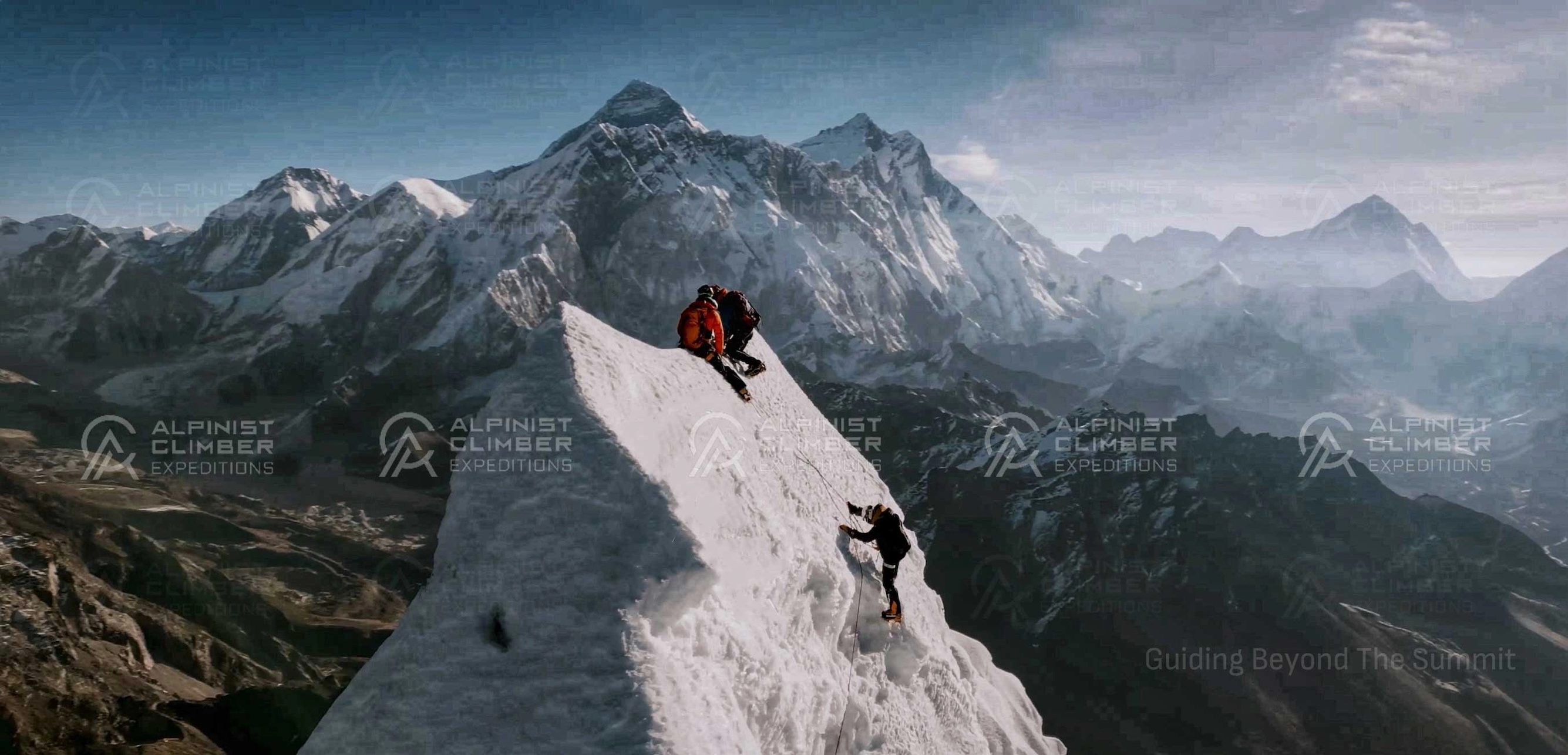
The same grade does not mean the same climb. Mera Peak and Island Peak are both commonly listed as PD, yet Mera is mainly a long, high glacier walk, while Island Peak has a steeper snow and ice section near the summit.
SECTION 07
Go Deeper in Our Blog
This page is a quick reference. Our blog guide covers each topic in full:
• Rock, ice and mixed grades: how single-section grades work and how they combine with the alpine grade
• Fitness self-check: questions to test yourself against what a trip demands
• Mera Peak and Island Peak: a side-by-side look at two popular first Himalayan climbs
• Questions to ask before you book: what to ask an operator about grades, itinerary and guides
• Preparation and common mistakes: how to train for both scales, and what climbers often get wrong
Read our guide: Alpine and Fitness Grading in Mountaineering: What the Grades Mean and How to Use Them
SECTION 08
Please Note
Grades are opinions, not measurements. They can differ between guidebooks and operators and can change with the season. Mountaineering carries serious risks, including injury and death, and no grade, training plan or guide removes them. This page is general information and not medical advice.
SECTION 09
Contact Us
If you are weighing a Himalayan climb, we can talk through the route you have in mind and how it fits your background. Please reach out to us:
PHONE / WHATSAPP
+977 9843314253
EMAIL
info@alpinistclimberexpeditions.com
WEBSITE
https://alpinistclimberexpeditions.com