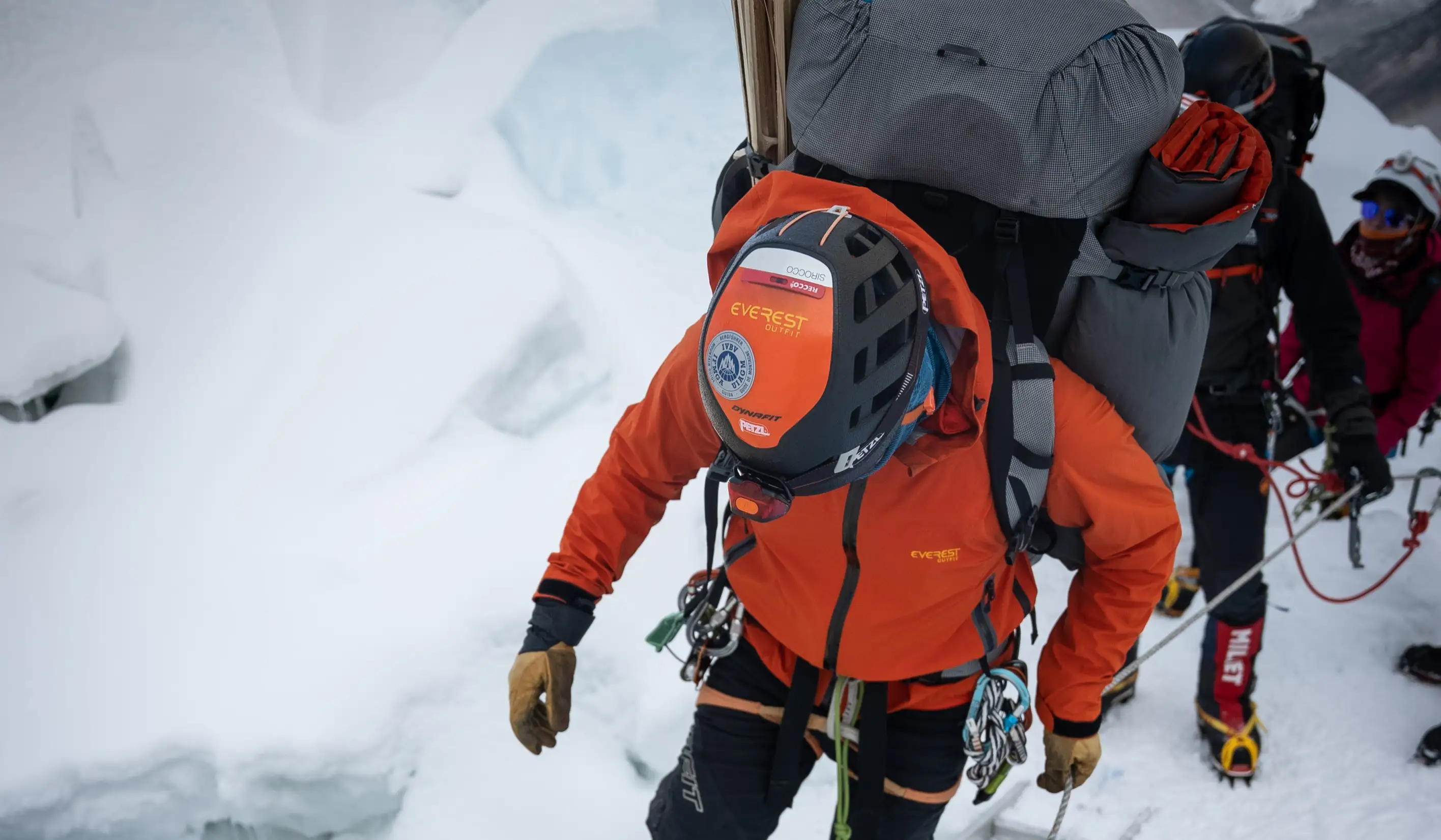
What Is an IFMGA Guide? Training, Standards and What Climbers Should Know
An IFMGA guide is a mountain guide who has passed a training and assessment programme that meets the standards of the International Federation of Mountain Guides Associations (IFMGA). The certificate covers four areas of mountain work: rock climbing, ice climbing, mountaineering and ski mountaineering. It shows that a guide has been trained and tested for the job. It does not promise a safe trip or a summit, because mountains always carry some risk. This guide explains what IFMGA is, how a guide qualifies, what the training covers, and how that training helps with weather, difficult ground, altitude and emergencies in the Himalaya. It also lists a few questions to ask when you choose a guide, and it ends with a short note on Nepal's own association, NNMGA. IFMGA at a glance Topic Key fact Full name International Federation of Mountain Guides Associations. The French name is UIAGM and the German name is IVBV, so you may see all three on one badge. Started 1965, by mountain guide associations from Austria, France, Italy and Switzerland What it is An umbrella federation of national mountain guide associations. Its training page refers to 28 member associations. Areas covered Rock climbing, ice climbing, mountaineering and ski mountaineering Minimum training At least 94 training days, with at least 84 of them practical work in the mountains Ongoing learning At least one day of continuing professional development every year Proof of status The IFMGA badge and an official IFMGA membership card What does IFMGA mean, and what does the organisation do? IFMGA stands for International Federation of Mountain Guides Associations. It is an internationally recognised organisation that represents professional mountain guiding associations worldwide. The IFMGA promotes high standards of professionalism, technical skills, safety, and ethical practices in mountain guiding. Its recognition is widely respected in the international mountaineering community and reflects a guide's professional qualifications and commitment to safe mountain travel. In simple terms, the federation does these jobs: Sets the minimum training standards that member associations must follow. Sets standards for how guides work and behave. Speaks for the guiding profession to authorities and the public. Protects the IFMGA badge, which only approved guides may use. How does someone become an IFMGA-certified mountain guide? There is no shortcut. IFMGA describes a fixed order of steps, and each country's association runs them: Meet the entry requirements. An applicant must be an adult, which is normally 18. IFMGA also expects wide mountain experience, and its training page mentions a documented record of 55 varied routes. Exact rules can differ by country. Pass an entry exam. Complete the aspirant guide course. This is the basic training, and it includes theory. An aspirant is a trainee guide. Learn in practice under a supervisor. Gain work experience. IFMGA asks for at least 14 days of practical learning under experienced guides. Take the mountain guide course, which includes a theory exam. Pass the final assessment. The minimum training time is split across several areas: Training area Minimum days What it covers Mixed terrain 32 Snow, ice and rock Ski and winter training 32 Ski mountaineering and avalanche safety Rock climbing 20 Technical climbing and rescue Theory 7 Weather, first aid, caring for the environment Country-specific training 3 Local conditions Total 94 At least 84 days are practical These are minimums. Candidates also need experience between courses, so the full path usually takes years. News reports about Nepal describe around five years of training in Nepal and abroad. The real time depends on the country and on the person. What do IFMGA guides learn? Technical skills IFMGA lists avalanche evaluation, navigation, rescue techniques and route planning among the technical skills. Theory lessons cover weather, first aid and caring for the environment. The training scope includes rock and ice climbing, ski mountaineering, trekking and high-altitude expeditions. People skills IFMGA gives equal weight to what it calls soft skills: leadership, communication, coaching and risk management. A guide who climbs well but cannot explain a plan, or cannot lead a nervous client, is only half prepared. Professional standards Every IFMGA guide is expected to follow the Code of Professional Conduct. Guides must also attend at least one day of continuing professional development each year. The badge and membership card are how you can recognise a guide who has completed the full training. A training base, not a finish line Training builds a base. One IFMGA member, the New Zealand Mountain Guides Association, says its courses do not cover every area in depth and names high altitude as one example. For work on big mountains, guides build on the base with extra courses and years of experience. Why mountain judgment matters IFMGA says clearly that the risks of mountaineering cannot be removed. Its guides are trained to reduce and manage risk, and to make decisions in conditions that keep changing. Training and years of experience are meant to work together here. Judgment is not one big decision. It is many small ones through the day. Is the snow stable on this slope? Is the weather changing faster than the forecast said? Is someone in the team slowing down? Is there a safer line? Is it time to turn around? A good guide evaluates all of these and changes the plan when required for the safety of the team and success of the expedition. How guides handle weather, terrain, altitude and emergencies Changing weather Mountain weather can change rapidly, making careful planning essential for the safety of climbers. Guides assess weather forecasts alongside local conditions, including changes in the sky, wind, snow, and temperature, to make informed decisions throughout the expedition. Extra buffer days should always be included in the itinerary to allow flexibility when conditions are unfavourable. These days are especially important because they give the team time to wait for a safe weather window rather than feeling pressured to climb in unsuitable conditions. Difficult terrain On technical terrain, the guide assesses the route, selects the safest line of ascent, and manages ropes and anchors where necessary. In some expeditions, a rope-fixing team installs fixed ropes along sections of the route before climbers arrive. However, fixed ropes do not eliminate the need for technical climbing skills, as climbers must still understand the terrain, use their equipment correctly, and move safely. Ropes provide support but cannot replace climbing ability. In alpine-style ascents, fixed ropes are generally not used. Instead, the guide carefully studies the terrain, evaluates possible routes, and develops a clear mental picture of the line to follow, adapting the approach as conditions and obstacles change. Altitude Low oxygen levels are one of the biggest challenges when climbing Himalayan peaks. As altitude increases, the body needs time to adapt to the reduced oxygen availability, a process known as acclimatization. Climbers usually ascend gradually through a series of camps, spending time at higher elevations before returning to a lower camp to rest and recover. These rotations help the body adjust before moving to greater heights. The guide plans and monitors these rotations, observes each climber's condition, and adjusts the schedule when necessary. Climbers should also communicate any symptoms, such as headaches, nausea, dizziness, or poor sleep, as early as possible so the guide can respond appropriately. For further information, ACE's acclimatization guide summarises recommendations from the US Centers for Disease Control and Prevention (CDC) and the Wilderness Medical Society. This article is intended for general information and does not replace professional medical advice. Consult your doctor before undertaking a high-altitude expedition, particularly if you have any existing health concerns. Emergencies Mountain rescue procedures, emergency response, and first aid are important parts of IFMGA training. However, managing an emergency in the mountains depends on several factors, including the location, weather conditions, terrain, and availability of rescue support. In remote areas, evacuation can take considerable time and may be affected by difficult conditions. Before booking an expedition, make sure you understand the emergency evacuation procedures, insurance requirements, and who has the authority to make decisions about stopping the climb or descending for safety reasons. For expeditions operated by ACE, you can refer to our insurance policy page to understand the coverage and requirements before your trip. What a professional guide is responsible for IFMGA describes a guide's duty to clients as giving a high-quality experience while managing risk in technical terrain. In practice, that covers several things: Before the trip: helping you choose a suitable goal and prepare for it. On the mountain: leading, managing risk, and giving advice and coaching along the way. For the place: working in an environmentally responsible way and respecting the region's mountains and culture. For the team: on larger expeditions, a guide works with Sherpa climbers and other staff, so each person's role should be clear. The IFMGA Guidelines on Treks and Expeditions recognise different expedition styles, each with its own guiding arrangements and responsibilities. In some expeditions, the guide accompanies a small group throughout the climb, providing direct support on the mountain. In others, the guide may remain at Base Camp while experienced climbing Sherpas establish higher camps, fix ropes, and support climbers during their ascent. The guide's level of involvement and responsibilities above Base Camp can vary depending on the expedition structure. Before booking, ask how the expedition is organised, who will accompany you during the climb, and what responsibilities the guide and climbing Sherpas will have. Clients also have an important role in maintaining safety. Be honest about your previous climbing experience, physical fitness, and medical condition when discussing your trip with the guiding team. Follow the guide's instructions, communicate any concerns, and respect decisions made to protect the safety of everyone on the mountain. The role of IFMGA guides in Himalayan mountaineering IFMGA training includes high-altitude mountaineering within its scope. In the Himalaya, an IFMGA-certified guide may lead a small team on a peak, make critical decisions about route selection and turnaround times, and coordinate with Sherpa climbers and support staff. In Nepal, many mountain guides develop their skills and qualifications through the Nepal National Mountain Guide Association (NNMGA), which conducts parts of its training on the country's own mountains. Understanding these qualifications is an important first step when choosing a qualified mountain guide. The following section highlights what climbers should look for when choosing a qualified mountain guide for their expedition and gives a short note on NNMGA. What to know when choosing a qualified mountain guide A certificate is a good place to start, but it is not the whole decision. These questions can help: Who exactly will guide me? Ask for a name, not just a company. Which association certified the guide? For IFMGA guides, look for the IFMGA / UIAGM / IVBV badge and ask to see the official membership card. Is the guide listed? IFMGA's find a guide page explains how to look for one, and national associations often share lists of their members. Websites that use the badge should clearly show which people are IFMGA guides. What will the guide's role be on the mountain? Will the guide climb with you, or be based at base camp? How many climbers will each guide look after? What is the guide's experience on your peak or region? How is acclimatization planned? Look for rest days and spare days in the schedule. What is the plan for bad weather and for turning back? Ask who makes the call. What is the emergency plan? Ask about evacuation, communication and the insurance you must carry. What does the operator expect from you? Good operators ask about your experience and health before they accept you. A short note on NNMGA NNMGA is the Nepal National Mountain Guides Association. It is Nepal's member association in IFMGA, and it trains and certifies Nepali guides to IFMGA standards. According to the American Alpine Club, NNMGA was formed in 2004 and was fully accepted into IFMGA in 2012. The Himalayan Times reports that NNMGA launched its aspirant guide training in 2007 and that the first batch of international mountain guides graduated in 2009. The path in Nepal follows the IFMGA order. The Aspirant Guide Course has three components over about ten months, with 47 training days. The final stage is the mountain guide course. Recent reports describe it as a winter course of about two to three weeks. One report gave 15 training days, and another described a 19-day course in 2026 near Chulu East (6,584 m) for eight aspirant guides. Because course details change from year to year, check NNMGA's current information if you need exact figures. Where to go from here IFMGA certification shows that a guide has completed a long, structured training and works to a shared code. It sits beside other things worth checking: the guide's experience on your mountain, the team plan, the acclimatization schedule and the emergency plan. If you are thinking about a climb in Nepal and want to talk about routes, dates or who would guide you, you can look at ACE's expeditions or write through the contact page. Frequently asked questions What does IFMGA stand for? IFMGA stands for International Federation of Mountain Guides Associations. UIAGM is the French version of the name and IVBV is the German version. How long does it take to become an IFMGA guide? IFMGA sets a minimum of 94 training days, with at least 84 of them practical. Candidates also need experience between courses, so the full path takes years. News reports on Nepal describe around five years. The time varies by country and by person. Does an IFMGA guide guarantee safety or a summit? No. IFMGA itself says the risks of mountaineering cannot be removed. The certificate shows that a guide has been trained and assessed to an international standard. Weather, snow conditions, health and the team's decisions still shape every climb. How can I check if a guide is IFMGA certified? Ask for the guide's name. Look for the IFMGA / UIAGM / IVBV badge and ask to see the official IFMGA membership card. You can also use IFMGA's guide search or the member list of the guide's national association. What does an IFMGA guide do when the weather turns bad? Weather is part of the training. A guide watches forecasts and conditions, and may wait, change the route or turn the team around. ACE's Manaslu 2026 account is one example of a team turning back at due to extreme weather. Are all members of an expedition team IFMGA guides? No. Teams often include IFMGA guides together with Sherpa climbing staff and other support staff, and each role is different. Ask the operator who will be on your trip and what each person does. What is NNMGA? NNMGA is the Nepal National Mountain Guides Association, Nepal's member association in IFMGA. It runs the aspirant guide and mountain guide courses that lead to IFMGA certification in Nepal. Sources and further reading IFMGA: About IFMGA IFMGA: Training and assessment IFMGA: Become a professional mountain guide IFMGA: What is a professional mountain guide IFMGA: Find an IFMGA mountain guide IFMGA: Brand and badge Association of Canadian Mountain Guides: IFMGA membership and history New Zealand Mountain Guides Association: IFMGA mountain guide qualification The Himalayan Times: NNMGA's Aspirant Guide Course The Himalayan Times: Eight aspirant guides undergo IFMGA diploma training in Manang This article is general information. It is not medical, legal or insurance advice. Mountaineering involves risk, and no guide or qualification can guarantee safety or summit success.