K2 Expedition
K2 8,611m is the world’s second-highest mountain, considered the most difficult to climb, earning it the nickname “The Savage Mountain.
The ACE’s strategies and approach to climb K2 have been the reasons that helped us to keep up with the highest success rates. We give a high Guide ratio, ensuring the right support for your summit and the safety.
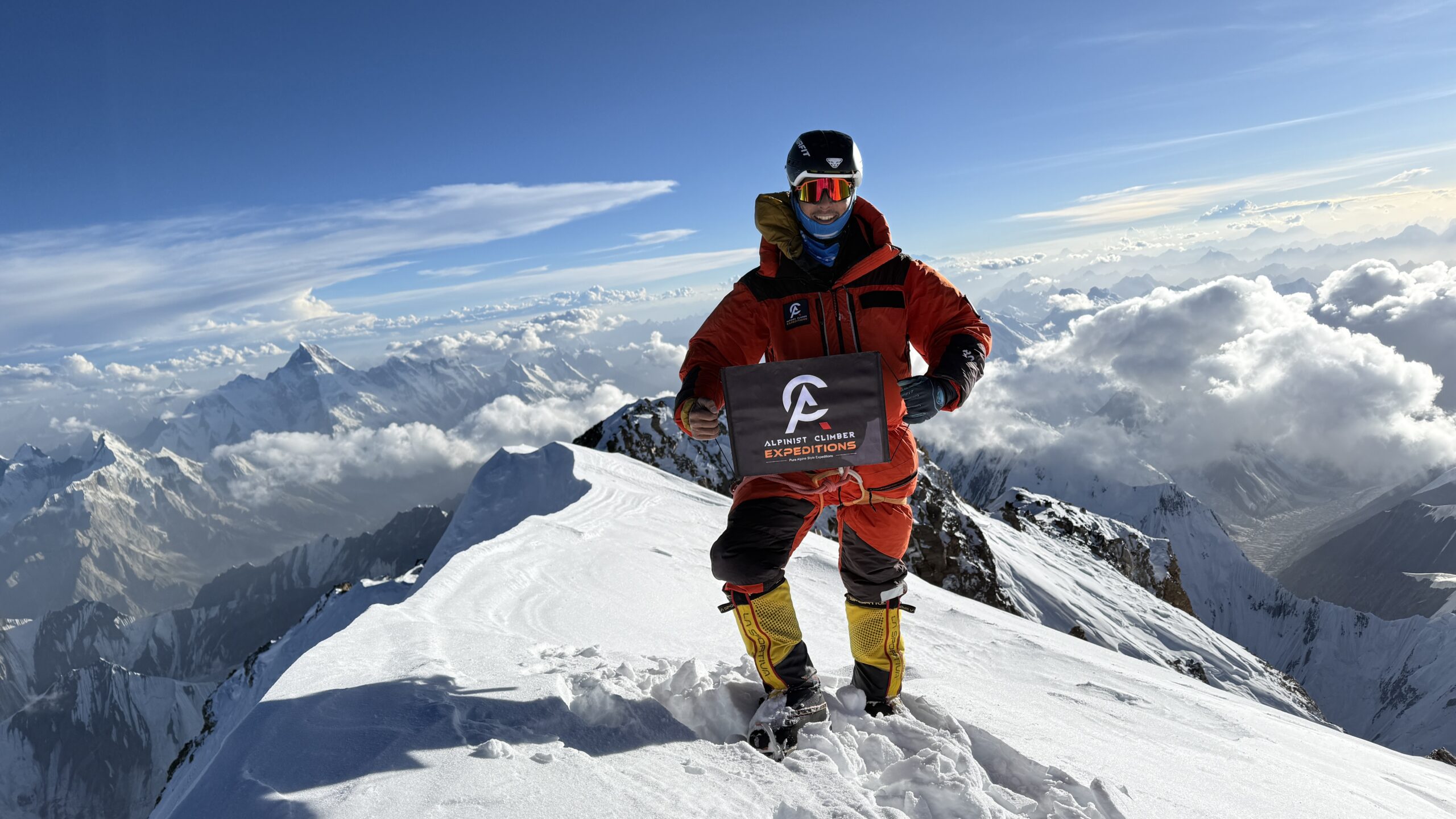
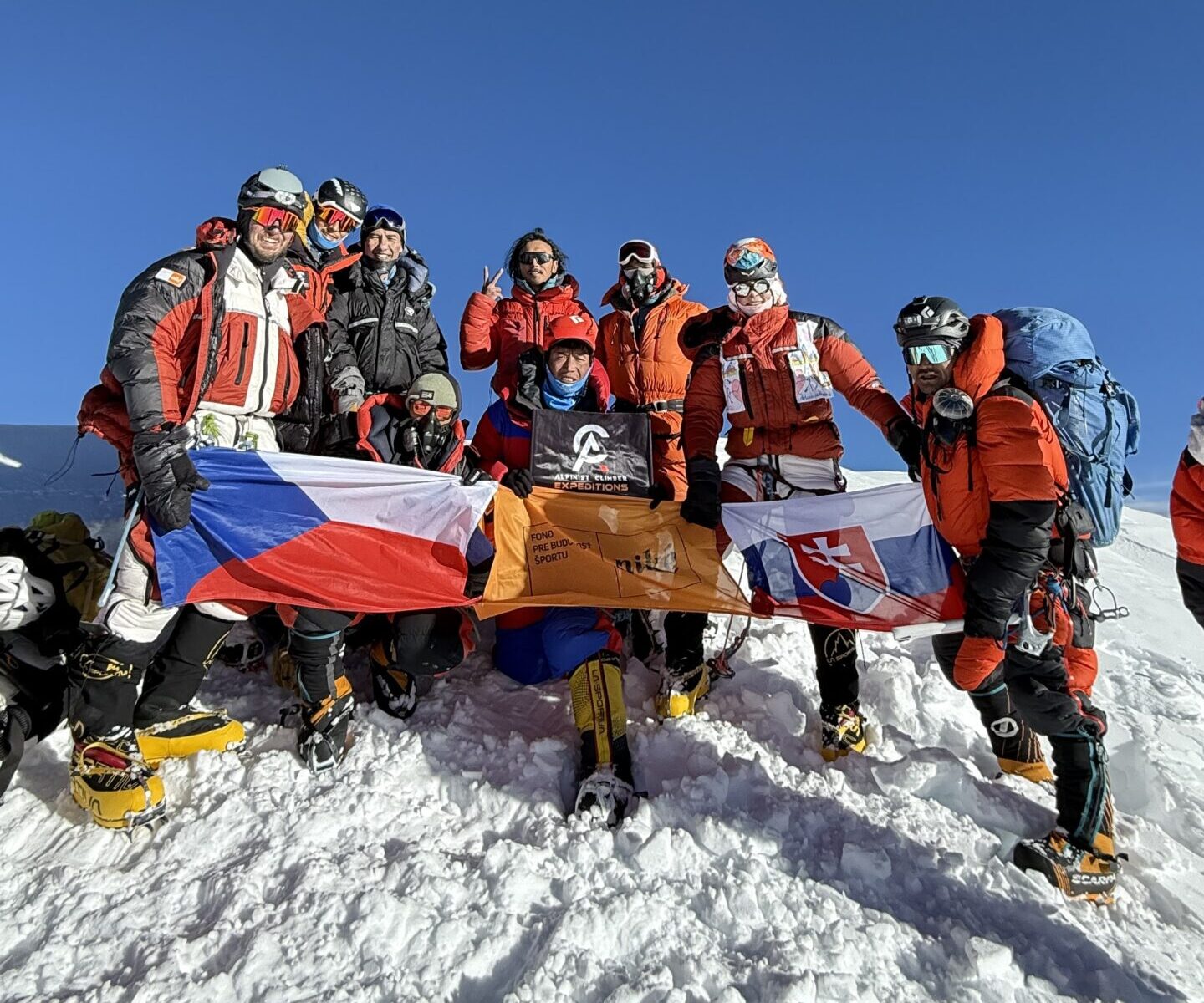
As the climbers stand on the summit, they also become part of an exceptional adventure. However, it is crucial to remember that the mountain demands respect. As well as safety should always be the first priority for those who dare to attempt the climb.
Difficulty Level
Hard
Best Season
June / July & August
Duration
40 days
Elevation
8,611m
Group Size
2 - 4
Trip Type
8000M Expedition


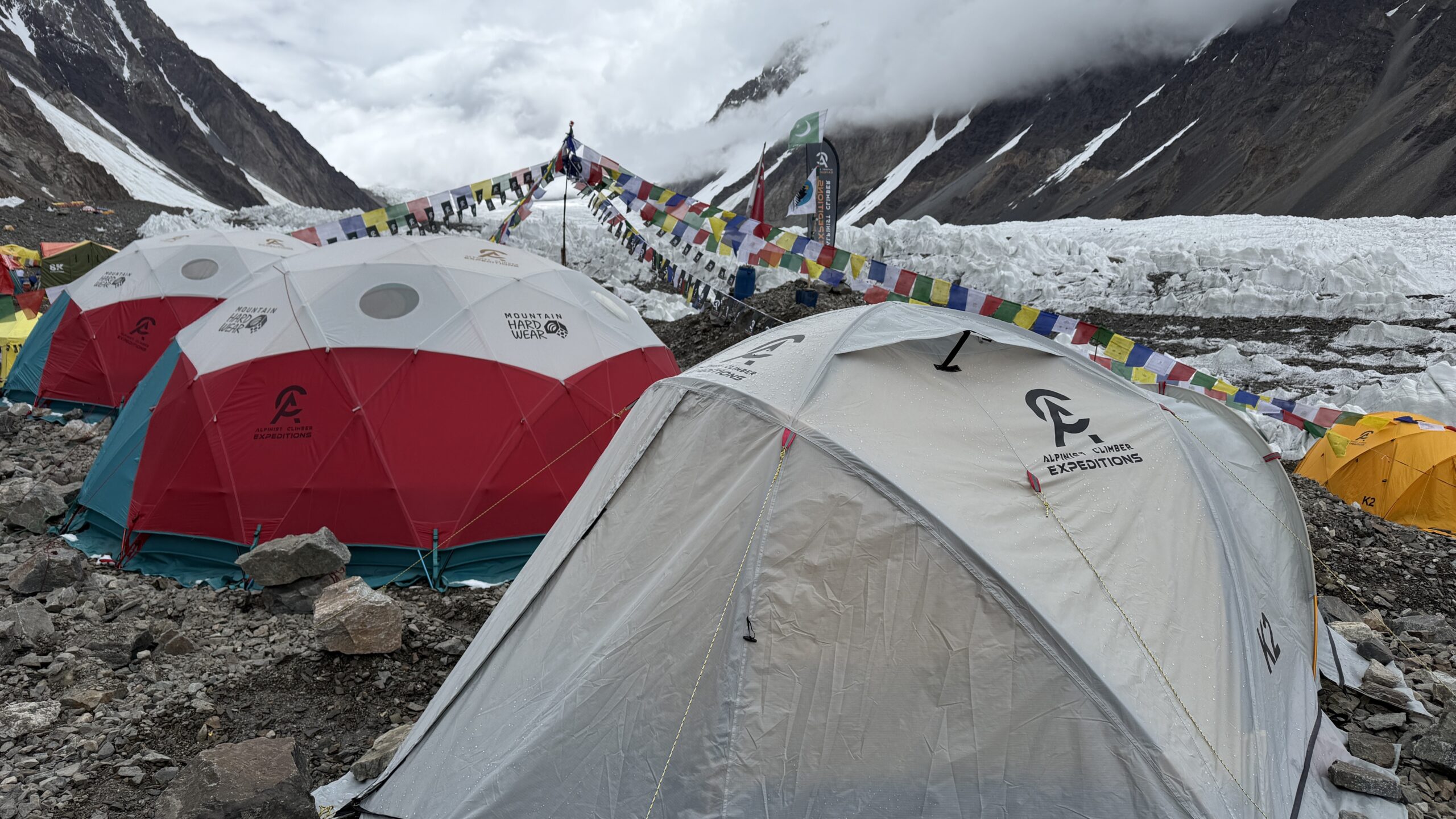
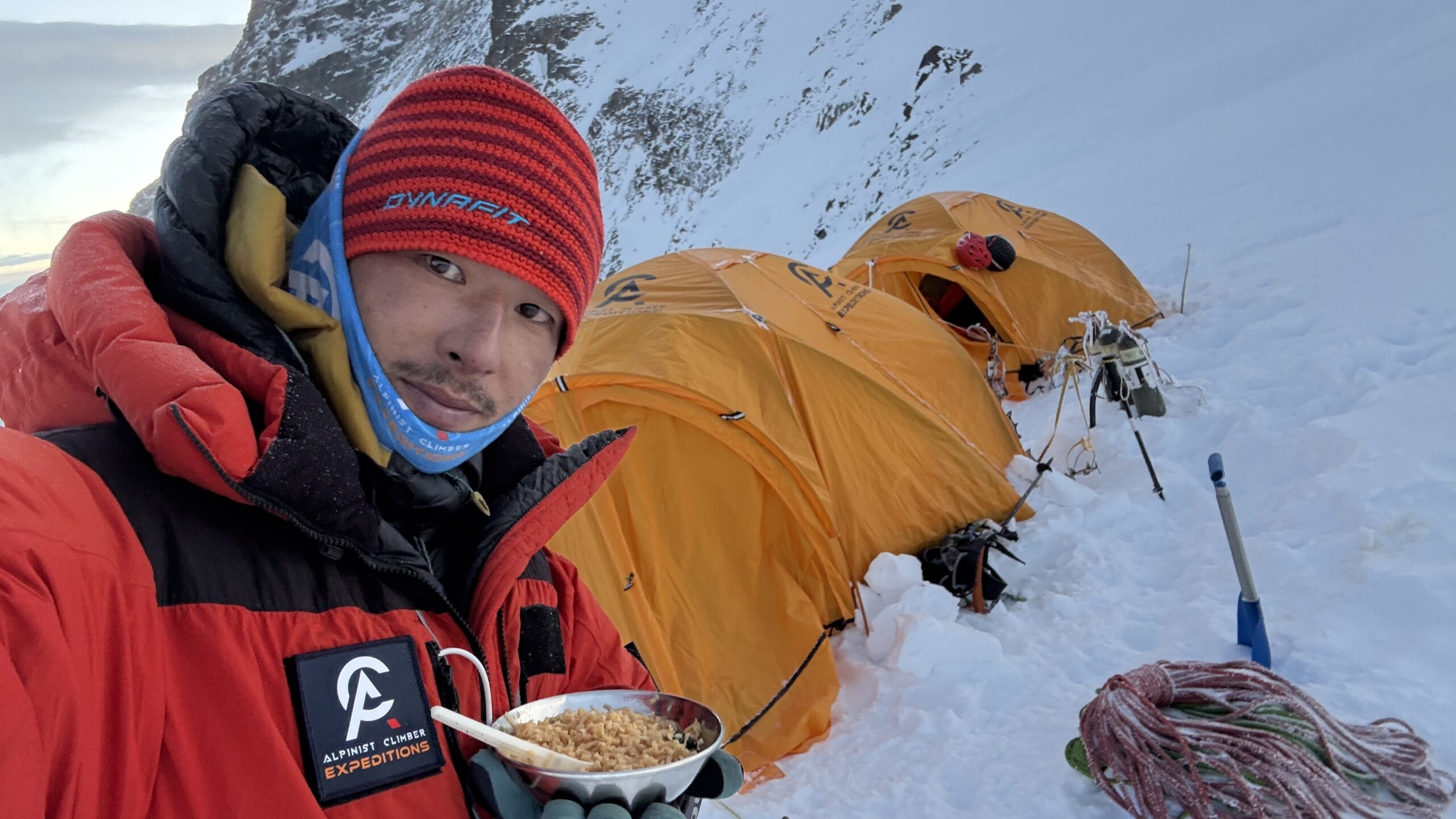
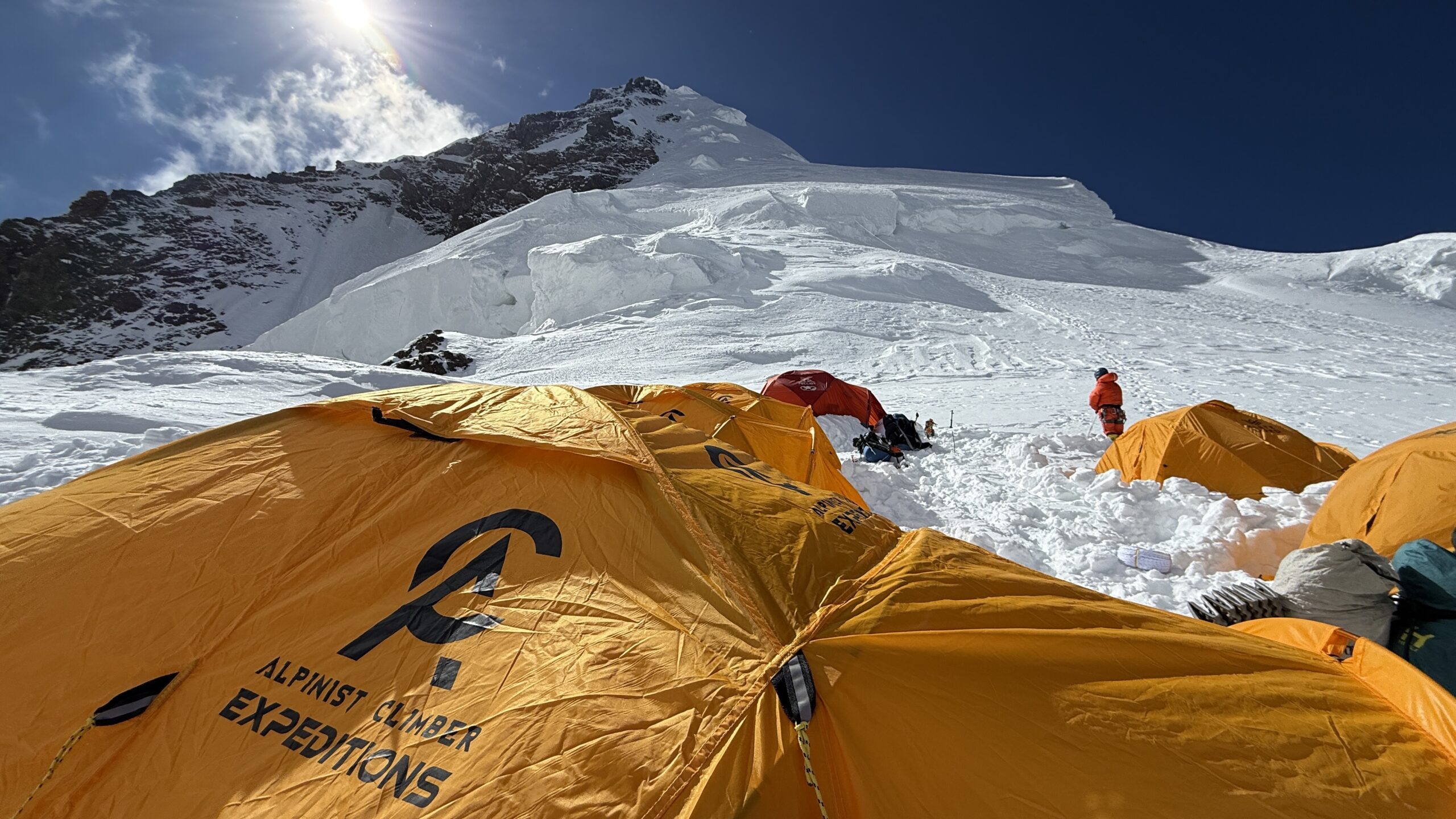
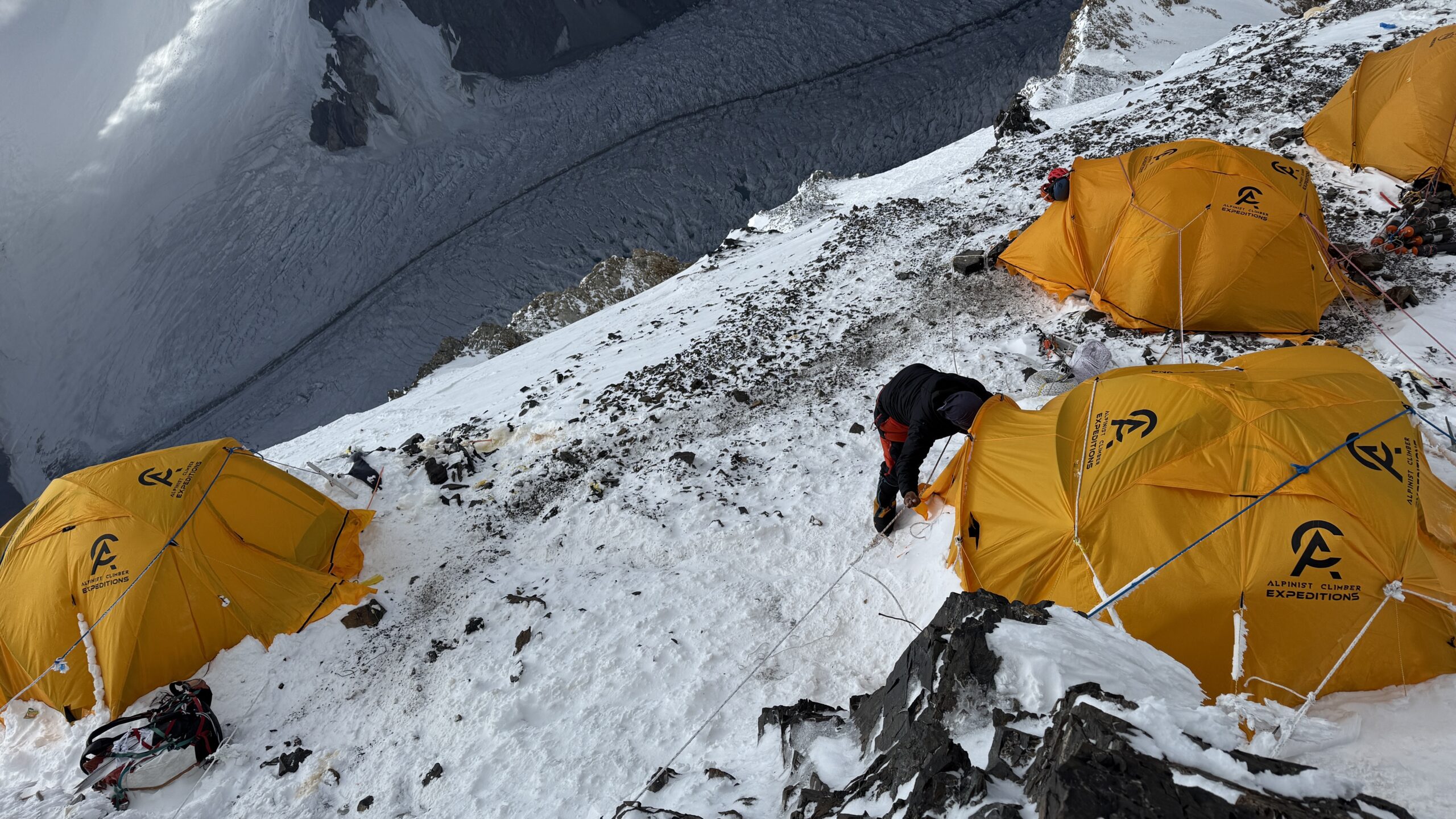
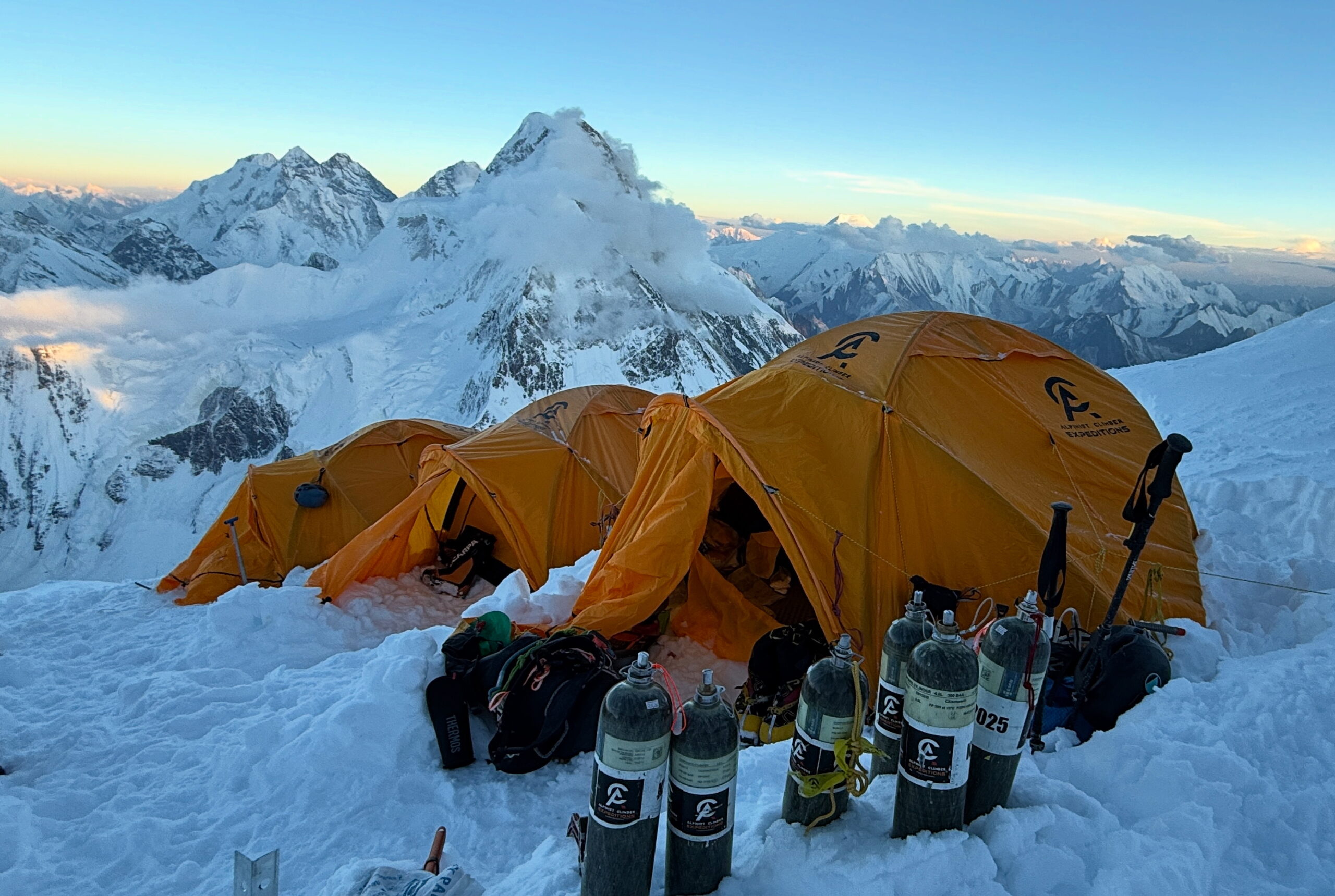
2026
8000M Expedition
- From June 15 to August 08, 2026
- Departs from Skardu
Overview
K2 8,611m the second highest mountain on Earth. Located Straddles the border between the Gilgit-Baltistan region of northern Pakistan and the Taxkorgan Tajik Autonomous County of Xinjiang, China. The primary climbing routes are accessed from Pakistan.
Mountain Range: The Karakoram Range.
Key Characteristics
K2 is notorious for being the most challenging mountain to climb, far more so than Everest. This reputation is built on several factors:
-
Technical Difficulty: The climb is a continuous technical challenge on steep rock and ice, requiring advanced alpine skills. There are no “easy” routes.
-
Objective Hazards: The mountain is inherently unstable. Climbers face constant threats from:
-
Seracs: Massive ice cliffs, particularly the one looming over the “Bottleneck” (a narrow, steep gulley near the summit), which can collapse without warning.
-
Avalanches: Frequent on its steep faces.
-
Frequent rockfall: Sections where rocks are constantly falling.
-
-
Extreme Weather: Located farther north than Everest, it is significantly colder and prone to sudden, violent storms with hurricane-force winds that can trap climbers for days.
-
Remote Location: Its isolation in the Karakoram makes access difficult and evacuation in case of emergency nearly takes days.
Historical Timeline
-
1856: Named “K2” by British surveyor T.G. Montgomerie, as it was the second peak measured in the Karakoram range.
-
July 31, 1954: First Ascent by Italian climbers Achille Compagnoni and Lino Lacedelli via the Abruzzi Spur (Southeast Ridge).
-
1978: First Ascent without supplemental oxygen by American climber Louis Reichardt.
-
1986: First female ascent by Polish climber Wanda Rutkiewicz.
The iconic and most feared section of the standard route is the Bottleneck. It is a narrow, incredibly steep traverse of ice and snow, directly below a massive, unstable serac. A collapse here has been the cause of multiple major disasters, including the 2008 tragedy where 11 climbers perished.
Itinerary
Day
Inclusions & Exclusions
The price of your trip includes the following:
- K2 climbing royalty fees
- Certified IFMGA mountain guide with his daily wages and full insurance etc
- Garbage disposal & management fees
- Government liaison officer with his wages, Insurance, transportation, etc
- National park permit and Route fixing
- Hotel / Airport pick up and drop by private tourist vehicle
- Accommodation, meals and drinks unlimited during the trip
- Base Camp single Dome tent per person and hot shower
- Alpinist Climber Expeditions duffle bag, Cap, and T-shirt per member
- Accommodation & food in the local Hotel are on full board during the trip
- Medical kit during the trip
- Porters and Mules carry trekking and expeditions gear
- Camp 1, camp 2, camp 3, and camp 4 tents for members and guides
- Unlimited oxygen and Mask regulator for member and guide
- High food for members and guides
- Experienced Sherpa support with his wages, full insurance
- All our government taxes, vat, tourist service charges
- Satellite Phone for emergency case
- All accommodation, wages, insurance, equipment, and medicine for all staff
- All official expenses
- Climbing Sherpas and guides international flight airfare
The price of your trip does not include:
- International flight tickets
- Pakistan entry visa fees
- Alcoholic beverages
- Personal clothing and climbing equipment
- Climbing sherpa summit bonus
- Personal travel insurance, medical and rescue insurance
- Tips for Staff Guide, Sherpa, and Porters
- Special drone permit fees
Cost Details
Details
Our budget cost option presents an affordable alternative for individuals seeking a mountaineering experience without the higher price tag of the regular and premium options. This package retains the same level of service as the regular option, including group guiding with a minimum of 4 people per group, offering the chance to share the journey with fellow adventurers. The budget cost package encompasses professional guidance from our skilled team, a well-structured itinerary, and accommodations in budget hotels and lodges throughout the trip.
Details
Our regular cost option offers an excellent value for adventurers seeking an unforgettable mountaineering experience. With this package, you’ll have the opportunity to attempt stunning peaks, receive professional guidance from our experienced team, and enjoy a well-planned itinerary. Designed for groups, the regular cost option requires a minimum of 2 members to join the expedition, ensuring a shared experience and camaraderie throughout the journey. It’s an affordable and exciting way to embark on a memorable mountaineering adventure.
Details
- Private 1:1 guiding service for each member
- More flexibility
- Separate base camp
- Extra climbing sherpa guides
- Enjoy exclusive benefits
For those seeking a truly personalised and flexible adventure, our premium cost option is the perfect choice. With the premium package, you’ll receive exclusive benefits such as 1:1 private guiding, allowing for a more personalised experience tailored to your specific goals and preferences. This option provides the utmost flexibility in scheduling and ensures that you receive dedicated attention from our expert guides throughout the expedition. Indulge in the luxury of private guiding and elevate your mountaineering experience with our premium cost option.
Payment Details
Account Information
- Bank Name: Nepal Investment Bank Ltd
- Account Holder Name: Alpinist Climber Expeditions Pvt. Ltd.
- Account No: 00101010343367
- Account Type: US Dollars
- Swift Code: NIBLNPKT
- Branch: Durbar Marg Kathmandu 44600
- Email. [email protected]
- Phone No: +977-9851364253
Why ACE ?
Alpinist Climber Expeditions is known for its expertise in leading high-altitude climbing expeditions, Alpine Style 1:1 private guiding with an IFMGA mountain guide as well as high-quality service throughout the expedition. Having more than a decade of years of experience in the planning and coordination of mountaineering expeditions, we achieve in ensuring each expedition is a successful one with the best possible experience for our climbers while focusing on our 3 primary goals which are, reaching the summit, returning safely, and having fun! Safety is always our number one priority.
We apply strong and specialized Expedition Leaders and Sherpa staff who are undoubtedly accepted as the most pre-eminent mountaineers in the industry.
The Alpinist Climber Expeditions approach to organizing expeditions systemized for you is based on our philosophy that is reflected in the quality and safety of the expeditions we manage with our consistently high success rate.
Trip Notes
The team will have a minimum size of 2 members and 1 IFMGA guides and a maximum size of 4 members and 2 IFMGA guides. The base camp will be staffed by a Sherpa sirdar/cook. A team of climbing Sherpas will carry loads above base camp and support in the mountain.
1. Pre-Expedition Preparation
a. Physical Preparation
- Conditioning: Train for months prior to your expedition. Focus on cardiovascular fitness (running, cycling, swimming), strength training (leg strength and core), and endurance. High-altitude training (e.g., at altitude gyms or using a hypoxic tent) is highly beneficial.
- Climbing Experience: Ensure you have experience with high-altitude climbs, particularly above 6,000 meters. Previous climbs of peaks like Cho Oyu, Aconcagua, Manaslu or Denali are common prerequisites for attempting K2.
- Mental Resilience: Psychological preparation is key. The conditions on K2 can be harsh, and there are long periods of isolation and mental strain. Mental toughness can be the difference between success and failure.
b. Base Camp and Acclimatization
- Trekking to Base Camp: Climbers typically start their journey by trekking from Askole, which takes about 8-9 days to get K2 BC depending on the pace. This trek passes through iconic locations like Trango Tower, Goro II, and Concordia.
- Acclimatization: K2 Camp 2 (6,680m) or Broad Peak camp 3 (6900m), climbers will spend several days to acclimatize to the high altitude. This is critical to prevent altitude sickness.
- Acclimatization Strategy: Climbers ascend to higher camps and then return to Base Camp for rest (the “climb high, sleep low” method). This process may take 2-3 weeks.
2. Key Considerations for Success
a. Weather
- Conditions on K2 are extreme. Temperatures can drop below -60°C (-76°F) with wind chill. Weather forecasts are crucial for planning summit attempts. The best time to summit is generally in July.
- Weather Forecasts: Mountaineers rely on weather forecasts from both meteorological stations and experienced guides to determine the best time for a summit attempt.
b. Oxygen
- Supplemental Oxygen: At altitudes above 8,000 meters, the air contains only about a third of the oxygen available at sea level. Supplemental oxygen is essential for most climbers. You will need to carefully manage your oxygen supply and ensure you are familiar with how to use the oxygen system.
c. Teamwork and Sherpas
- Sherpas play a vital role in the expedition. They often serve as guides, carrying heavy loads, setting up camps, and fixing ropes in dangerous sections like the Bottleneck and the below camp 1.
- Having strong communication, respect for each other, and mutual support within your team and with your Sherpas is key to success.
3. Summit Day: The Final Push
- Timing: The summit attempt is typically made in the early hours of the morning to avoid the dangerous afternoon storms and the extreme cold. Climbers usually aim to reach the summit before noon.
- Summit Window: The summit window is narrow due to K2’s severe weather conditions. Climbers must be flexible and ready to make decisions based on the forecast.
- Return: After reaching the summit, climbers must descend immediately to avoid staying in the death zone too long. Many climbers face exhaustion, frostbite, or other challenges during the descent.
- Celebration and Reflection: Summiting K2 is a huge achievement, but for many, the real victory is in surviving the journey and sharing the experience with the climbing community.
4. Risks and Challenges
- Altitude Sickness: Symptoms include headaches, nausea, dizziness, and loss of appetite. Severe cases can lead to High Altitude Pulmonary Edema (HAPE) or High Altitude Cerebral Edema (HACE), which are life-threatening and require immediate descent.
- Frostbite: Due to extremely low temperatures, frostbite is a significant risk. Proper clothing and regular checks of extremities are essential.
Prakash Sherpa (Pemba) CEO / IFMGA Mountain Guide
The expedition is being organized by Prakash Sherpa, director of Alpinist Climber Expeditions and a veteran of decades of High altitude expedition guiding and organizing. All of our trip guides have extensive experience at high altitudes and a proven record of safety, success, and compatibility. The number of guides is determined by the team size but the normal ratio of guides to members is 1.2 You will find our guides companionable and strong expedition members with considerable power and willingness to see you achieve your goals.
Equipment
Bodywear
- Down suit – Recommended the best brand
- Down jacket – recommended the best brand
- Waterproof jacket and over-trousers that goes over your alpine boot
- Balaclava – recommended BUFF or similar covering nose and face
- Long sleeve thermal shirt and trousers
- Fleece jacket and trousers
Handwear
- Liner gloves – thin and warm
- Down mitts
- Gore-Tex Primaloft glove.
- Mountain gloves – recommended water and windproof
- Smartwool mountaineering socks (2 pairs – new)
- Ultra-soft running / Hiking socks (2 pairs – new)
- Mountaineering boot – recommended La Sportive, etc.
- Alpine boot – recommended La Sportive and Scarpa, etc.
Climbing Equipment
- Climbing Helmet (UIAA tested)
- Harness – recommended Petzl or BD
- Goggles with UV protection and anti-fog system
- Sun glasses UV protection
- Headlamp – recommended Petzl or BD
- Spare batteries – recommended Energizer Ultimate Lithium batteries
- Ascender (Jumer) – recommended Petzl or BD
- Abseiling device – recommended Petzl or BD ATC guide
- Screw gate carabiners (2 x large, 2 small sizes) recommended Petzl or BD
- Bent gate carabiners (2 medium sizes) – recommended Petzl or BD
- 6 mm rope – recommended 2 meters UIAA tested
- 6 mm rope – recommended 5 meters UIAA tested
- Dynamic 8 mm rope – recommended 2 meters UIAA tested
- Classical alpine ice-ax – recommended Petzl, Grivel, or BD
- Crampons that fit mountaineering boots – recommended Grivel, Petzl, or BD
Other equipment
- Sleeping bag (comfort rated – 20 degrees
- Large size duffle bag with padlock
- Headlamp with spare batteries
- Water bottles 1 liter
- First aid kit
- Trekking poles
- 45–75-liter Rucksack
- Swiss army knife with a multi-tools system or Leatherman
- 1-liter stainless steel thermos – that works in extreme weather conditions
Headwear
- Sun hat or Normal Cap
- Fleece or woolen hat
- Sunglasses with UV protection
- Buff scarf / thin face mask
Handwear
- Fleece or woolen thin gloves
- Gore-Tex mitten gloves
Bodywear
- Gore-Tex jacket
- Gore-Tex pant
- Hiking pant
- Fleece trousers and jacket or warm jumper – recommended not thick but warm enough that fits inside the Gore-Tex pant
- Anti-sweat T-shirt
- Thermal inner trouser
- Down jacket with hoodie
Footwear
- Trekking boots
- Slipper
- Trekking socks (4-5 pairs)
- Snow gaiter
- Alpine Boots
- Crampons
- Climbing equipment
Other equipment
- Sleeping bag (comfort rated – 20 degrees
- 45-liter rucksack with cover
- Large size duffle bag with padlock
- Headlamp with spare batteries
- Water bottles 1 liter
- Thermos
- First aid kit
- Trekking poles
Washing kit & Toiletries
- Waterproof washing kit bag
- Towel – medium size
- Washing soap, towel, tooth pest, toothbrush, etc.
- Sun lotion enough +50SPF (including total bloc for lips, nose, etc.)
- Handwash & sanitizer
- Toilet paper (you can buy it in the Lodges)
- Wet tissues
Terms & Conditions
Please read our terms and conditions carefully. Terms and Conditions are an essential part of the trip for members who wish to book an Expedition, Peak climbing, or trekking trip with Alpinist Climber Expeditions.
The terms and conditions inform the client about the booking confirmation, payment and refund system, cancellation policy, and other important information about your trip. The Booking Terms and Conditions form a legally binding agreement between Alpinist Climber Expeditions and you for the services to be provided. The specific details of our Terms and Conditions can be found below.
- Alpinist Climber Expeditions accepts Euros (€) and US dollars (US$) as payment. The currency will be applied based on the client’s location. After the initial deposit/payment, all subsequent fees will be charged in the same currency.
- When Alpinist Climber Expeditions issues the written confirmation receipt of your deposit amount the
existence of the booking will be confirmed. Alpinist Climber Expeditions kindly requests you to make a
deposit of 20% cost of your trip. You are supposed to pay the remaining amount upon your arrival in
Kathmandu. You need to send your deposit to the Company. In the case of the customized trip, you
should do a 50% deposit as it will cover all intensive details. We accept a last-minute booking with 100%
payment in some cases.
- If you wish to make amendments to your tour arrangements we require notification to Alpinist Climber
Expeditions in writing. If any government permits, flight tickets, or insurance has been issued and cannot be
revoked and refunded you will be liable for these costs. You may also be liable for the cancellation fee of airfares purchased on your behalf.
The future is unpredictable. Notice of cancellation shall be submitted by the client in writing providing
a reason(s) for cancellation. The refund procedure will be as follows:
- Cancellation before 60 days of the trip, 20% cancellation will be charged.
- Cancellation Before 30 days of the trip 40% cancellation will be charged.
- Cancellation Before 15 days of the trip 60% cancellation will be charged.
- Cancellation Before 07 days of the trip 70% cancellation will be charged.
If cancellation is made within the week of the departure or upon arrival in Kathmandu no
refund shall be provided. Any remaining payment will be required at this time. The cost of
Climbing Permit/Insurance/Equipment allowance is not refundable in any period of cancellation.
- Travel insurance is not included in the tour price, but it is a required condition of booking a trip with
Alpinist Climber Expeditions and your responsibility to ensure that you are adequately insured for the
full duration of the trip covering expenses against all possible risks including missed flights, canceled
trips, baggage loss, emergency medical evacuation, high altitude accidents, and other unforeseeable
events. All costs for emergency evacuation must be paid in cash in Nepal unless an insurance
company has agreed to pay the costs on your behalf. It is important to ensure that your personal
travel insurance covers all of the activities you participate in the Himalayas.
- The client / You are responsible to insure yourself with an insurance policy that covers
medical expenses, flight cancellation, trip cancellation, emergency evacuation, and any other
unforeseeable events that may cause loss to you.
- The client is responsible to bear all expenses of personal nature and any extra cost resulted
due to extended stay because of natural calamities, political strikes, and any uncontrollable
events.
- The client is responsible to book the flight tickets with a flexible time frame as traveling in the
The Himalayas can be unpredictable. In case of missed flights, the client shall be solely
responsible to bear the loss.
- If you wish to add extra services mentioned by the company in the Cost Inclusions
section of each package, you shall be entitled to bear the extra costs.
- The company is fully responsible to provide all the services mentioned in the Cost Inclusions
section.
- The company is responsible to introduce all the team members to guides, Climbing
Sherpas, Staff, and manager.
- The company is fully responsible to make the best arrangements for food, lodging, and
accommodation during the trip.
- The company is responsible to hear out the concerns of the member in terms of safety.
- The company is responsible to make prompt arrangements in case of emergencies during the
trek and expeditions.
- The company is responsible to provide valuable service to the clients and deserves pay to
the staff.
- It is your responsibility that you carry a valid passport and have rightly obtained the appropriate
visas when traveling with Alpinist Climber Expeditions. Please ensure that your passport is valid for 6 months.
- As part of the booking and permit process, we will need to obtain personal information from each
client. Your personal will be kept by us in a secure way and none of your private or personal
information will be disclosed for any other purpose.
- This agreement and the rights and obligations of the parties will be construed and take effect in
accordance with and be governed by the laws of Nepal.
FAQs
K2 Expedition is a hard climb so that means that a previous experience in a 6000m or 7000m peak is necessary to feel comfortable during the climb. Physical conditioning is also crucial, involving cardiovascular endurance, strength training, and acclimatization exercises. Prior experience with high-altitude climbs and technical ascents is highly recommended to ensure safety and success on the challenging terrain of K2. During the expedition you will be able to learn with our guides the basic mountaineering techniques.
K2 expedition trip, we provide 1:1 private guiding lead IFMGA Mountain Guide and team of Sherpa guides will assist the loads during the climb and summit day.
For the upcoming K2 expedition trip our director and IFMGA mountain guide Prakash Sherpa will be leading the expeditions. Prakash Sherpa has summited K2 in 2025, and several other 8000m successful summit. Among with him, other experienced Sherpa guides will assist you during the climb. We want to ensure that our clients will have a safe and successful trip with us.
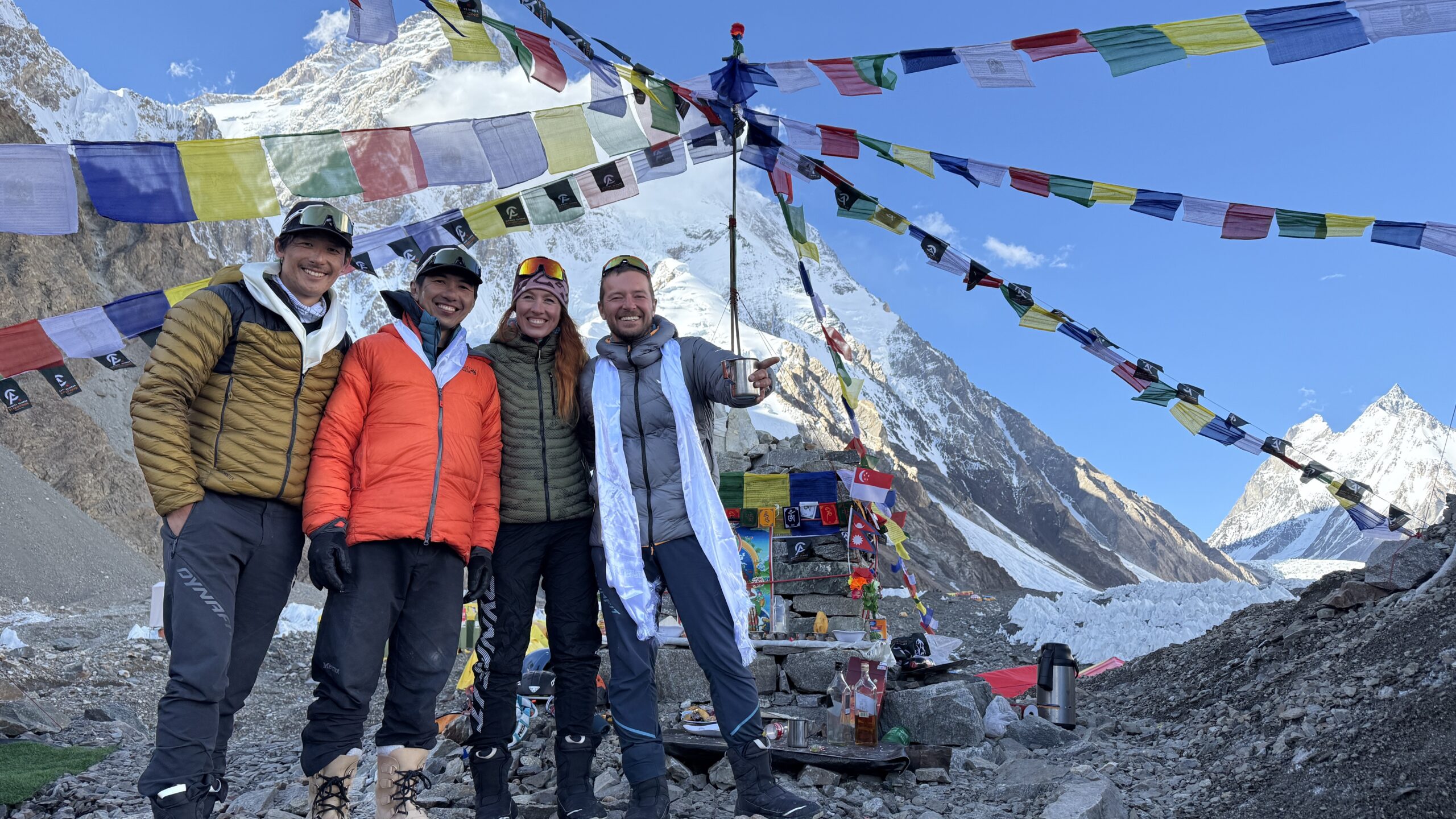
Prakash Sherpa was leading Kahshin Leow & Lenka Polarckova on K2 2025. The expedition was organised by Alpinist Climber Expeditions.
Similar Trips

Kyajo Ri Expedition
17 Days | 6,186m
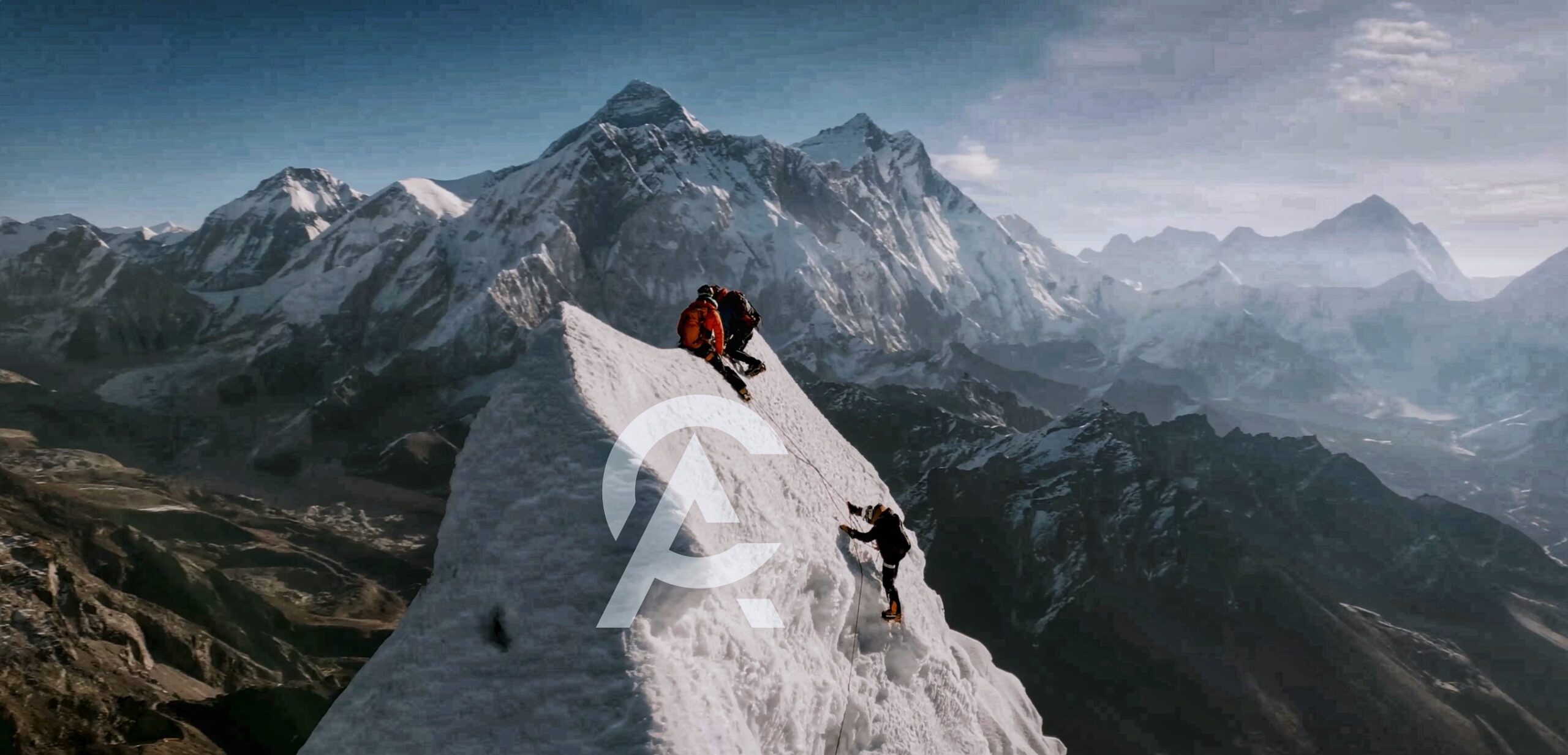
Cholatse Expedition
24 Days | 6,440m
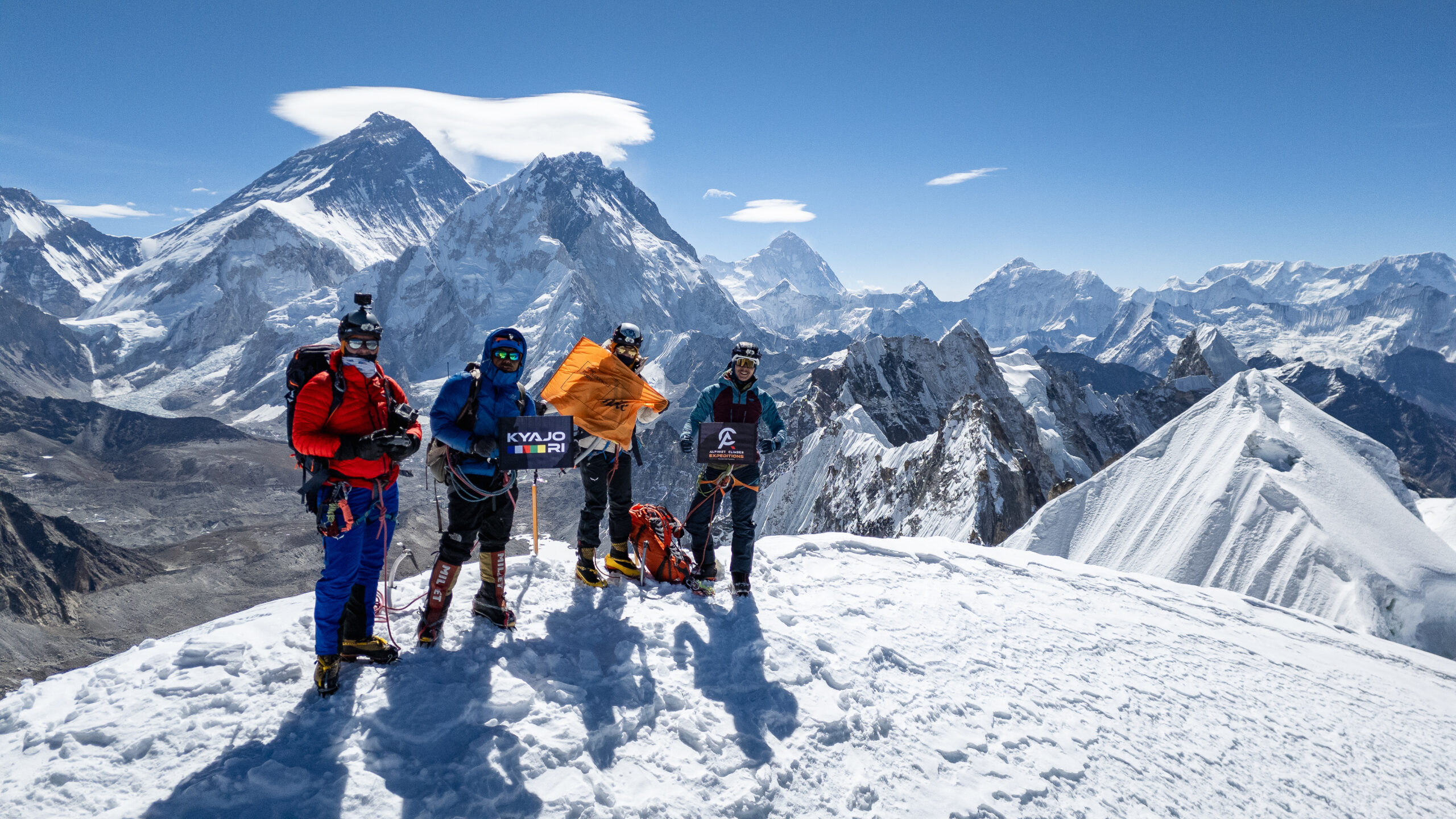
Nirekha Expedition
17 days | 6159m

Ama Dablam Expedition
24 days | 6,812m
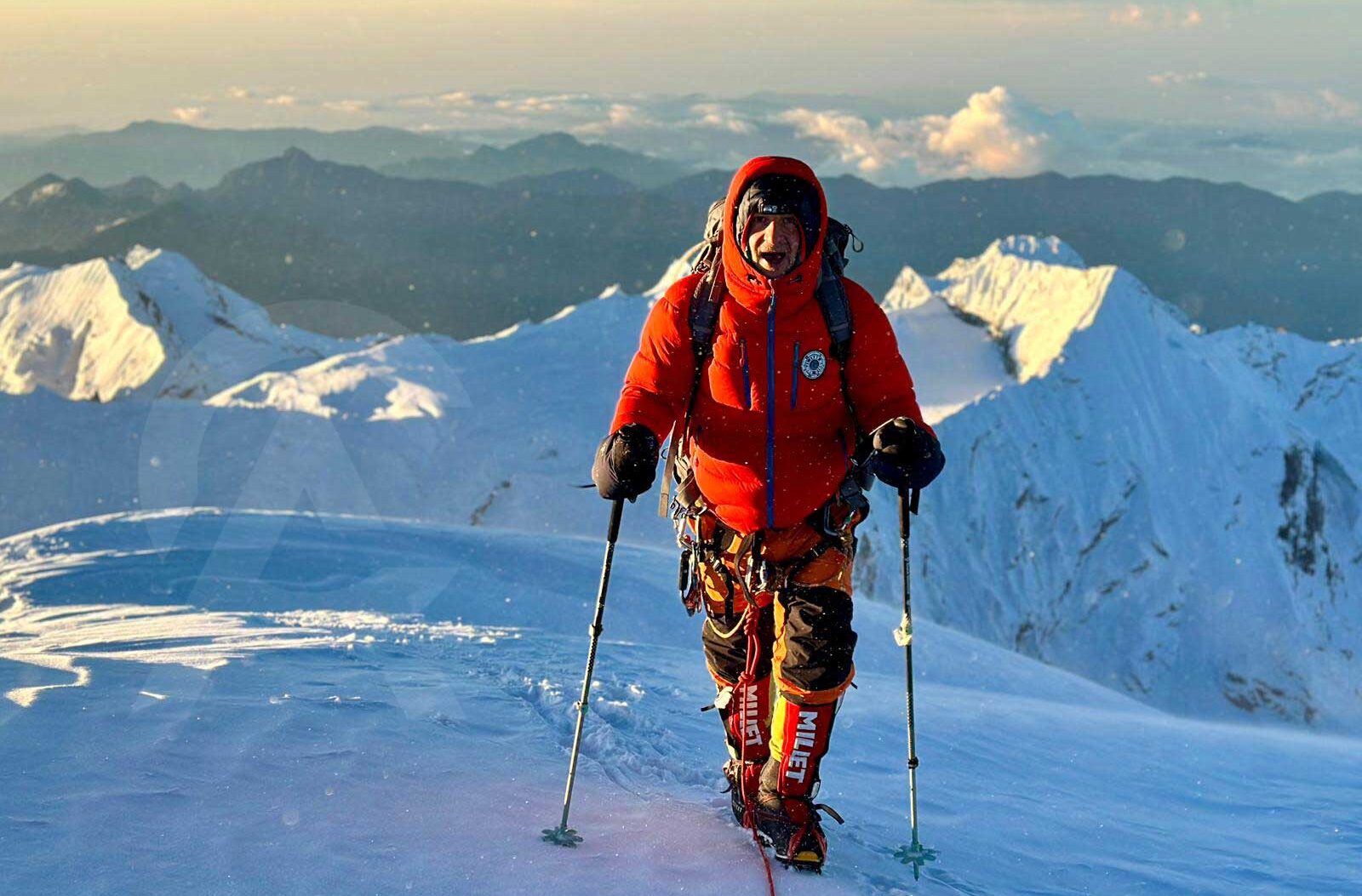
Mera Peak Luxury Expedition
16 days | 6,476m

Island Peak & Kyajo Ri Expedition
22 days | 6000m+
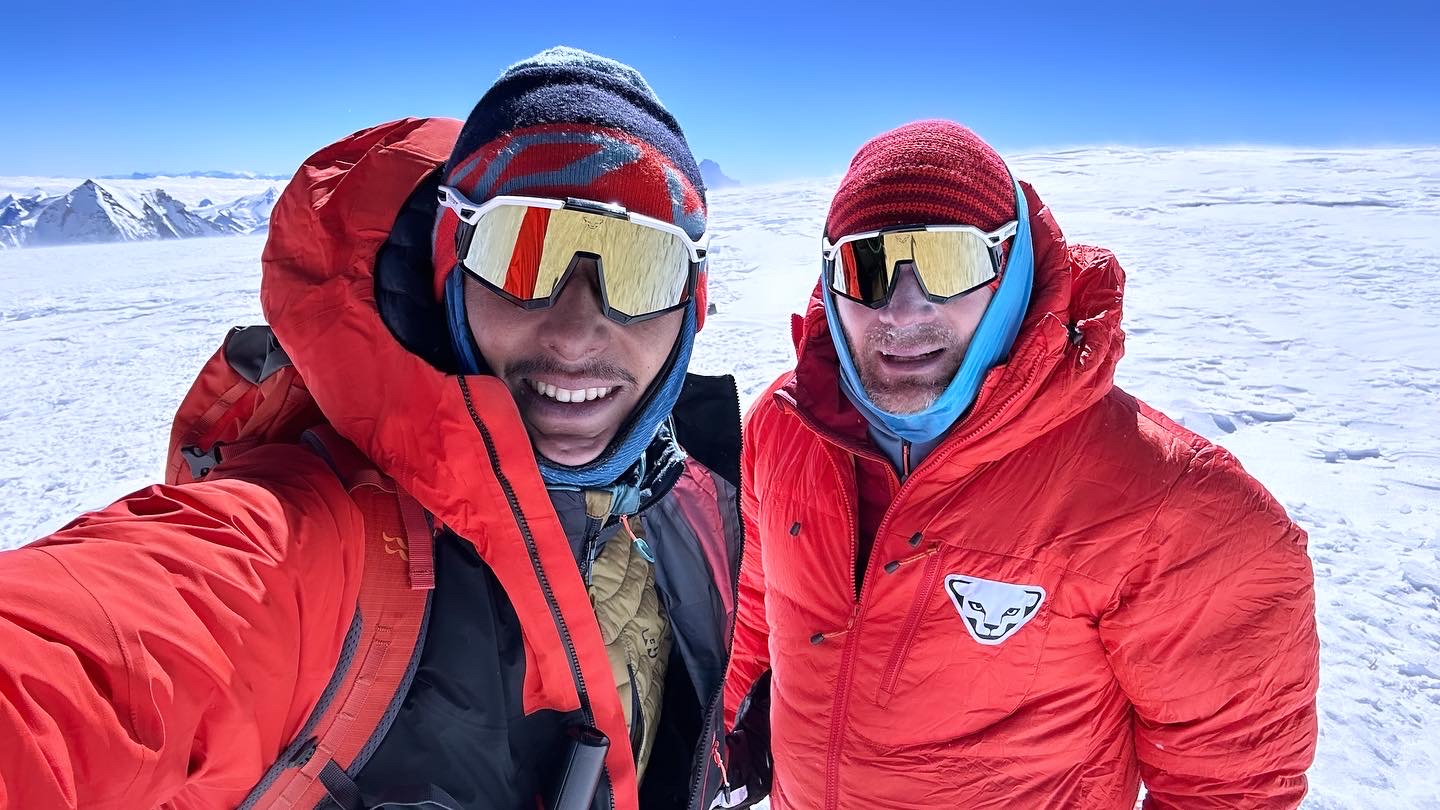
Cho Oyu Expedition
30 | 8,188m
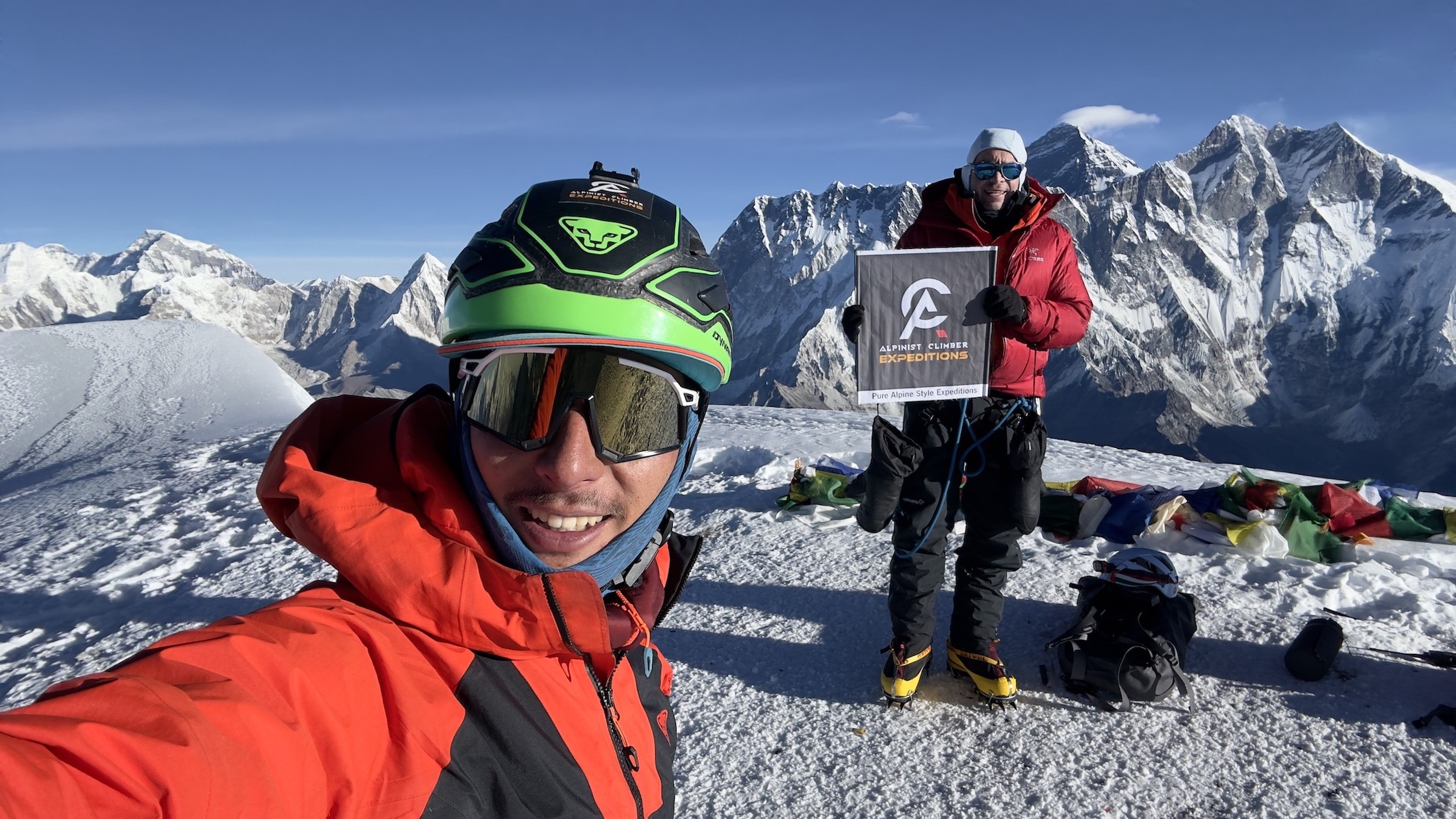
Ama Dablam & Kyajo Ri Expedition
24 days | 6,812m
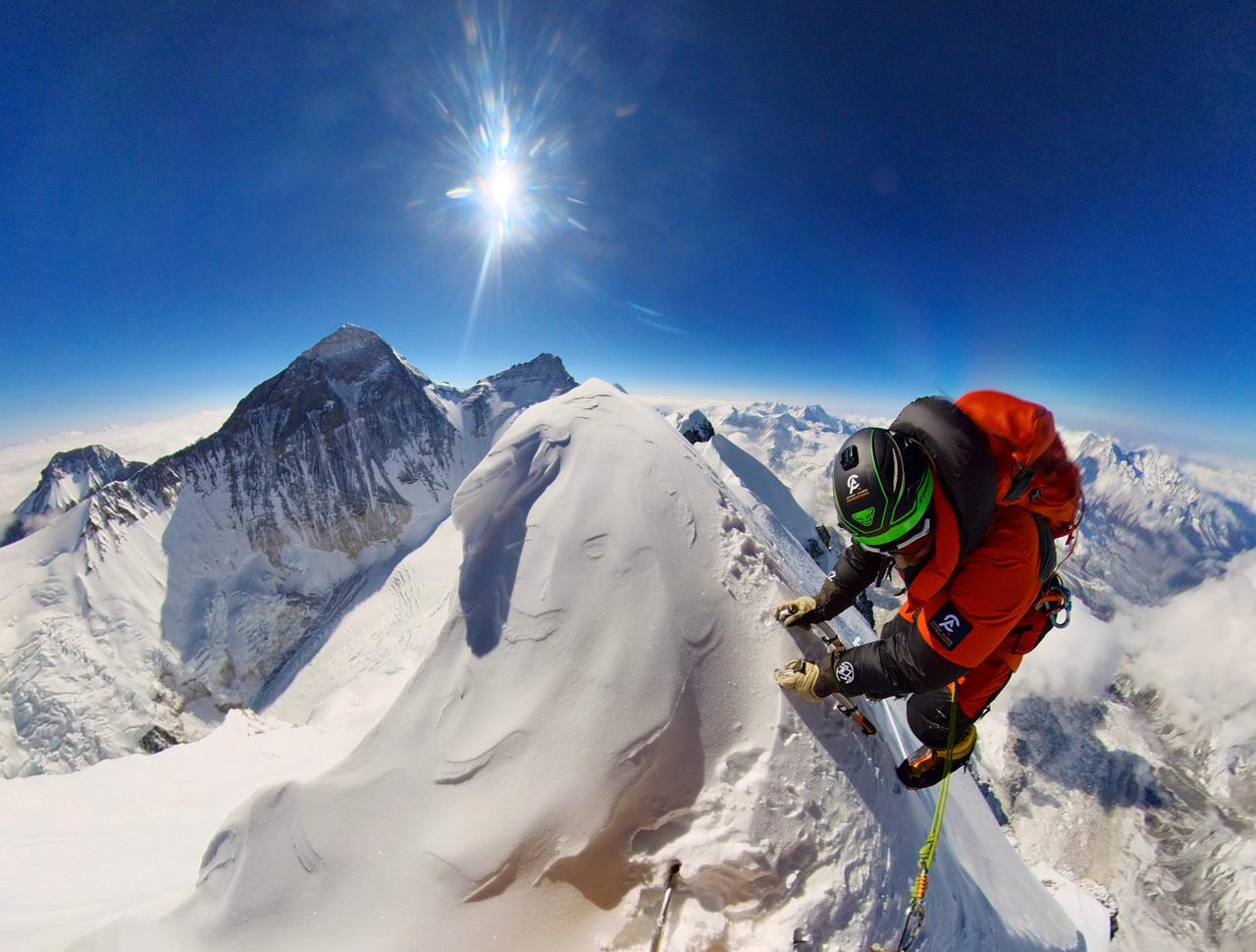
Nuptse Expedition
30 days | 7,861m
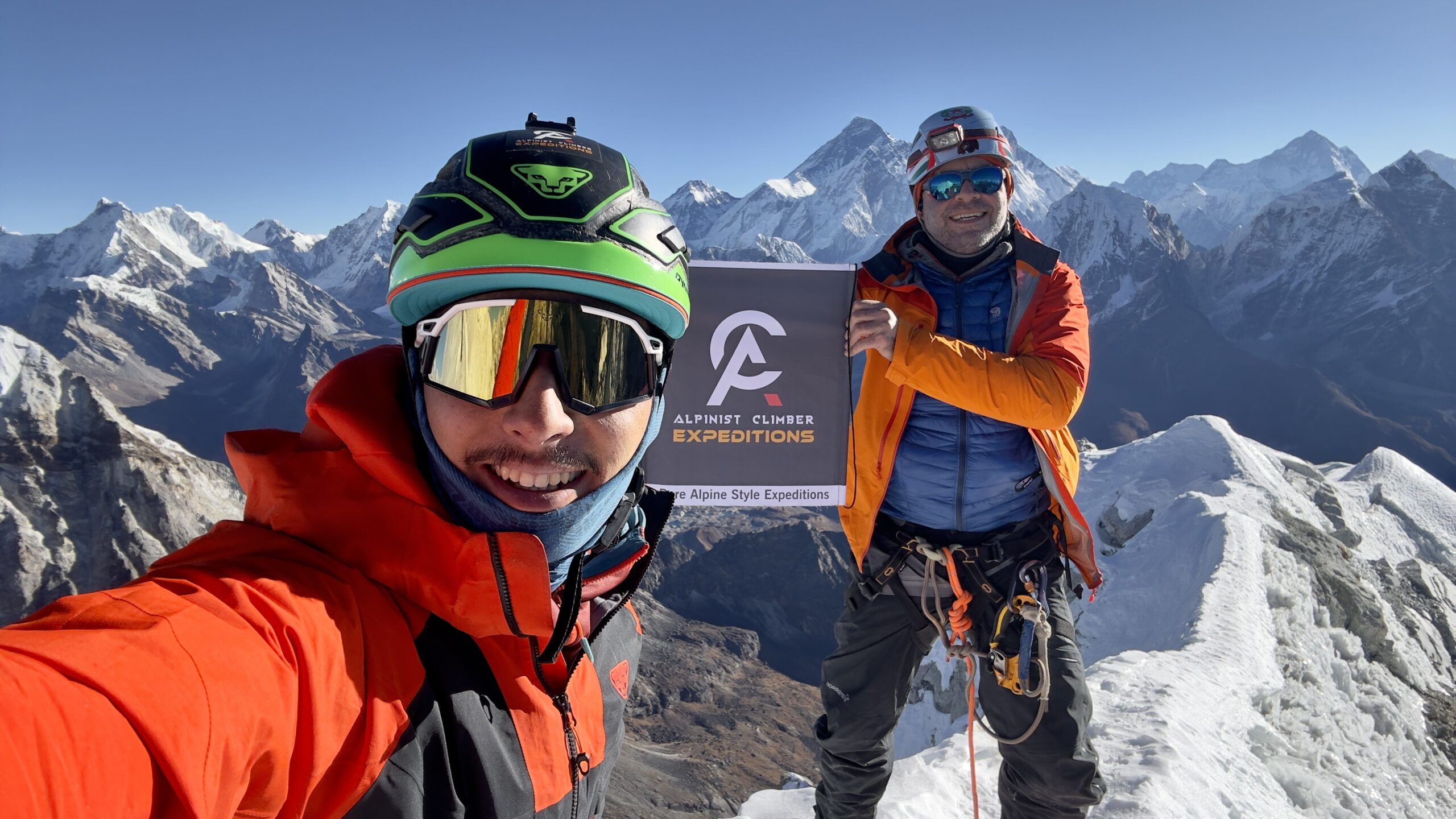
Kyajo Ri and Cholatse Expedition
25 days | 6000m+
Three Peaks Combo Package
33 days | 6000m+
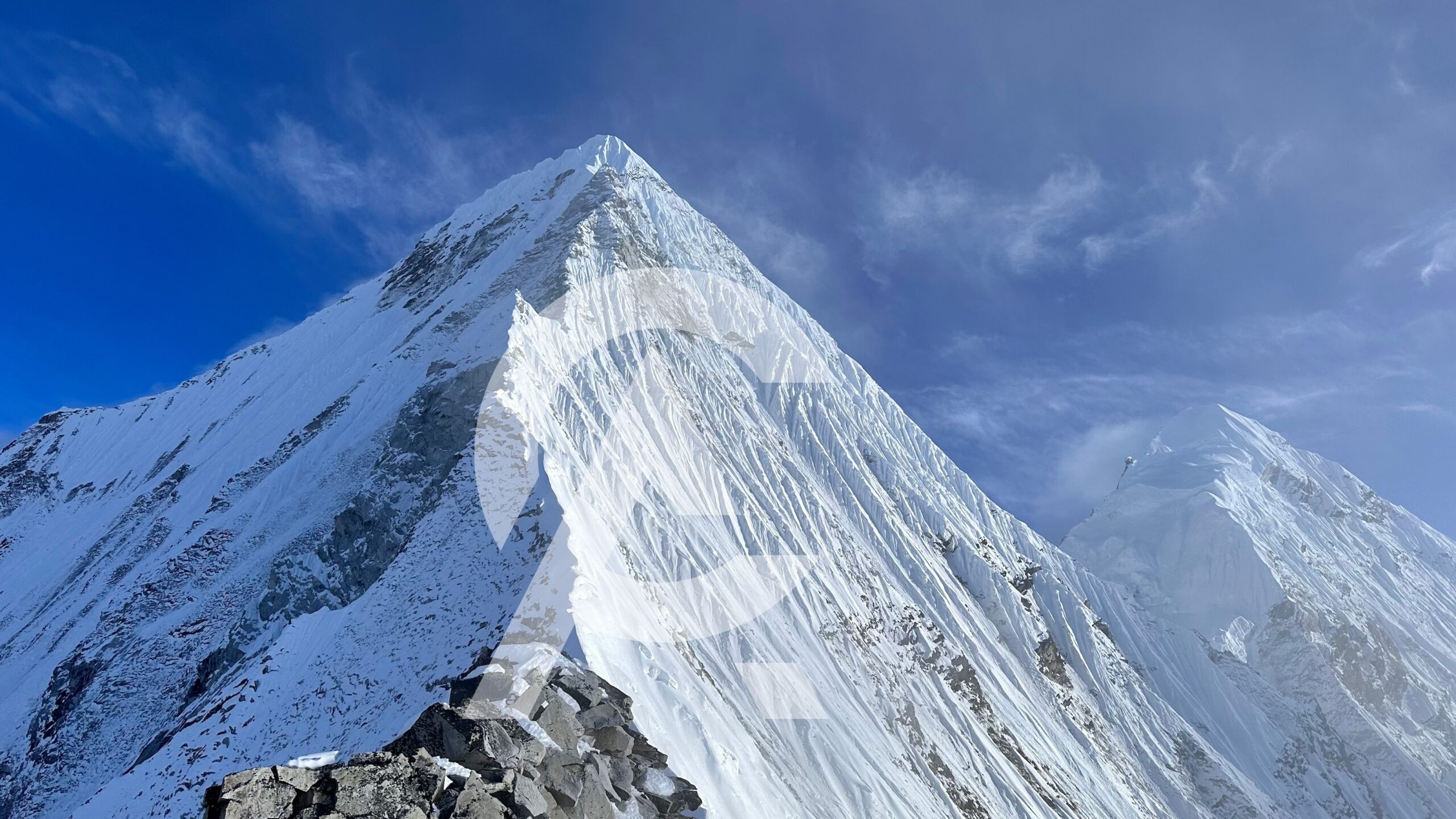
Malangphulang Expedition
24 days | 6,573m

Himlung Himal Ski Expedition
25 Days | 7,126m

Baruntse Expedition
31 days | 7,162m
